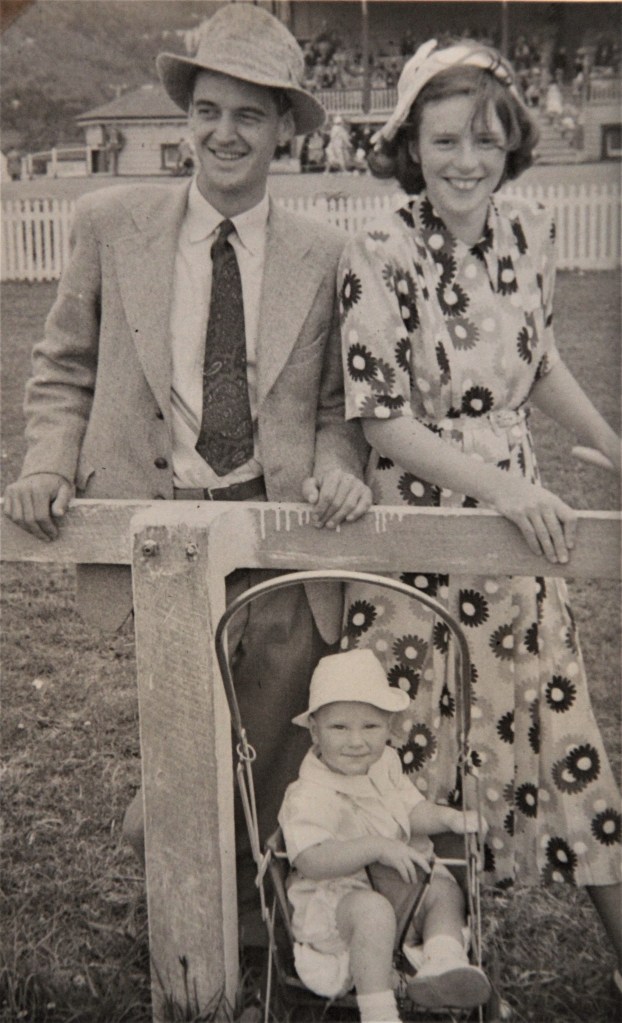
It is possible that when Mum and Dad married, they had not decided what to do to make a living. While farming was obvious, Dad’s Massey training would have qualified him for a professional role in one of the allied agricultural industries or organisations. And that is where they began.
Dad had obtained a job on a DSIR crop research farm at Lincoln, so in early 1950, they set up their first home in Christchurch. It was here that their first child, John Aitchison, was born, on 3 July 1950.
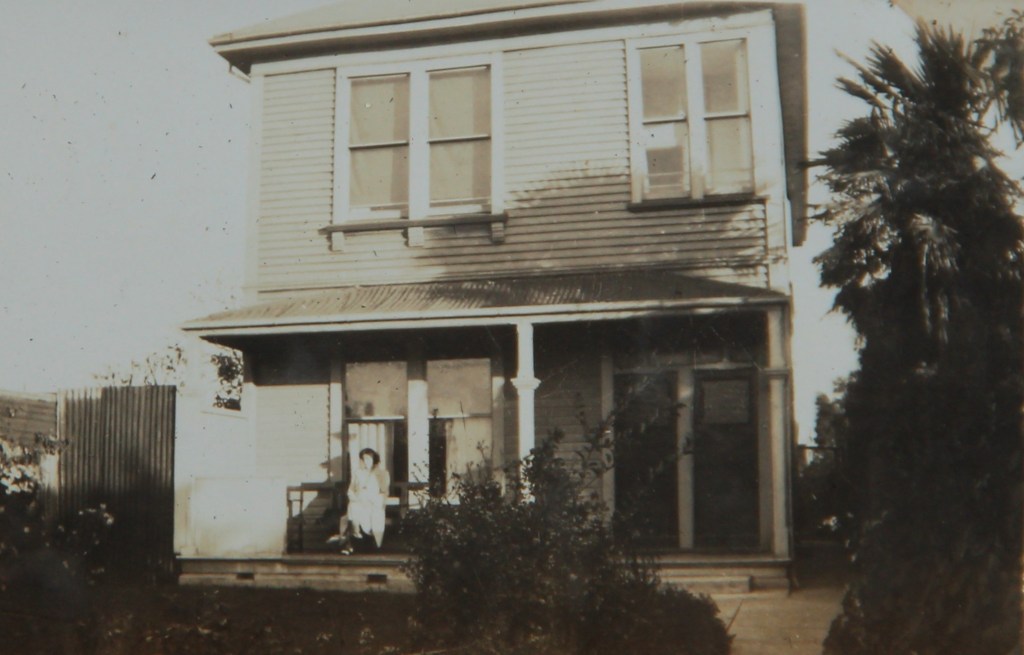
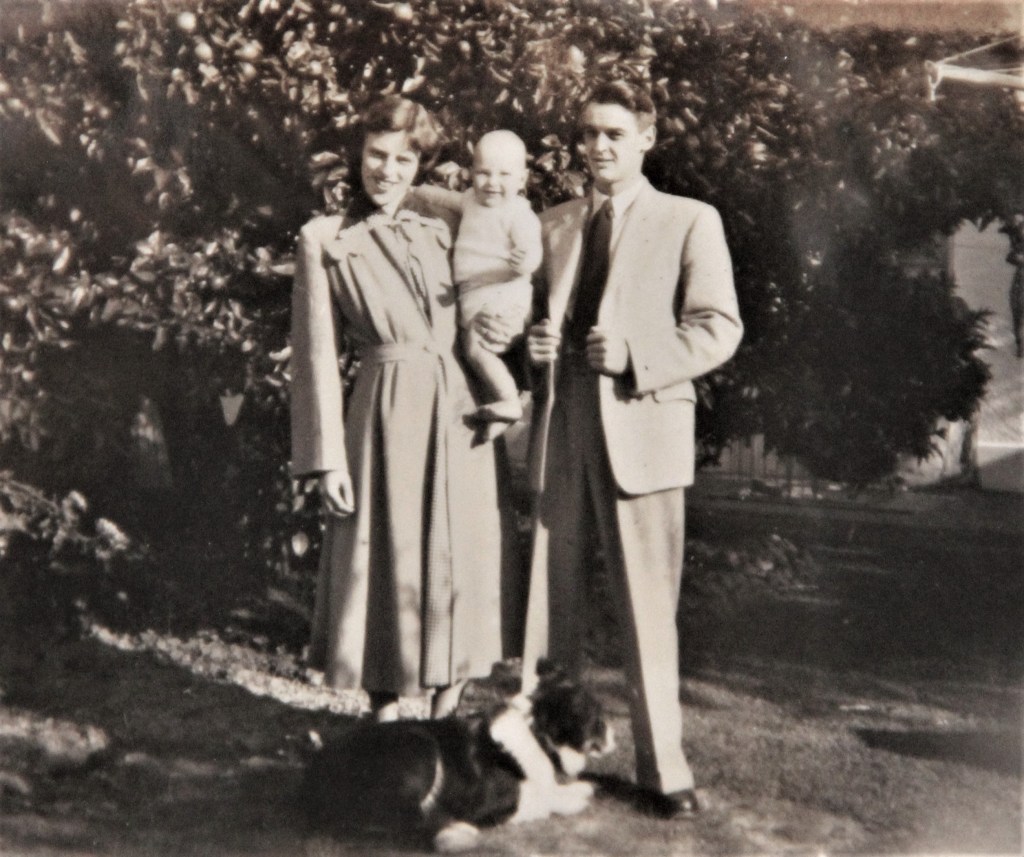
Whether because the job on the crop research farm was not living up to its promise or whether the idea of going farming had always been in gestation, I don’t know, but they decided in that year that they would buy a farm and that it would be dairy. This was mainly because then, as now, this was the best way to fund your way into a farm.
Kaiaua and Whakapara
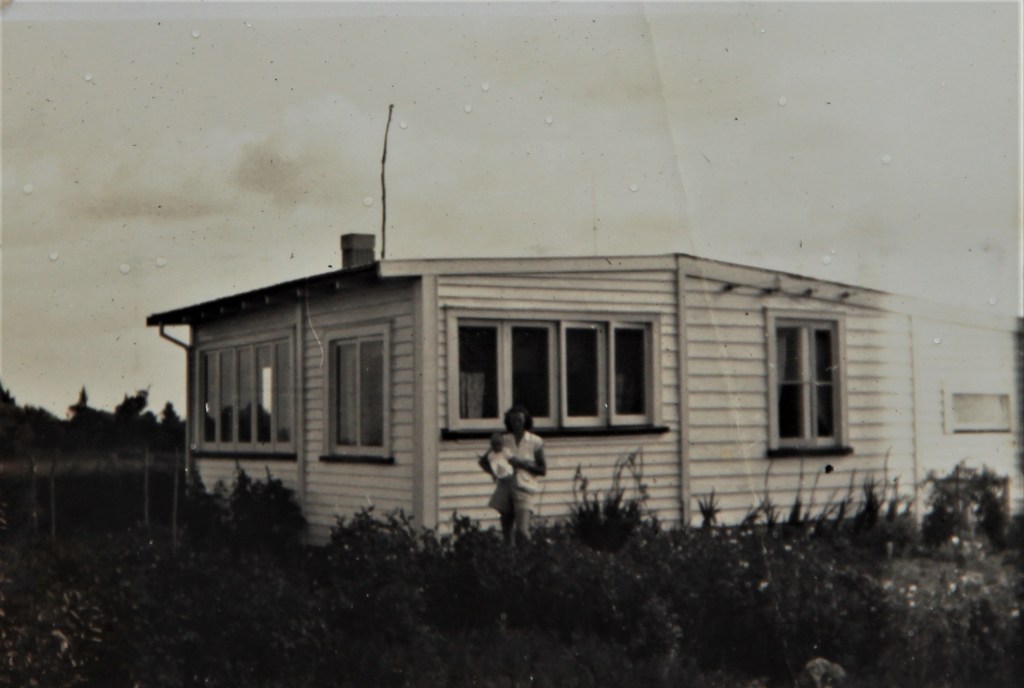
To gain experience, they got a contract milking job for a season in Kaiaua, on the western side of the Thames Estuary. They then bought a small dairy unit on Pigs Head Road at Whakapara, north of Whangarei, milking 40 cows and rearing pigs.
Both Kay (Katherine) and I were born here, Kay on the 5th of October 1951 and me on 19 January 1953.
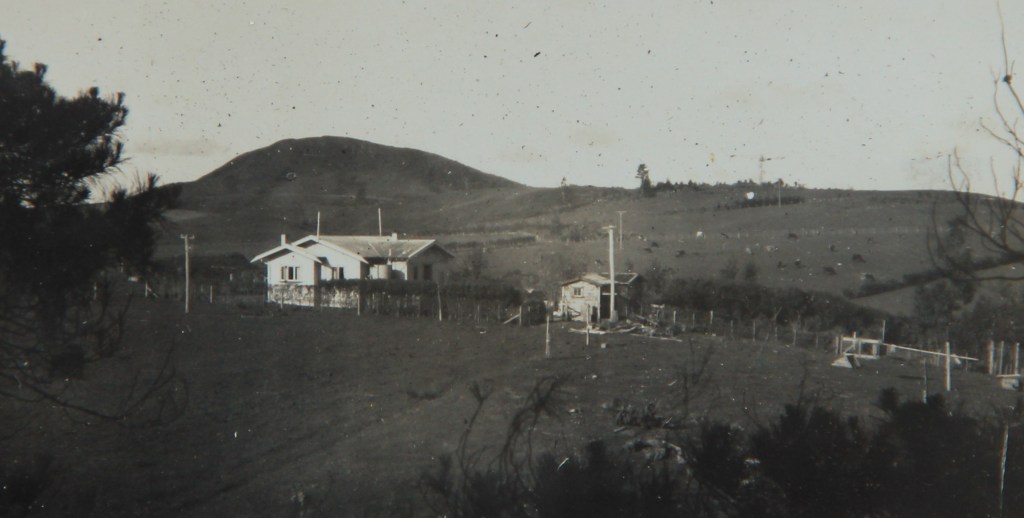
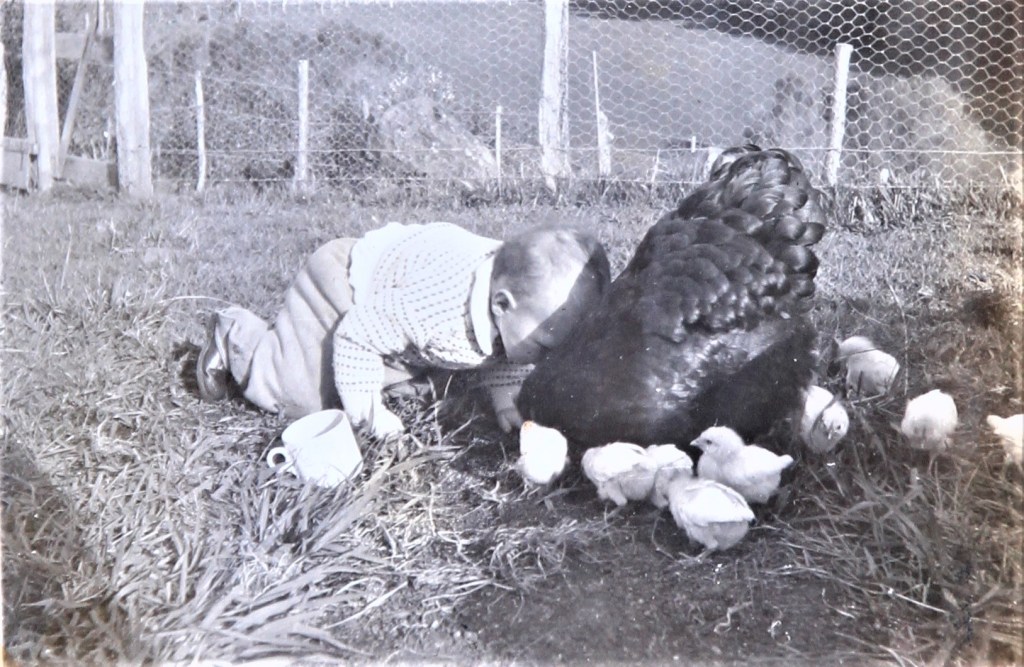
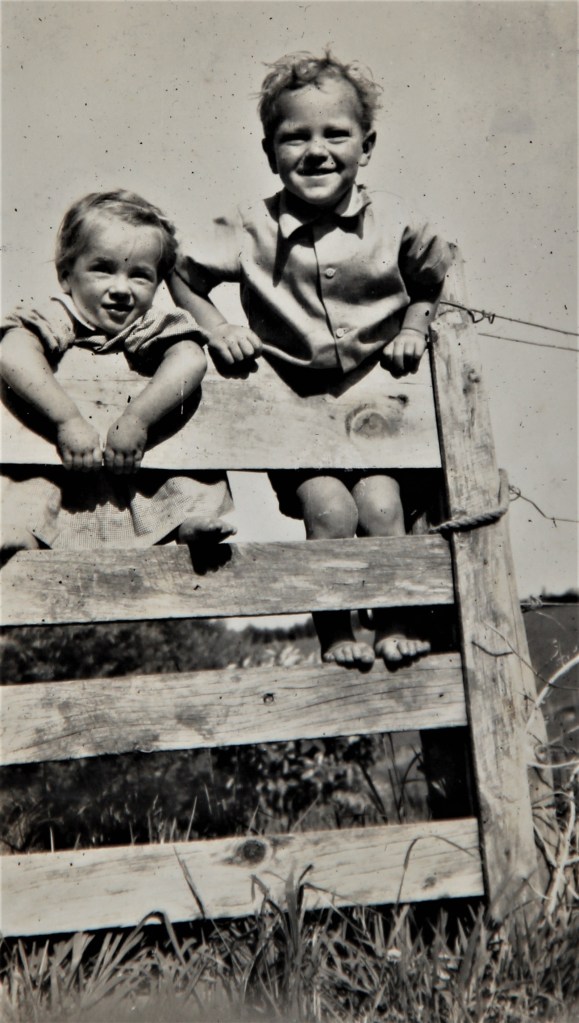
Farm and young children notwithstanding, they still found time for the sea. There were regular trips over the Helena Bay hill to Helena Bay and Teal Bay where we played on the beach, puddled in the estuaries and fished from a 12-foot clinker dinghy. It seems that the 12-footer was not enough, as they soon bought their first yacht, Venora, a 26ft sloop which they kept moored in Parua Bay in the Whangarei Harbour.

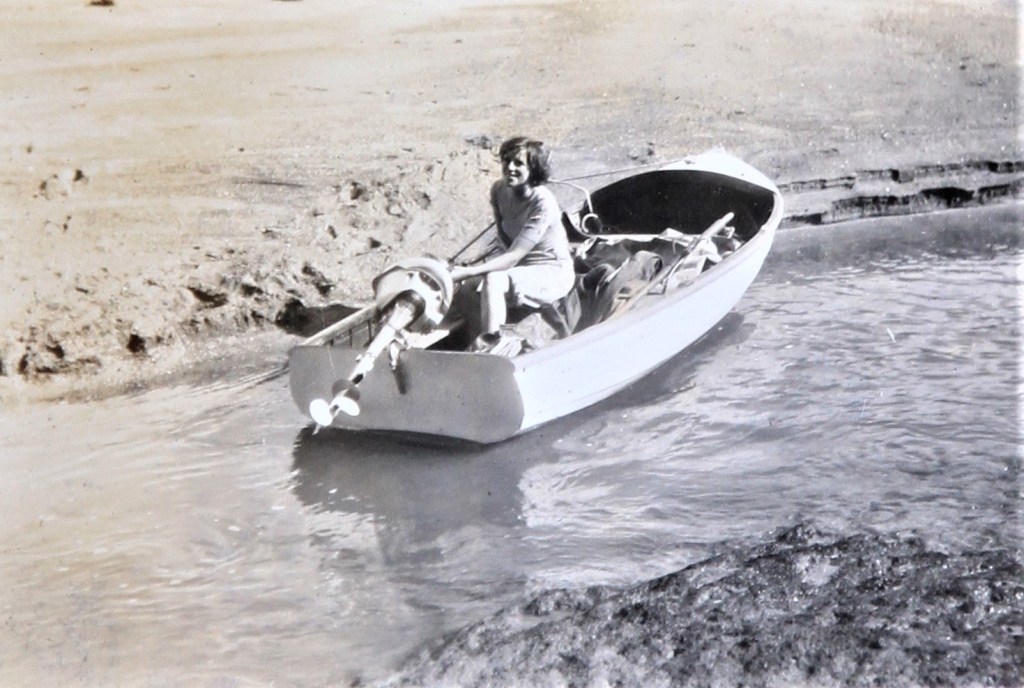
With some help from Dad’s uncle Ian Stewart, a BNZ manager in Gisborne, they were persuaded that they could fund a move to a larger sheep and beef property, but that they would have to increase their income for a time to help service a loan. So, the Pigs Head Road farm was sold, and Dad began a job as a loan assessor for the State Advances Corporation in Whangarei – travelling from Tapora in the south to Kaitaia in the north, visiting farms and assessing their capacity to service a loan. I had a very similar role covering the same territory when I left Lincoln in 1978. I loved the opportunity to explore every inch of Northland and I’m sure Dad felt the same.
During these travels, he discovered Honeymoon Valley, which runs north out of the Mangamuka Range through Peria to Taipa. He used to speak of it often as a wonderful piece of country and that he’d like to buy land there one day. He never did, but in the late 1970s, it became a popular spot for ‘hippies’ escaping the city to buy up land and set up communes, and many remain there today. They could clearly see the quality in the land that Dad had seen years before.
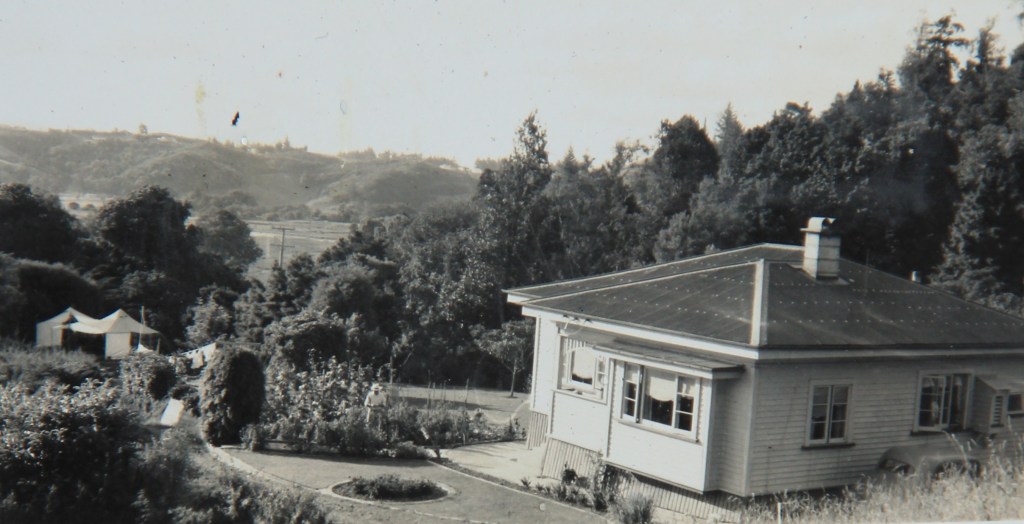
They rented a house at Waikaraka, on the road to Whangarei Heads just beyond Onerahi. I have no recollection of the Pigs Head Road farm and very little of this house, but one memory remains with me to this day. Apparently, a pig on the farm at Whakapara would always attack Dad or whoever went into his pen. This must have made quite an impression on us, as I recall John telling me hair-raising stories of wild pigs coming out of the bush next to the Waikaraka house and trying to attack us. I was convinced that I would be the first to be eaten, as my bed was against the wall by the bush. I recall pleading with Mum to let me swap beds with John, but she wouldn’t have it.
Pip (Philip Hunter) was born when we were in this house, on the 8th of October 1954. It was here too, that Mum recalls packing John, Kay and me into the car to go to town and getting to the Whangarei Basin before she realised that she had left Pip sound asleep in bed. Little wonder really, with four children under five, but she beat herself up about it for years. Thankfully, Pip was still sleeping when we got back.
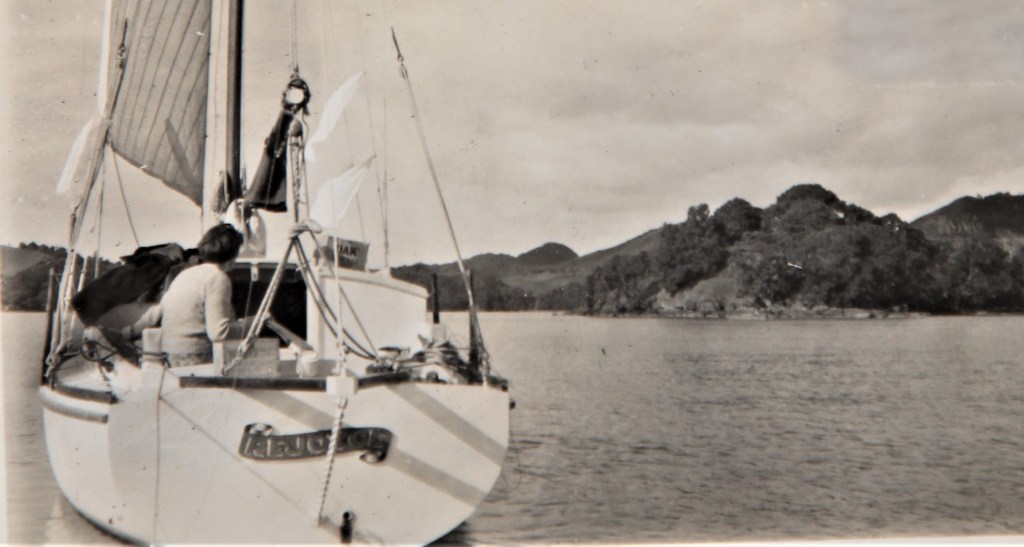
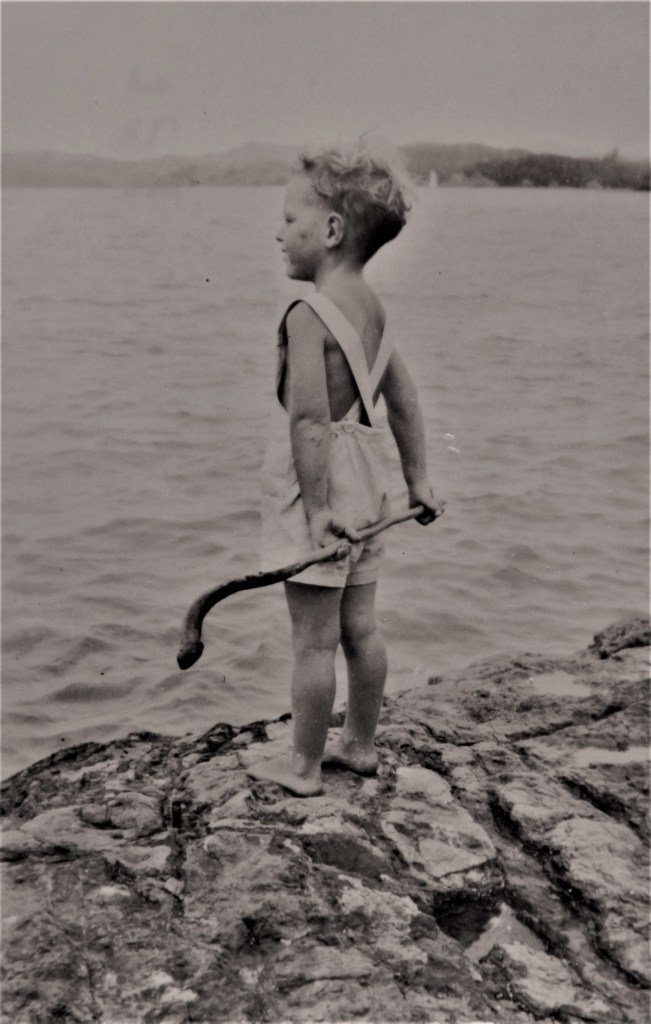

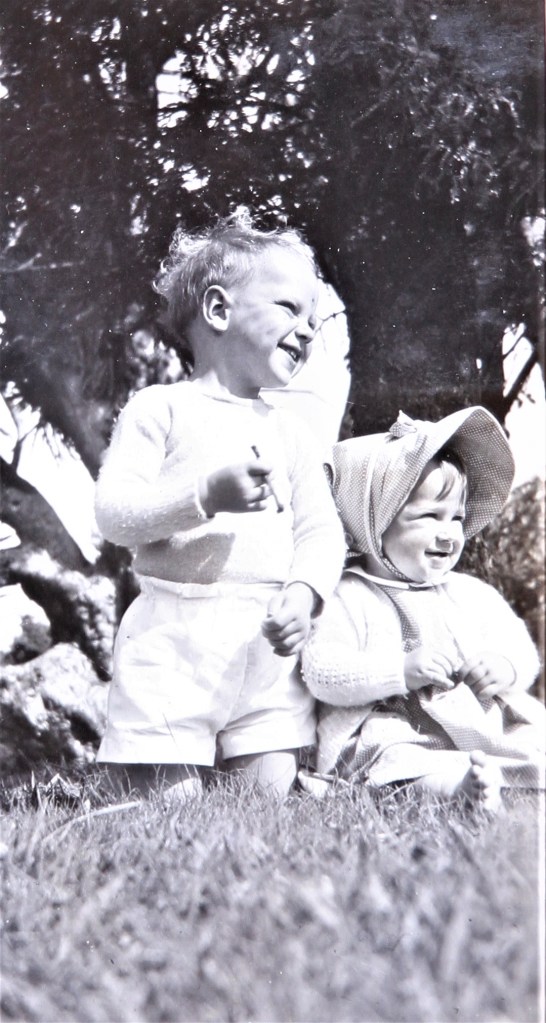
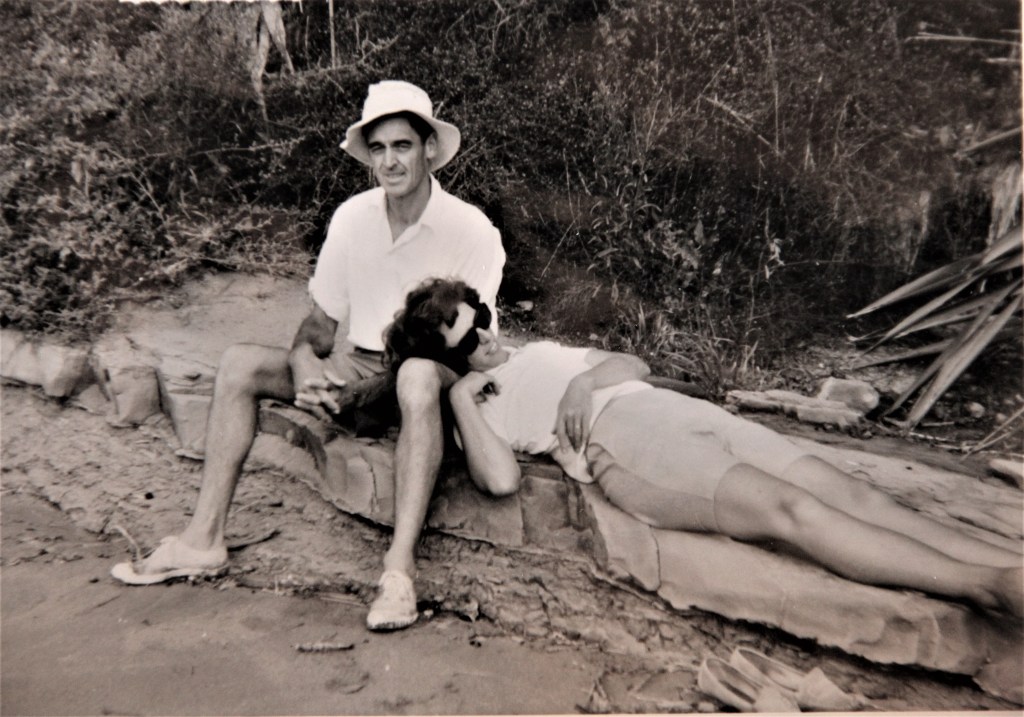
Boats still feature significantly in their lives while they are living here. Perhaps Venora did not prove big enough, but she was soon sold and replaced by Rejoyce, a 28-foot sloop. Mum recalls once tying up alongside the wharf in the Town Basin as they took on supplies. With four young children to contain, she put a leash on Kay and me and tied us to the mast so we wouldn’t fall overboard. As she was helping Dad load gear, she heard two old dowagers on the wharf, huffing in indignation about how appalling it was and that “…parenthood had gone to the dogs these days”.
Ladywell, Kaharoa
In 1955, they bought a 400-acre sheep and beef property at Kaharoa to the north of Rotorua (now 667 Kapukapu Road) which they called ‘Ladywell’ after the Murray land in Berwickshire. It was rolling hill country on Kaharoa ash soils, and with good rainfall and the right fertiliser, it could grow grass.
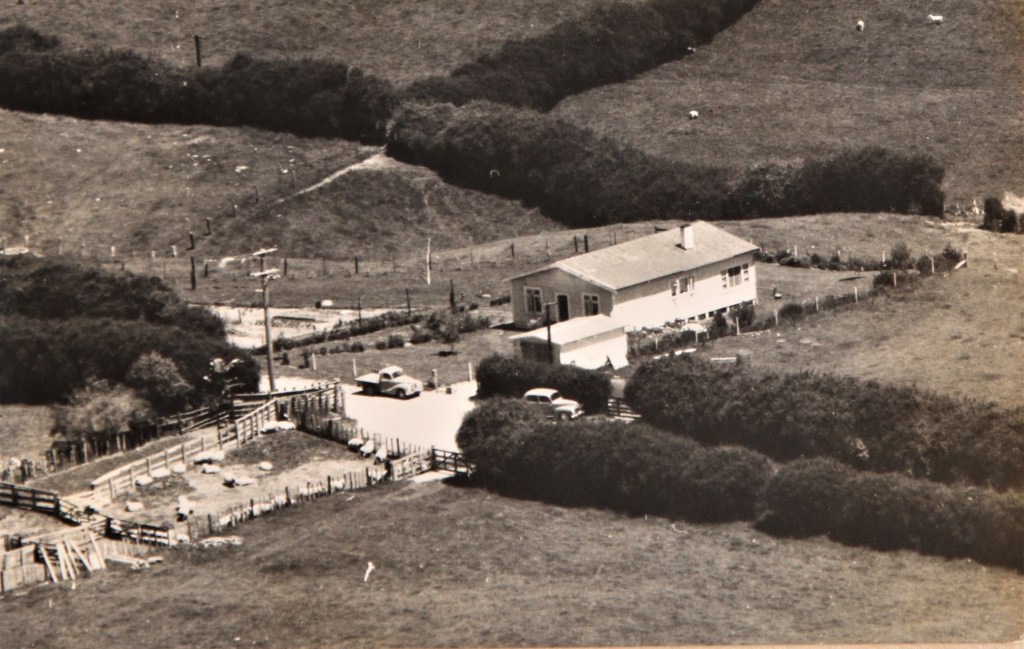
It backed onto the southern edge of the Mangorewa Gorge, a deep, almost vertical ravine that pig dogs would occasionally fall into but which we were never allowed near. Consequently, it remained a mysterious and enticing place for small children. There were signs everywhere of pre-European Maori occupation (Ngati Rangiwewehi, of Te Arawa), attesting to its natural productivity. There were kumara pits (death traps for young lambs), kainga sites, garden terraces and in the bush at the end of the road on Don and Flo Tombleson’s place (adjacent to where the Kaharoa Kokako Trust Reserve is today), I recall seeing a near complete carved waka that Don had found.
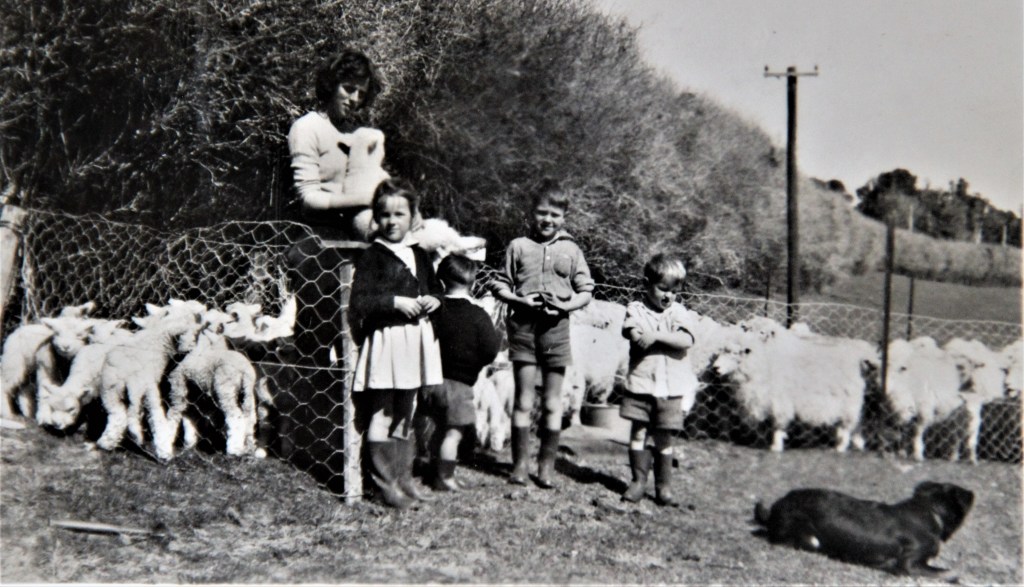
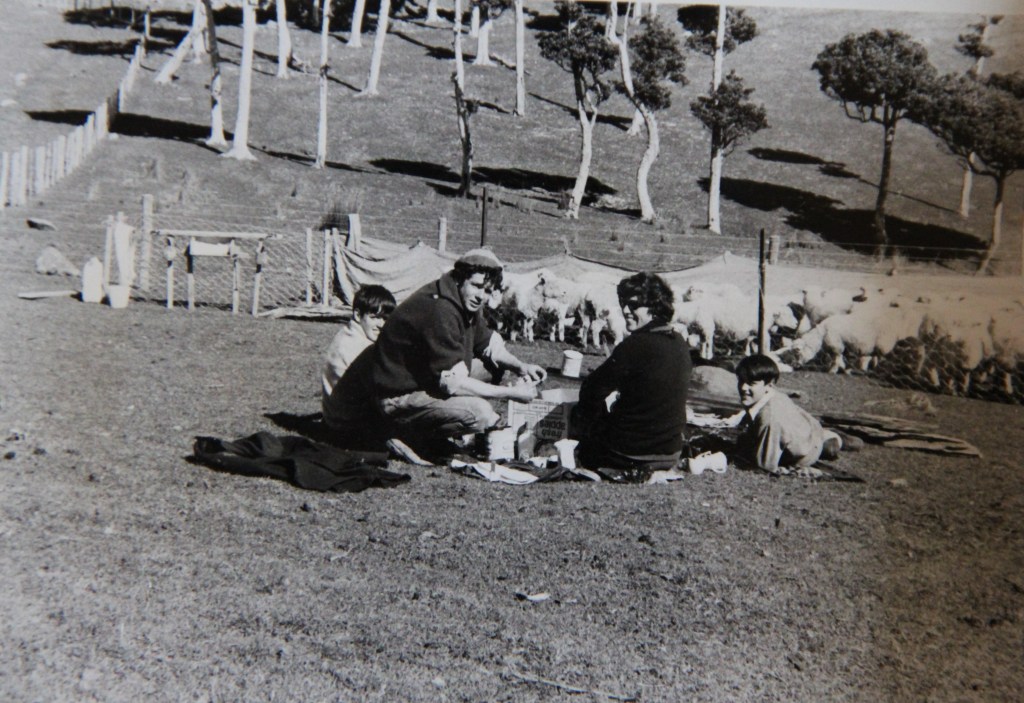
It was still in its early days of development out of bush and there was still much work to be done, but over time, it became a good but small productive unit, running just under 2,000 stock units. In our early days there, Dad spent a good deal of time ‘out the back’ as we called it – in the area adjacent to the Mangorewa Gorge, clearing bracken and sowing grass. We would often go out with Mum to help out and to take him some lunch. On one occasion I recall, we were all sitting down on a picnic rug eating lunch when Dad, who was trying to spread salt on his cold meat, suddenly leapt up and hurled the salt shaker off into the scrub, yelling after it, “damn useless thing!” (he never used more colourful expletives than that). I can, to this day, still see the arch that it described as it sailed off into the bush and can feel the shock of his sudden anger. Things were clearly not going well for JH that day!
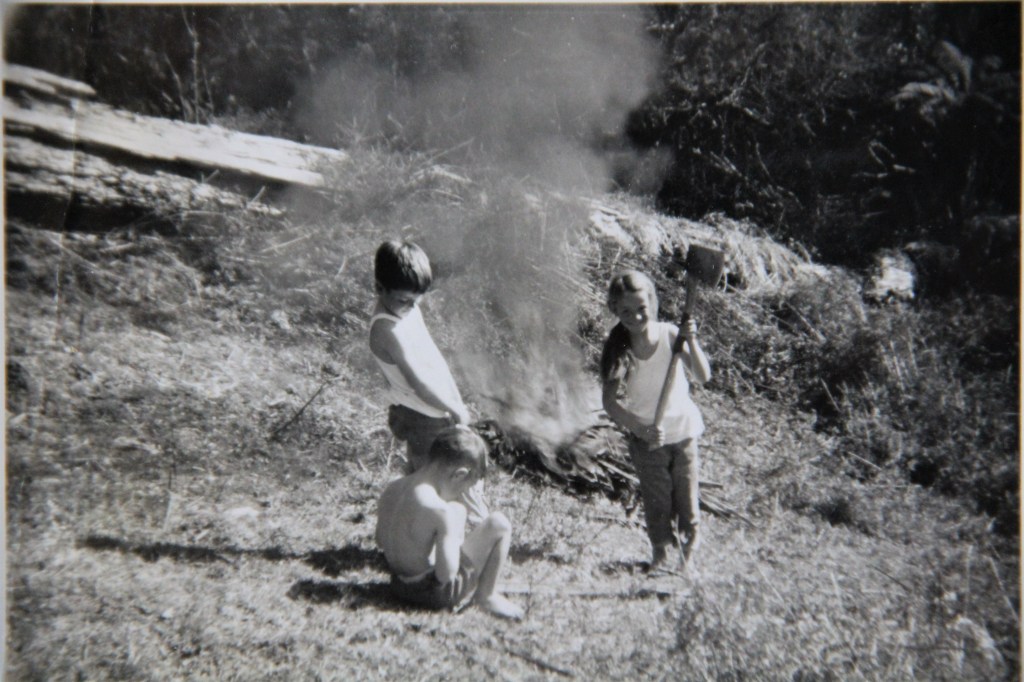
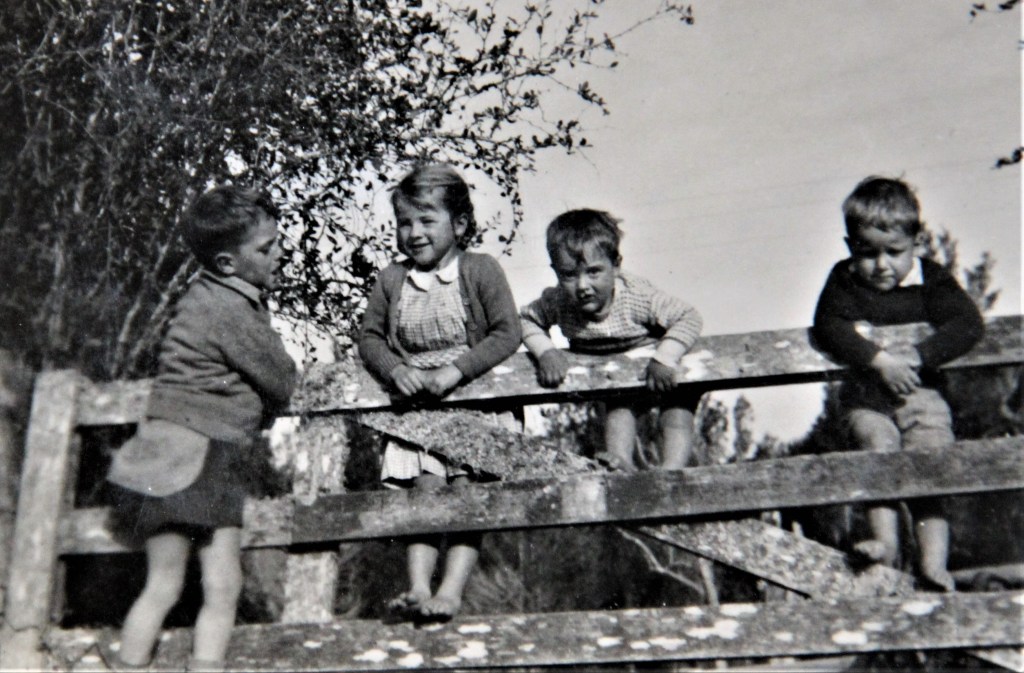
Finances must have been quite tight, but I don’t recall wanting for anything. We all started school here at the Kaharoa Primary—a one-room affair with between 15 and 20 students. We fell in love with farm life, and Kay, at least, fell in love with horses. We still had holidays away, and we proudly took on the badge of a country kid (to be distinguished from those City Slickers).
Despite tight finances, there were trips away: in the Land Rover, to Auckland to see Nan and Grandpa and to Wellington to see Gran and Uncle Ticka. Quite how we all fitted in, I have no idea. It was a short wheel-based series II model with next to no room on hard bench seats in the back, but somehow, we not only fitted in, but we were even able to sleep on long trips—at least I could.
On one such trip to Wellington, we stopped for the night somewhere around Taupo and as a special treat, we went out to dinner at the Orakei Hotel, a very fine and expensive establishment in those days. Mum and Dad must have been hugely apprehensive at the time because I recall getting endless lectures beforehand with threats of death, if we weren’t on our best behaviour. As it was, we all behaved impeccably, even Pip, who didn’t have a reputation for being the most compliant kid. For country bumkins with no experience of affluence, we were probably awed into submission.
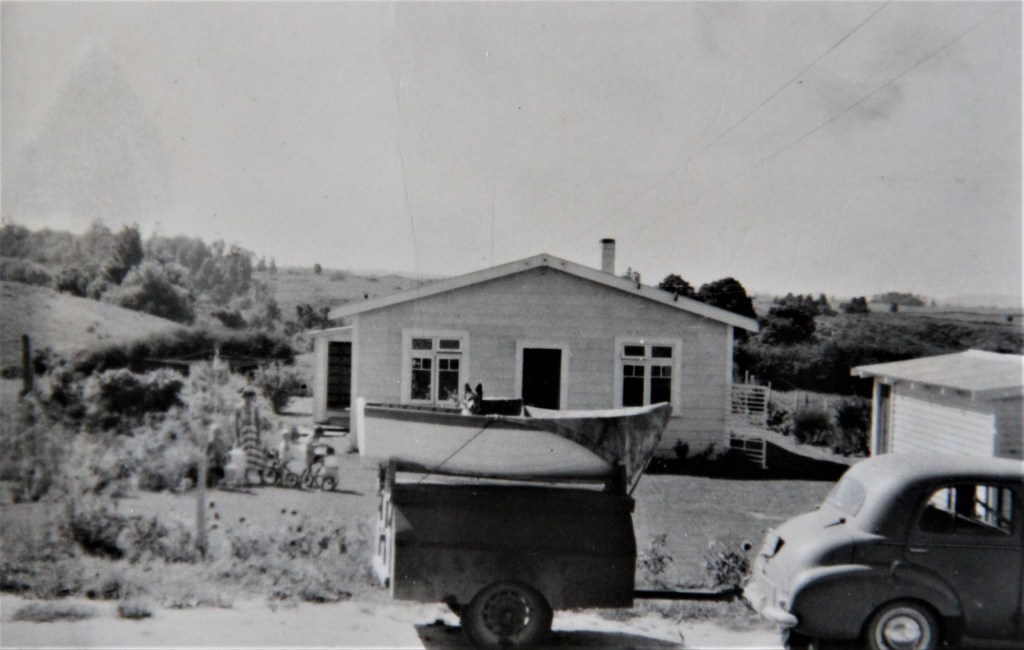
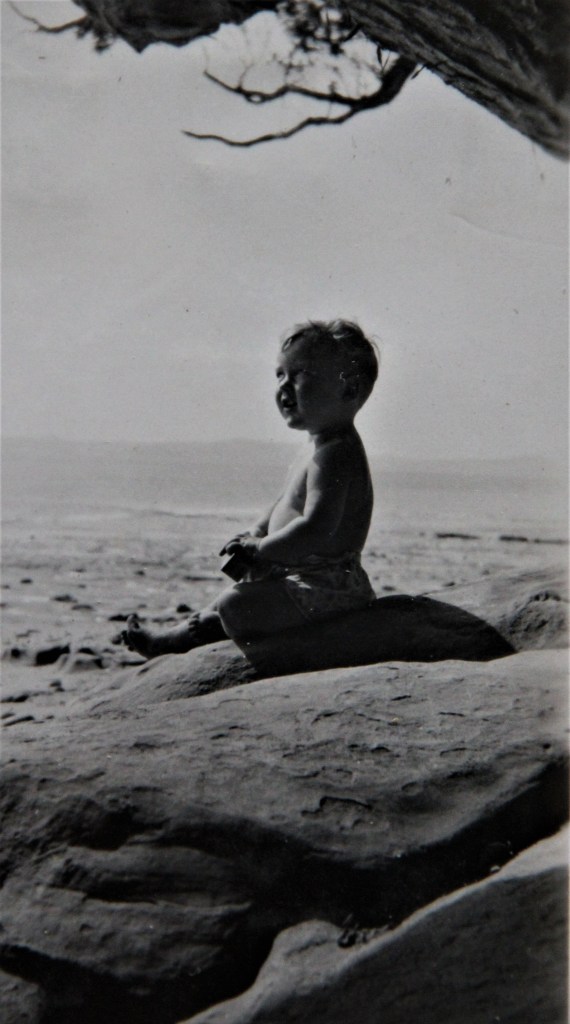
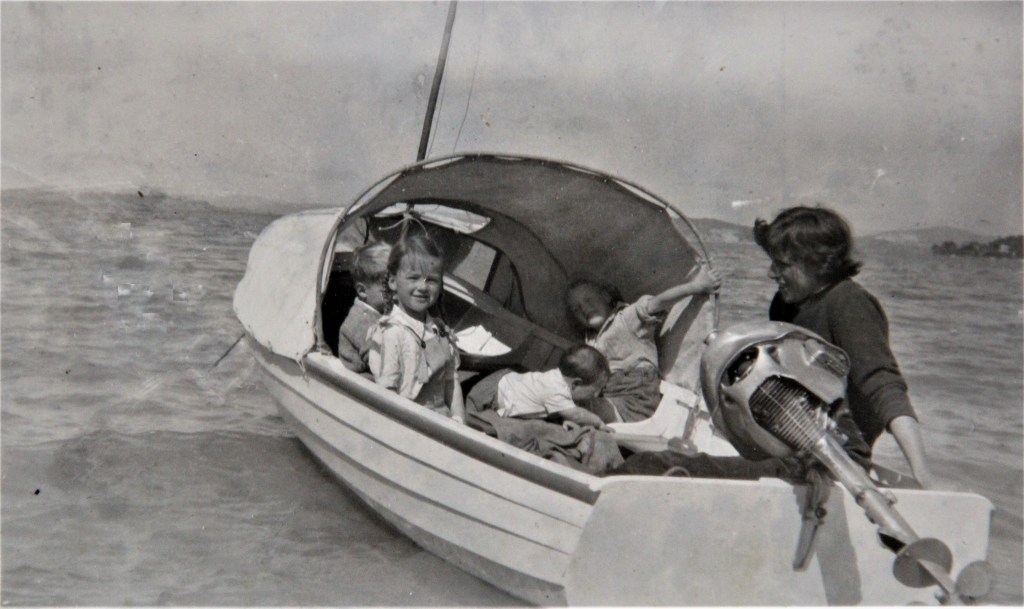
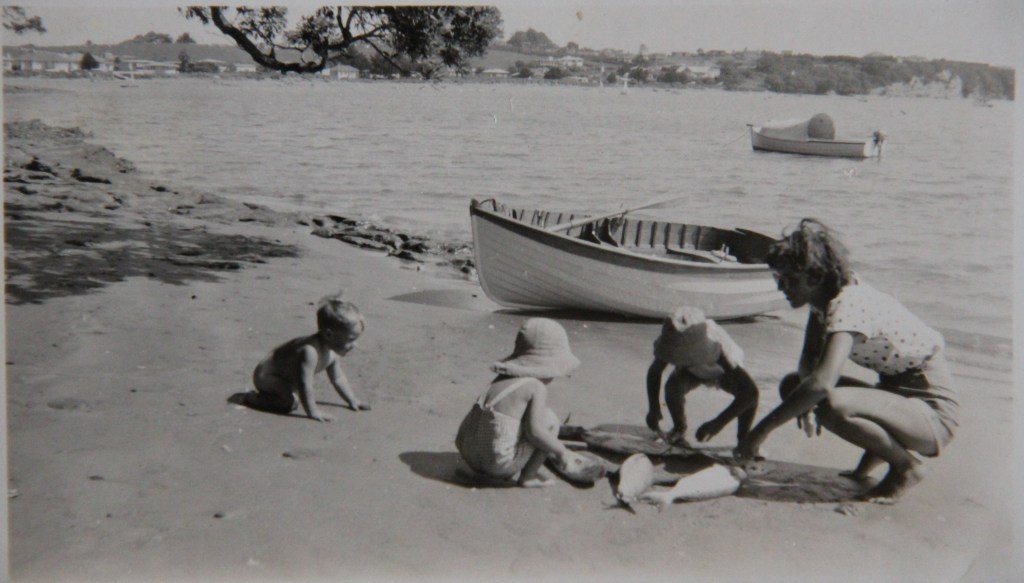
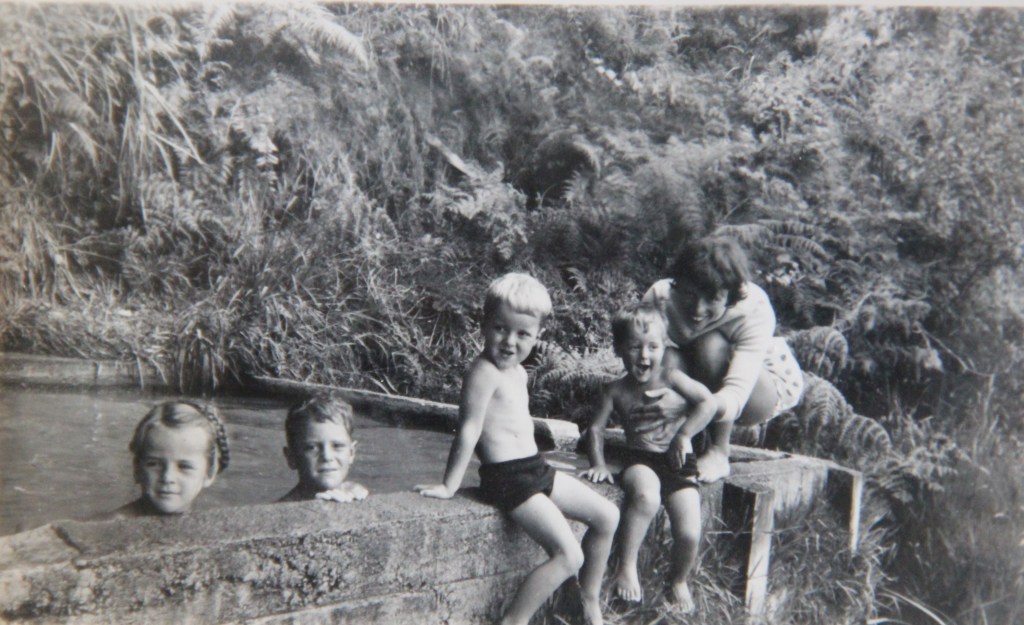
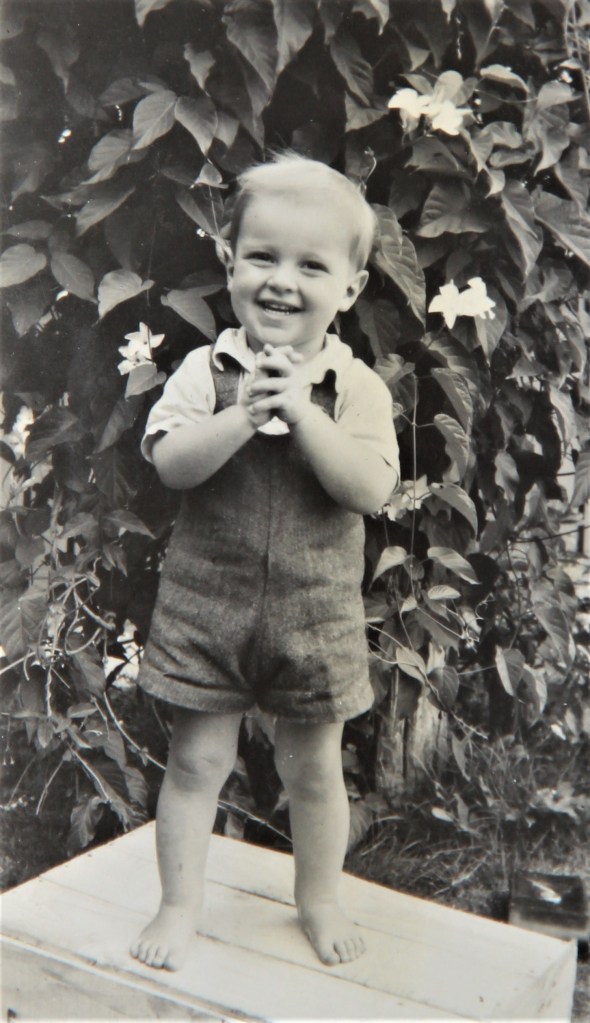
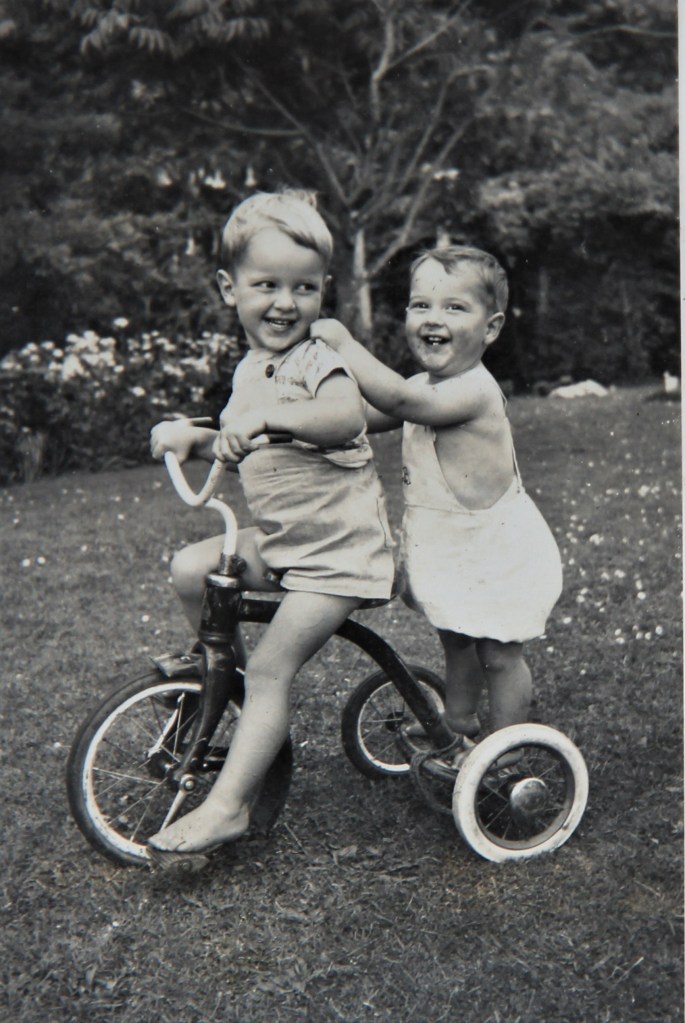



Despite the farm being 56kms inland from the sea, or perhaps because of that, Mum and Dad decided they needed a boat on which we could all go away for holidays. So, they had a 34-foot launch built in Tauranga that they call Chinook. I asked Mum years later why they had done this when finances were still very tight, and she said simply that they wanted us to experience life on the sea. And so we did – fishing trips off Mount Maunganui and Papamoa where we learned how to set and retrieve a setline from a heaving dinghy, trips to Tuhua (Mayor Island), Whitianga, the Hauraki Gulf, and Great Barrier Island. Endless hours exploring rocky shores on styrofoam paddle boards, swimming, snorkelling, fishing and discovering new places.
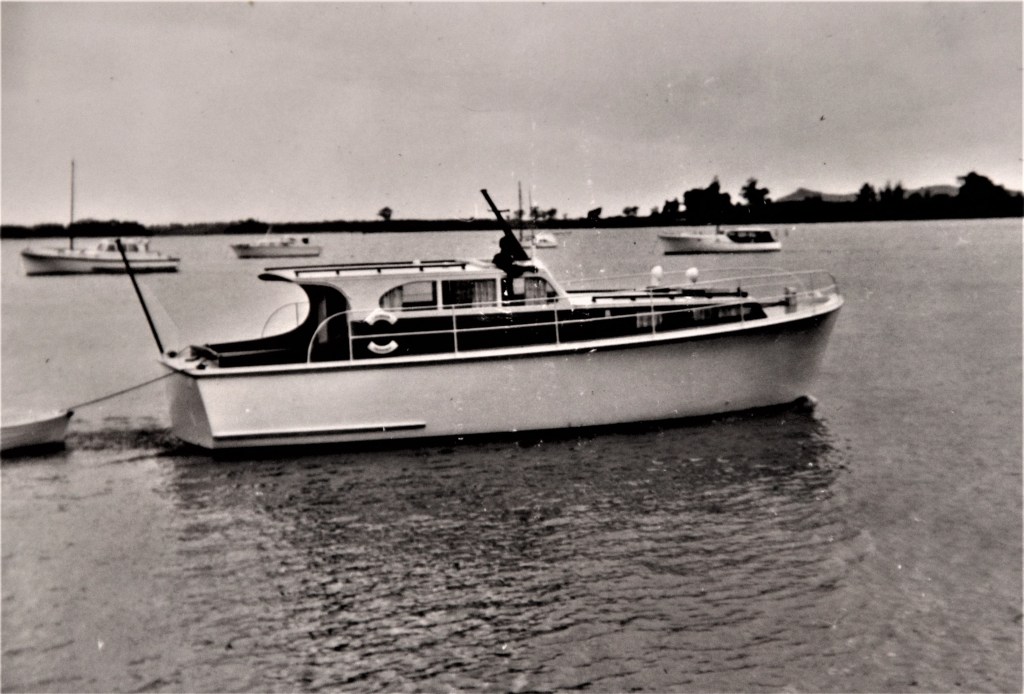
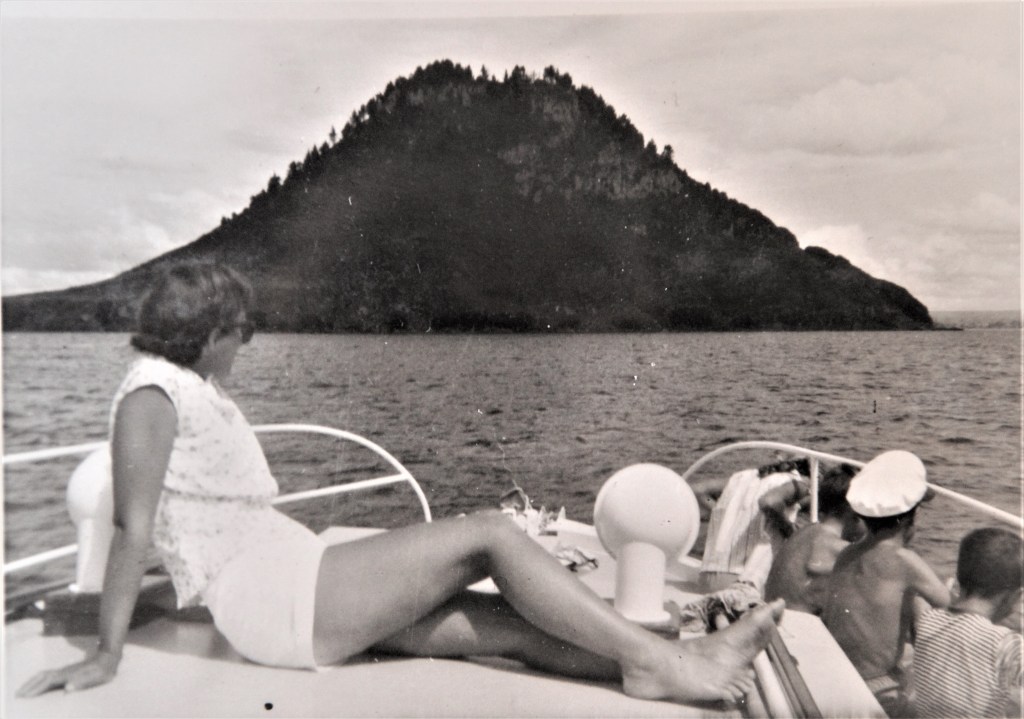
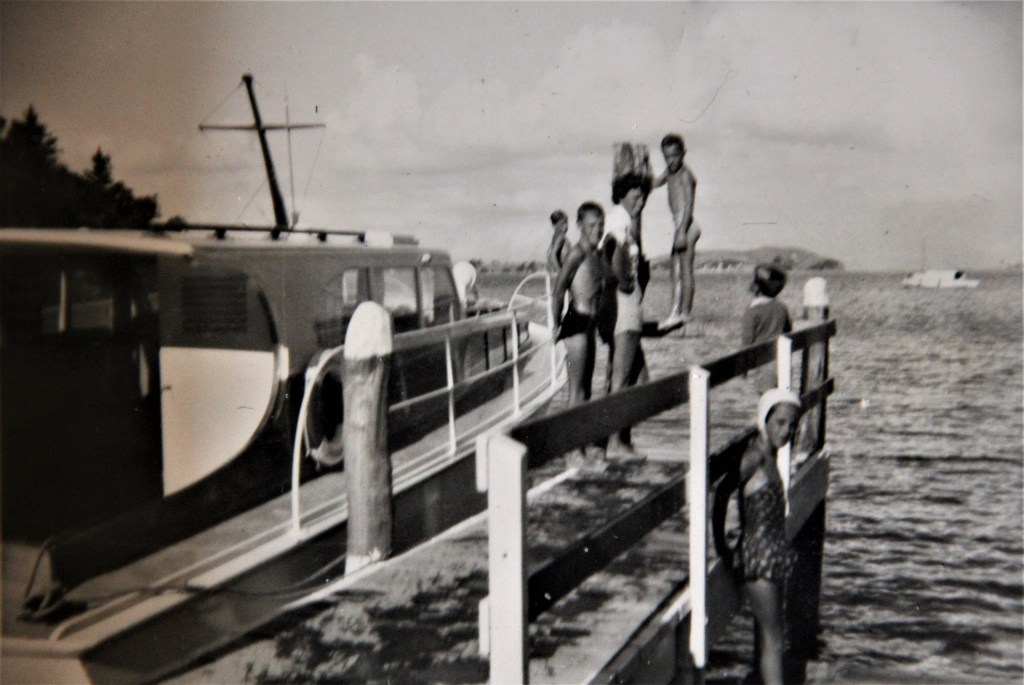
This was the beginnings of a life-long love of the sea for all of us. It was not all sunshine and pleasure though. We never looked forward to the trip to and from Tauranga on a long, winding metal road through the Mangorewa Gorge, with Dad smoking his roll-your-owns and ginger beer bottles exploding in the boot. There was also an occasion when Chinook broke a fuel line in the middle of the Colville Channel. There was a significant wind against the tide, and it was the only time I recall seeing Dad seasick as he made the repair, head down in the engine room. Needless to say, we were all sick.
Mum described these as happy years for her, but mostly a blur. She had four children under ten to care for and seemed to be out on the farm helping Dad often. I don’t recall her ever losing the plot or complaining. She simply got on with it and still found time for the little things that make a kid feel special. To be fair, parenting in those days was perhaps a little less demanding than it is today, at least her version – as it had to be. She was far from a helicopter parent and would let us wander the farm for hours on end unsupervised, riding horses, puddling in creeks, and swimming in flood water, among other things. There were rules about where we could and couldn’t go, but Mum and Dad trusted that we would adhere to them, and we mostly did. We come home in the evening breathlessly competing to tell them about our adventures.
Dad’s health was not great through these years with regular chest infections (likely not helped by his smoking habit), stomach ulcers, and some unspecified liver ailment, and I recall at least one bout in the Rotorua Hospital to remove stomach ulcers. Looking back, I suspect that much of this was anxiety related, but he felt it limited his ability to do justice to the farm and family. Despite the stint in hospital, the only real change I recall was his swapping cigarettes for Oddfellows while driving.
For a time, they employed a young Auckland lad named Richard Riddler to help on the farm, but it was not big enough to sustain a worker. There was some talk of buying the neighbour’s farm owned by a widow, Mrs Florey. This would have nearly doubled the effective area and made it possible to sustain a farm worker. Her husband Jack (who Dad had known from his Massey days) had died while we were living there, so perhaps Dad had hoped she might want to sell, but she was not of a mind to move. I recall Dad railing about her ‘mining’ the land and letting it go back to brown top and bracken. Ironically, the land was eventually sold and was brought back to good production while Ladywell was left to revert over thirty years by a subsequent owner.
By 1962, they had decided to sell and find a new, hopefully more profitable venture. Many might have chosen to sell and buy a bigger farm. This would have meant more debt, but it would have been possible then. As it happened, they decided to go north to Warkworth and buy a shoe store.
I was never able to get a convincing explanation from either Mum or Dad on why they did this, but it was to fundamentally change the direction of their lives and those of their children, in my view, for the better.
Dad’s health was still not good, so it is possible that he felt the need to find a venture that Mum could manage on her own while bringing up children, should he continue to be debilitated or even die. A shoe store would fit that need. It is also possible that he’d decided – or they’d decided – that they were no longer enamoured with the farming life, that there were opportunities out there that would better provide for them and their children. The truth was probably a mix of these things and an aversion to lumbering themselves with massive debt that would have tied them to their land for years. However, what this decision reflected was Dad’s tendency to make quite radical shifts in thinking.
Waiti Station, Waiheke
This was not, however, the end of their farming career. After five years of running a shoe store (mostly Mum) and longline fishing out of Kawau Bay (Dad), something attracted them back to the land. Perhaps it was the place, or maybe it was simply that they’d never really thought they’d done with farming and had always harboured a dream of getting back to it. Whatever the case, they took on a management job on Waiti Station at the eastern end of Waiheke Island, which now forms the eastern portion of Man-O-War Station. After a short stint in a rental just up from the Matiatia Wharf, they moved onto the farm in the middle of 1967.
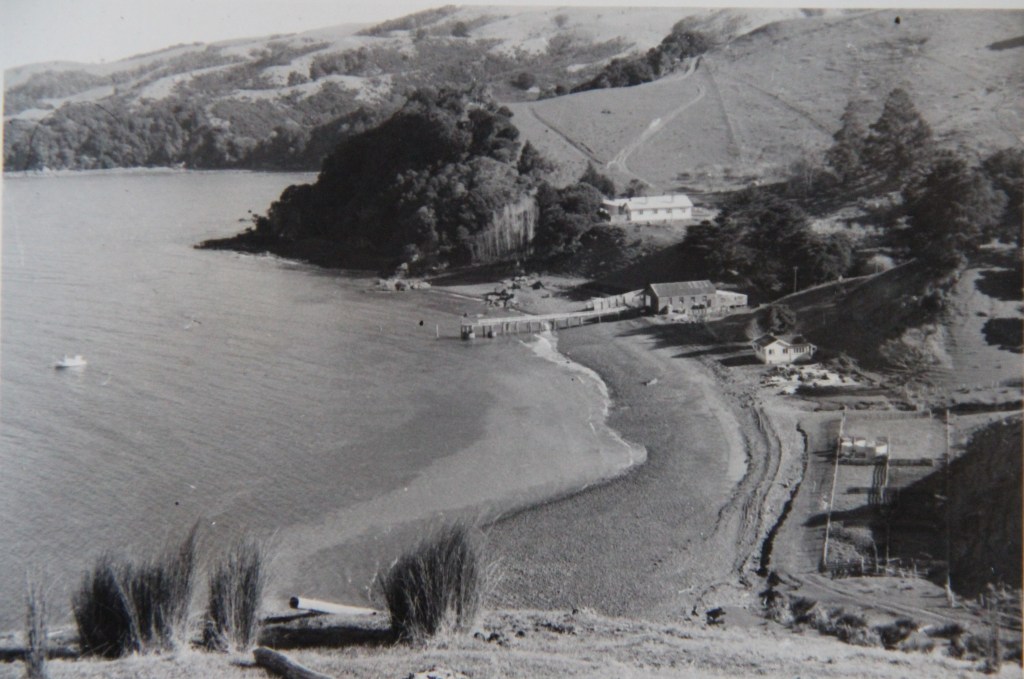
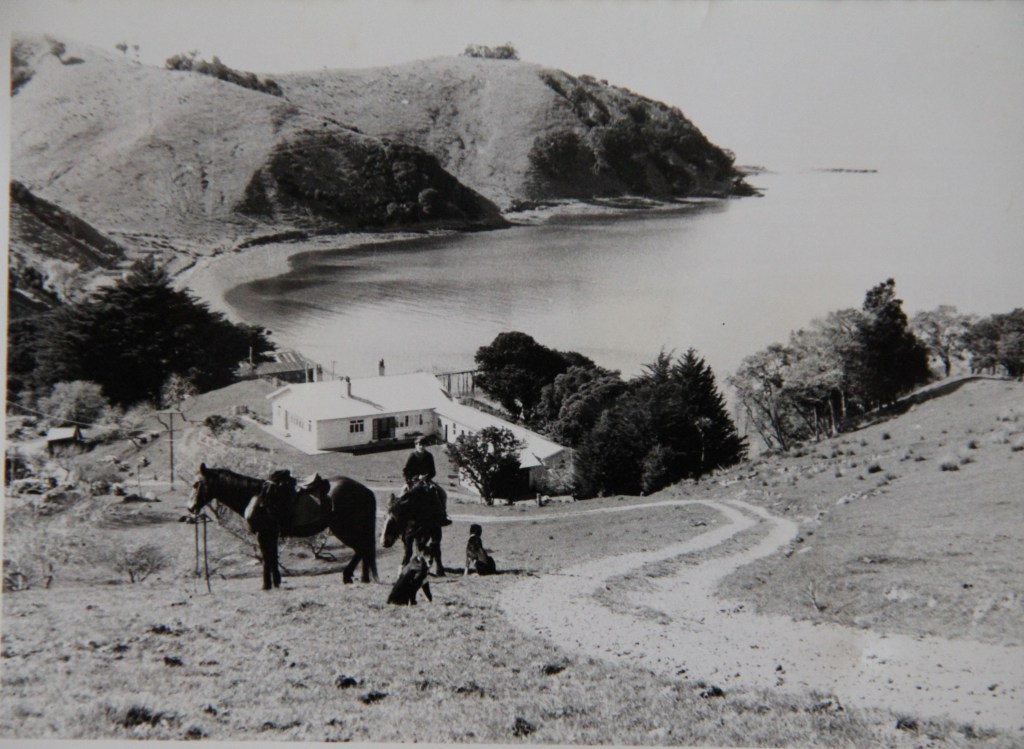
This 1,800 acre moderate to steep hill country farm took in all the land east of a line between the eastern ends of Hook’s and Man-o-War Bays, including Stoney Batter. It ran a motley flock of Marino/Romney cross ewes and an Angus breeding herd. It had no road access to the island’s western end, fencing was limited, and it hadn’t seen fertiliser for many years. It was owned by an Auckland gynaecologist who knew nothing about farming but was prepared to accept Dad’s advice on what was needed to make it at least pay its way if not profitable.
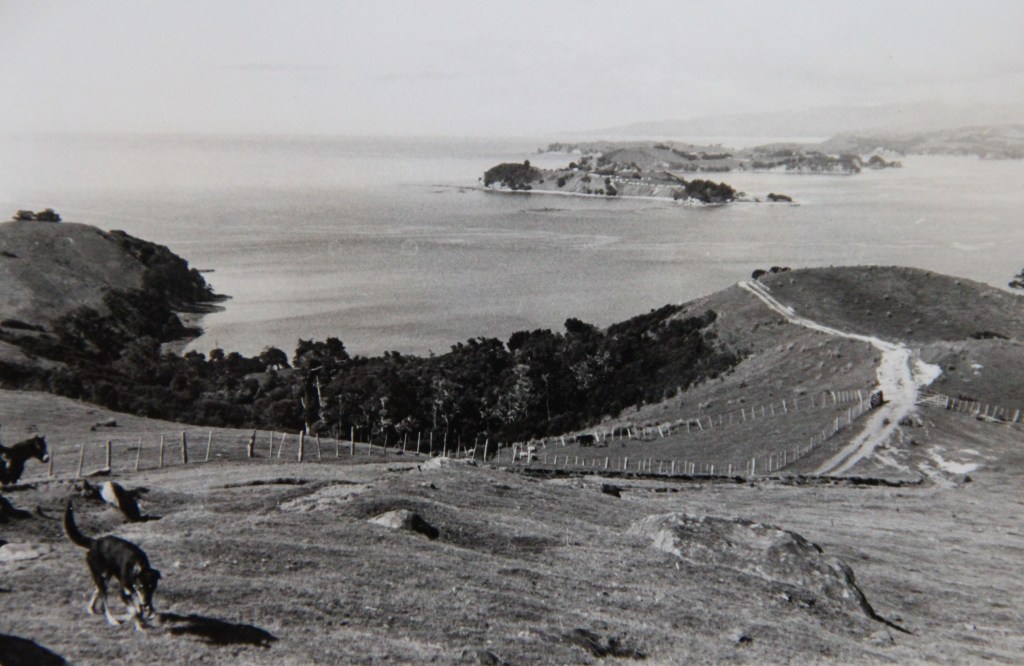
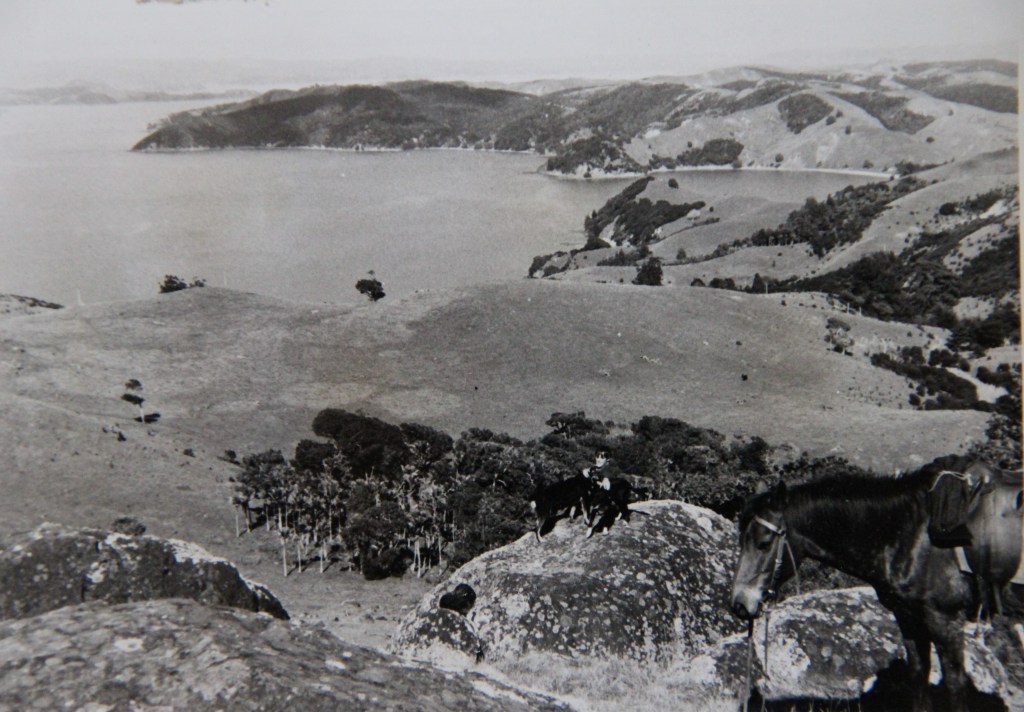
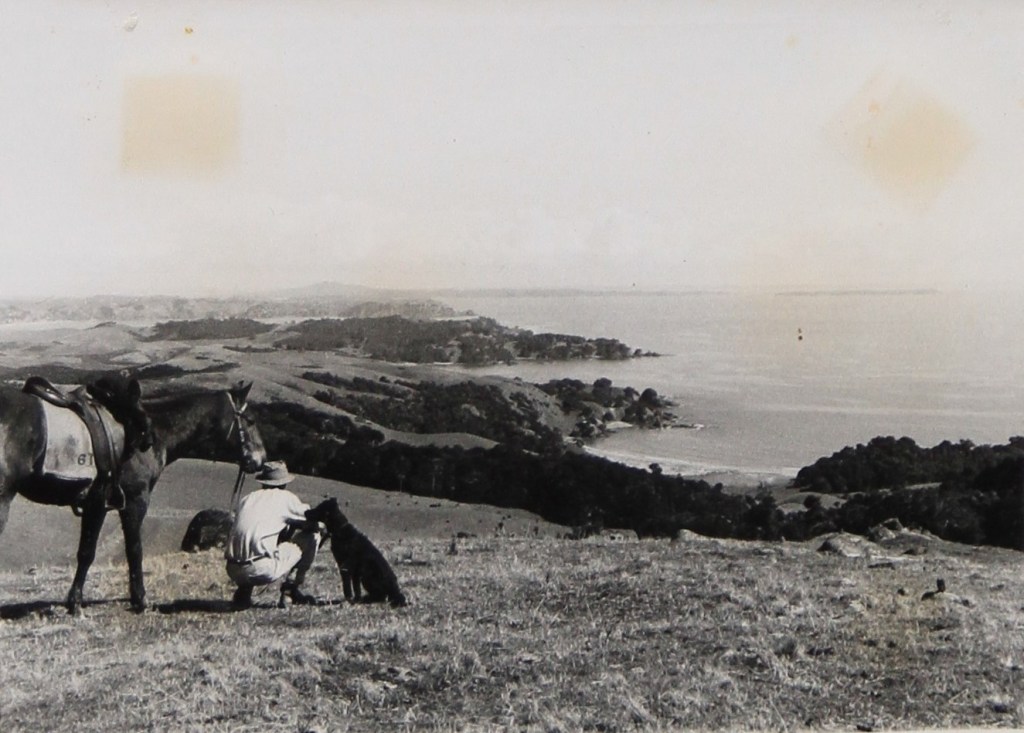
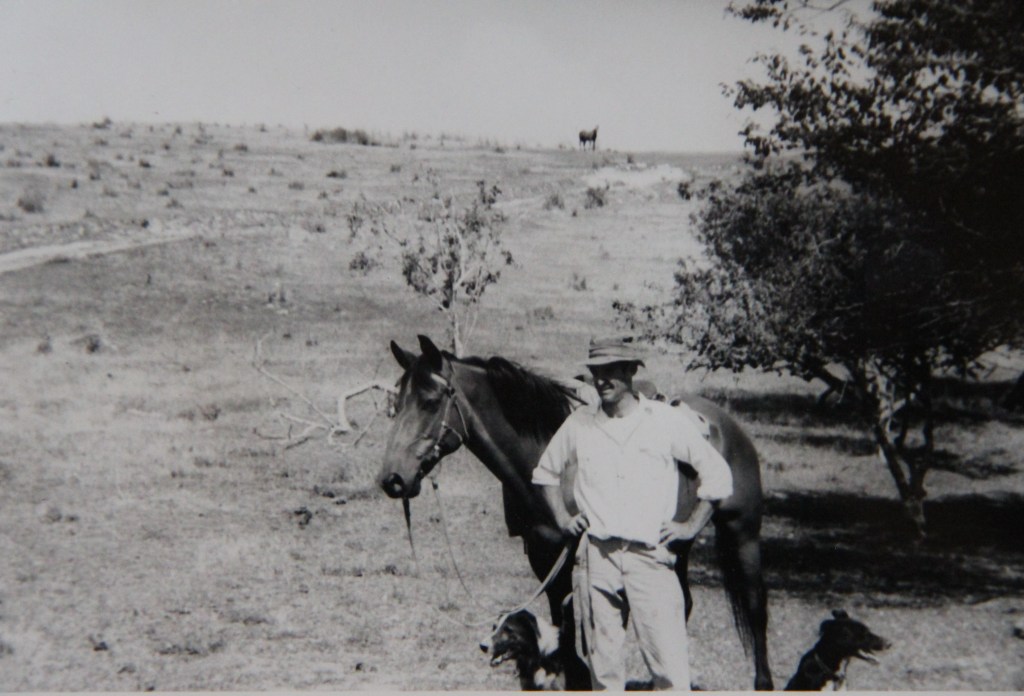

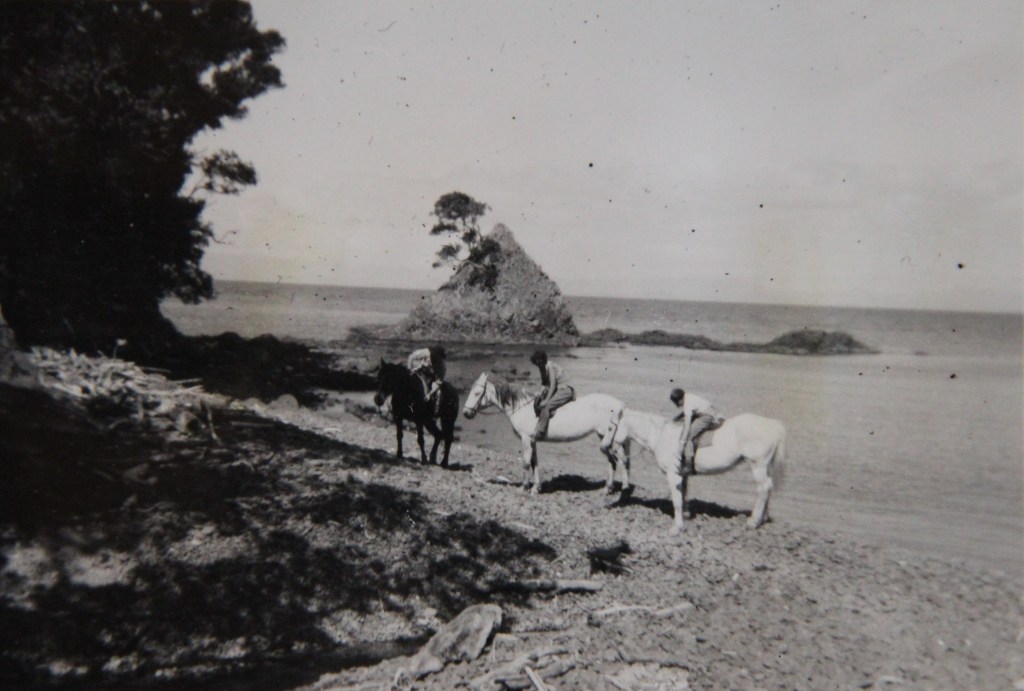
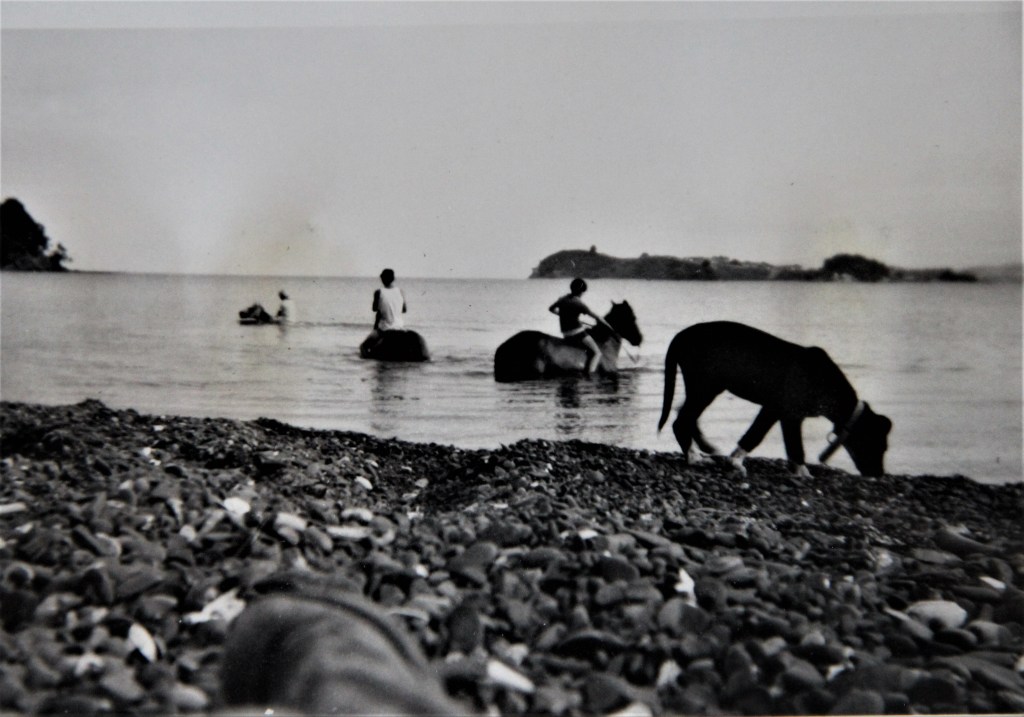
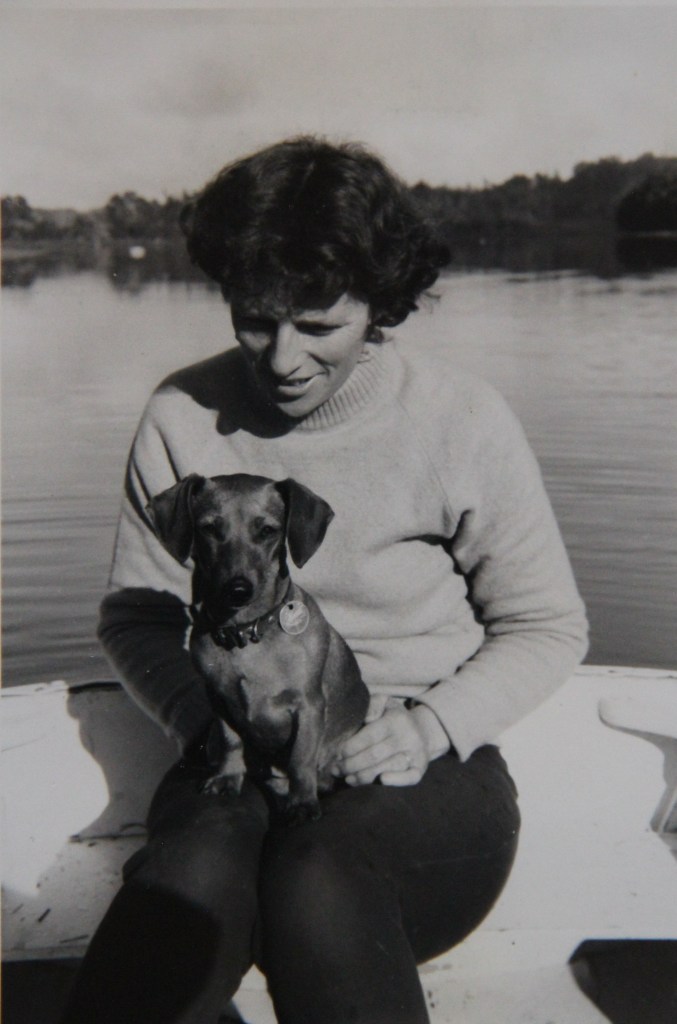
For Mum, this was a paradise. Farming life right on the water, a magnificent piece of coastline, and acres of land to wander over. Groceries were delivered by the hydrofoil ferry to the adjacent Pakatoa Island (in those days, a luxury resort), and the city was only 10 minutes away by SeaBee Air amphibian planes if you were really in a hurry. Otherwise, it was a 3-hour trip on the farm boat or an hour on the hydrofoil from Pakatoa. Fish were caught just off the beach on demand (something that would be impossible today), and the resident dairy cow supplied all the milk and cream they needed.
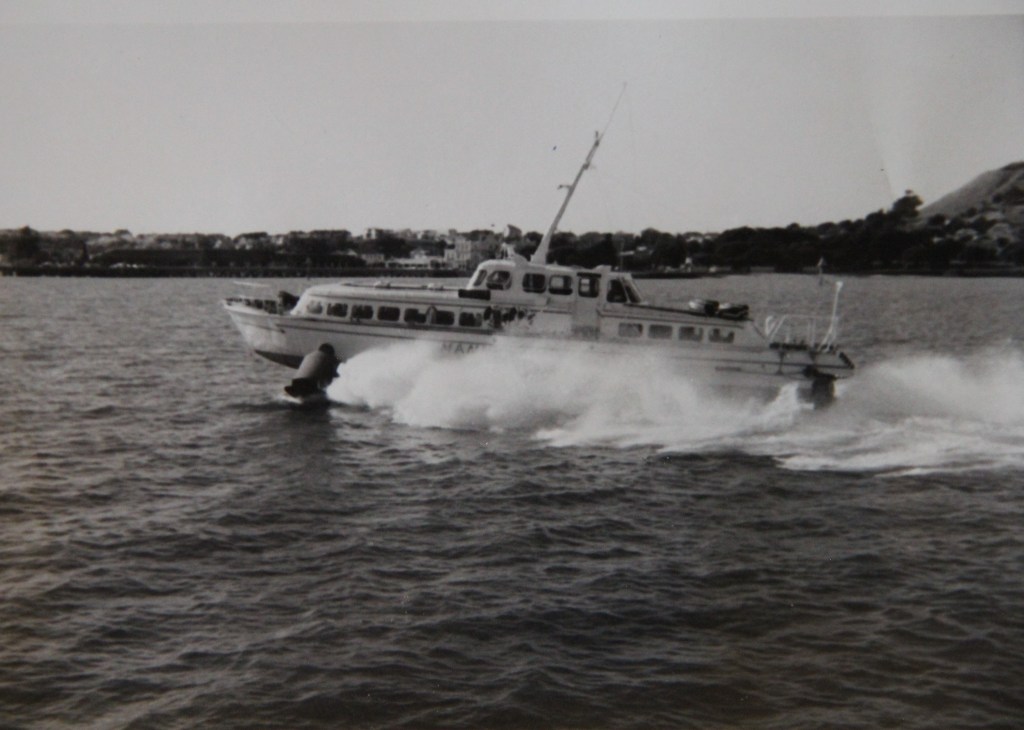

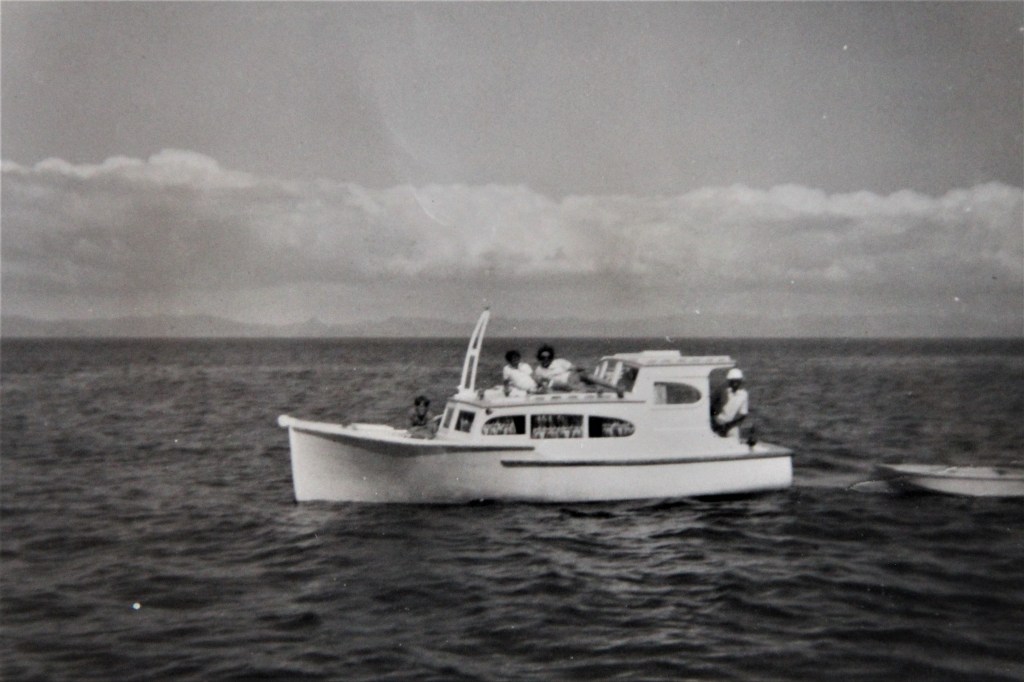
Dad, too, loved the place and seemed to enjoy the challenge of redevelopment, at least while the owner was willing to keep the purse strings loose. As Dad said, though, it was a hell of a place to farm—much drier than the surrounding Auckland region, plagued with rabbits, steep coastal cliffs, inadequate fencing, and endless problems arising from its relative inaccessibility, particularly for heavy supplies and livestock.
It was also paradise for a young teenager, at least for me, for all the reasons it was for Mum. We were only ever there during holidays, but it seemed like forever. John had finished school at the end of 1966 and was working for Dalgety’s in Whangarei; Kay remained at Mahurangi College for her last year at school, living at Matakana with Richard and Margaret; and Pip and I were at school at St. Kent’s.
Mum and Dad still managed to get to school events and take us out on the occasional Sunday leave despite living at the remote end of Waiheke (we were only allowed out every second Sunday). I recall being vaguely embarrassed at being picked up and dropped off at school in the old Series II Land Rover while our friends were being delivered in shiny new Mercedes and BMWs. And Mum and Dad walking up in their finery, from the farm boat in the Tamaki River to the parents’ ball. A child with whit might have talked it up as a point of pride, but sadly, I was lacking.
School holidays were spent helping on the farm – mustering, drenching and dipping sheep, shearing, and docking – and doing what kids do in a place like that – fishing, puddling about in boats, riding horses, and shooting rabbits; and of course, exploring the myriad tunnels on Stoney Batter. On one occasion John and I were left to move a mob of sheep while the rest of the family went off to town in the farm boat. I was on horseback and had Toss with me, my quite useless but utterly devoted heading dog (she used to swim out and try to rescue me when I was swimming), and a huntaway called Cam. As I was riding above a steep bluff, the girth broke. Without a surcingle, one little buck from the horse, and both me and the saddle were off over the bluff, a fall which broke my femur. John was nowhere about, and I couldn’t raise him with a yell. As I sat and waited, the horse came back to check me out and was promptly set on by Toss who knew instantly that I was wounded. A small herd of curious heifers came up, as they do, to see what was going on, and they got similar treatment from Toss. Thankfully, Cam, who felt no protective urge, got bored and ran off to find some other action. He eventually found John, who realised that something was amiss. Later, I recall watching the two St. John medics struggle up the hill from the beach below and their SeaBee Air amphibian, and hearing them grumble about not being assigned a helicopter. As they approached me, Toss let loose on them like a banshee and wouldn’t let them near me.
Despite the relative isolation, there was a regular stream of visitors, so it was far from a lonely place. I particularly recall visits from Gran and Ticka and Marg Falconer from Clachanburn. There were also two friends of Kay’s who used to ride their horses down from the western end of Waiheke and stay for a time. This was interesting for a young teenager with a developing interest in girls. I took a particular shine to one who I eventually asked to go to the St. Kent’s ball with me. However, I didn’t have the self-confidence necessary to believe that she might also be interested in me, and I recall once, Dad getting frustrated with me after she once visited, saying “God, you are so obtuse!!”.

Boats were necessary on the island, but these were functional things that didn’t sail. So, in 1969 while they were still on Waiti, they took the first step in their plans to do a blue water cruise. They bought a yacht – Cecilene. She was moored down below the house at Waiti for the next two years as Dad used spare moments from the farm to fit her out. For Mum, this was priceless. She had a life on a farm in one of the loveliest spots in the Hauraki Gulf and she had a yacht right on hand that they could sneak away on for a few days periodically.
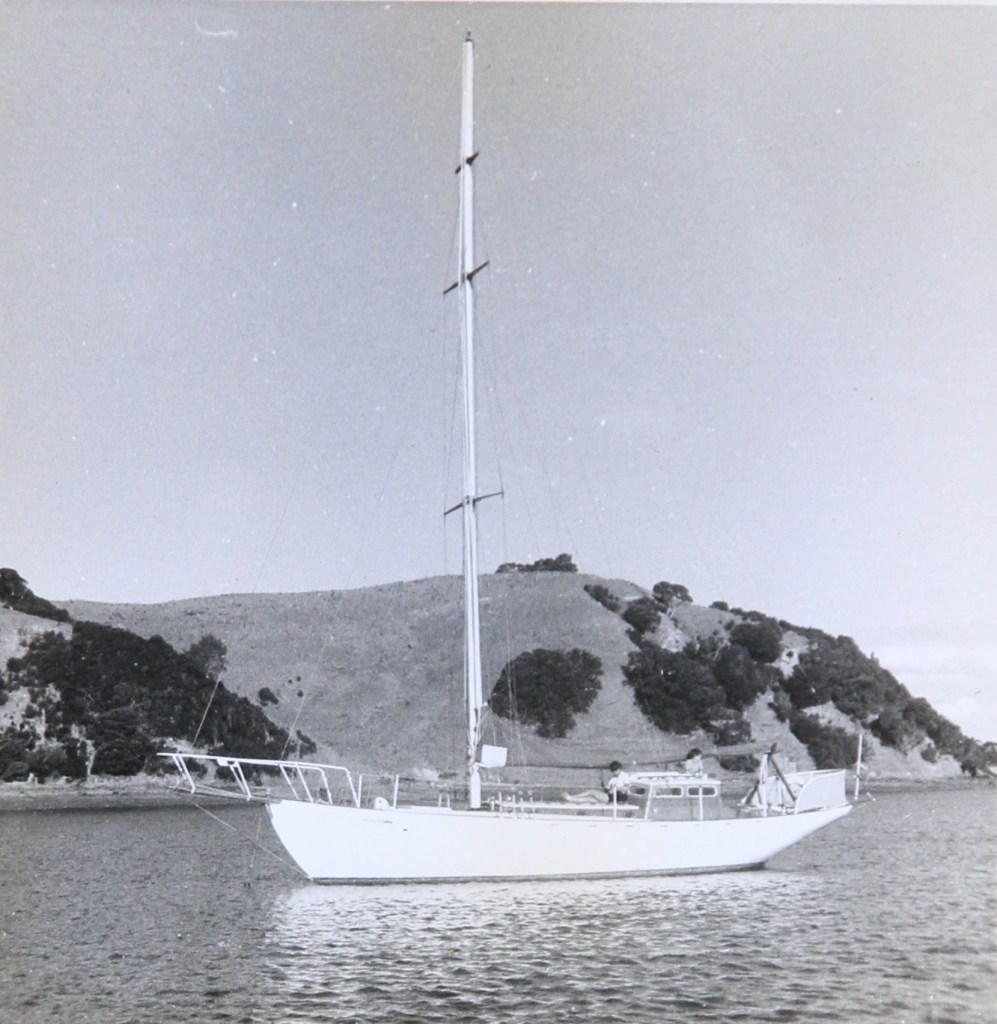
They had been discussing the possibility of a blue water cruise for some years. They had both consumed books on ocean cruising – Joshua Slocum, Eric and Susan Hiscock, Miles and Beryl Smeeton, Peter Pye and Bernard Moitessier – so they thought that if they were to do it, now was likely to be the best time. Despite having grown up as far away from the sea as you can get in New Zealand, Mum was quite determined, and I suspect her encouragement ultimately galvanised Dad into action. So, when they bought a boat capable of doing the job, it set in train an inexorable move away from farming for them both.
 John and Beverly Murray
Leave a comment