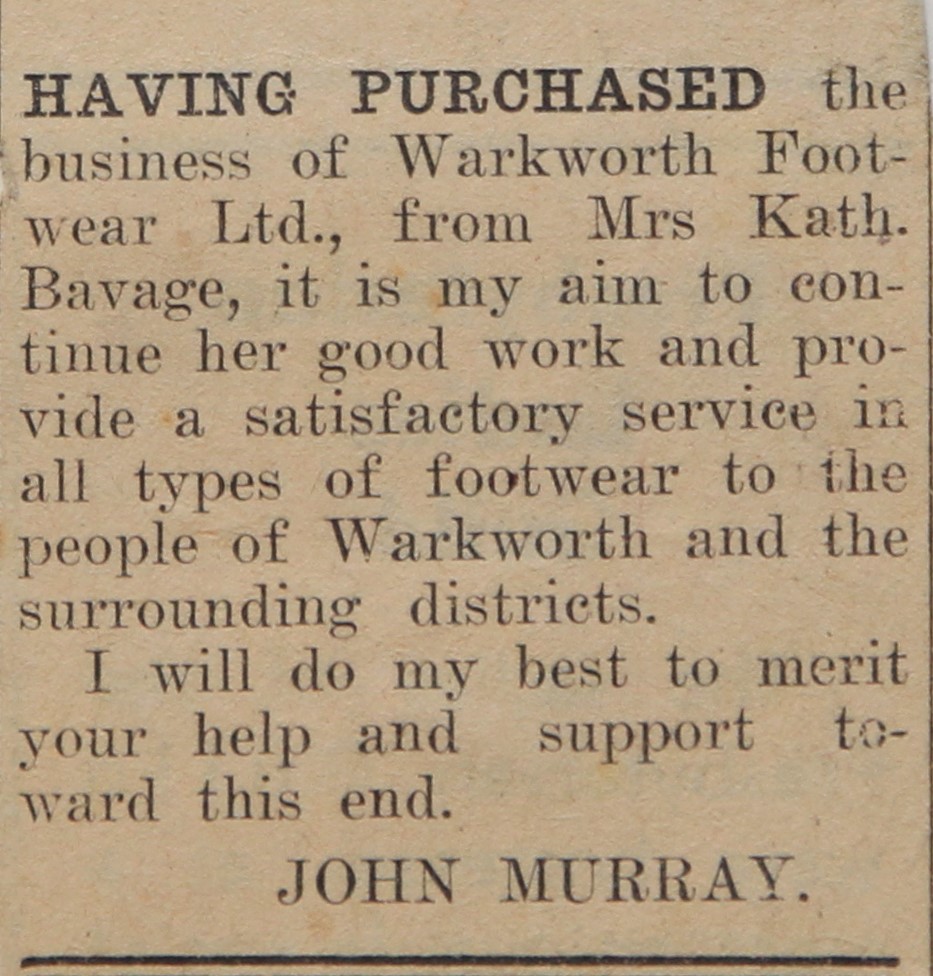
The purchase of a shoe store in 1962 seemed even to a nine-year-old, a most unlikely thing for Mum and Dad to do. It must also have surprised many others who knew them, but they embraced it with apparent enthusiasm. They were soon shoeing the feet of Warkworth’s populace and entertaining shoe peddlers who came by regularly to sell them the next new fashion line.
Hours were reasonable as there was no weekend trading in those days, although there were late night Fridays. On these nights, we’d go downtown from school, hang out with friends and sit with them on the floor of the local appliance shop watching Hogan’s Heroes on TV while eating fish and chips for dinner. There being no TV at home, this was quite a treat.
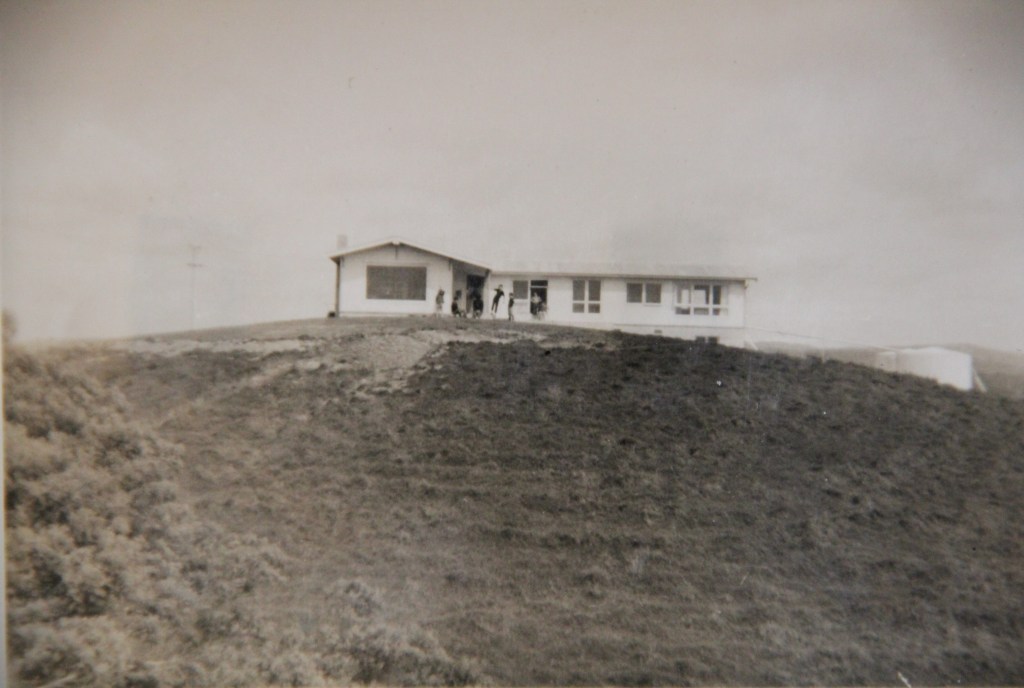
In addition to buying the shoe store in 1962, they purchased ten acres of bare land on the hill between Algies Bay and Snell’s Beach on the coast east of Warkworth. They had a new Lockwood home built right on top of the hill. It had magnificent views over Kawau Bay, but it was exposed to every wind that blew and could be seen as a scar on the landscape for many years. Mum recalls insisting on it being built on the top, but she was the one who coined the name ‘Saw Thumb Point’. It was stocked with Kay’s horses and our pet lambs from Kaharoa (we would never allow them to be sent to the ’works’), and it was soon planted with many trees, many of which are still thriving today.
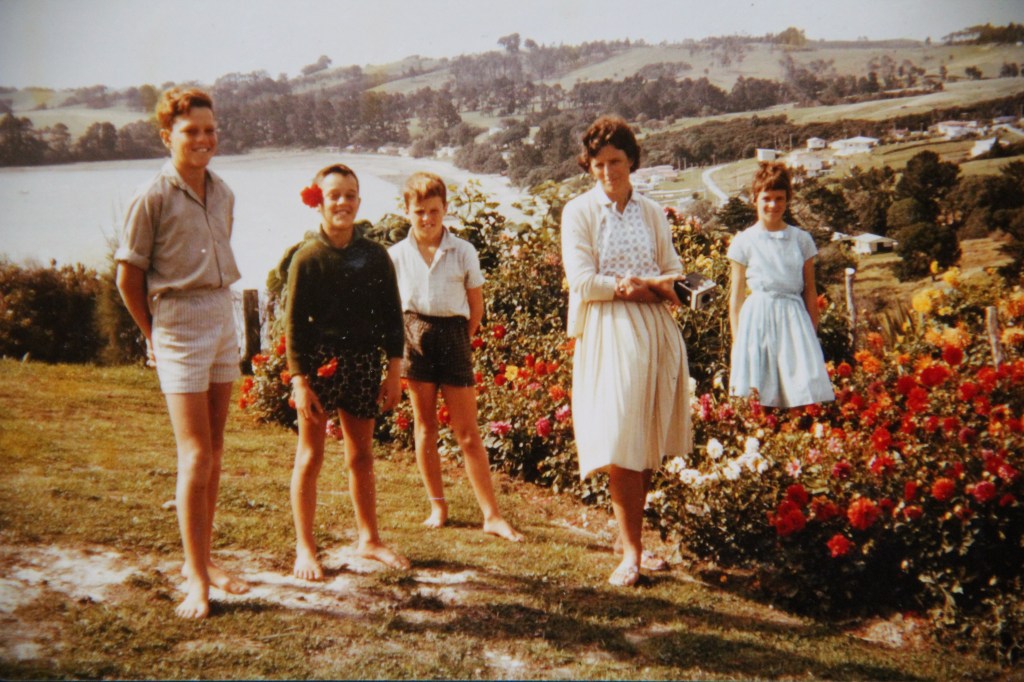
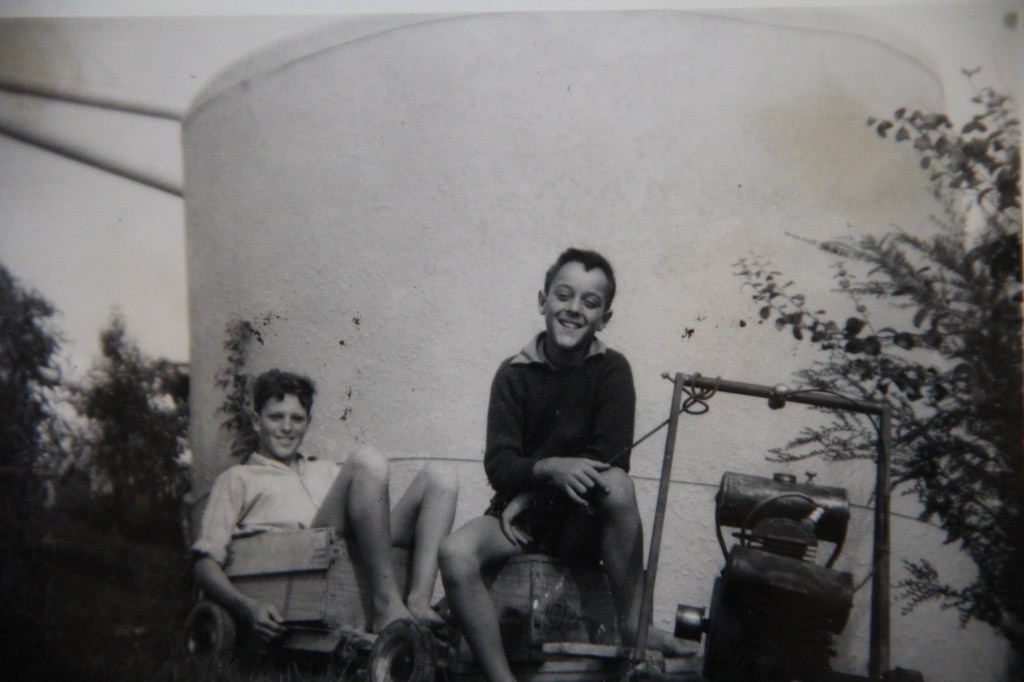
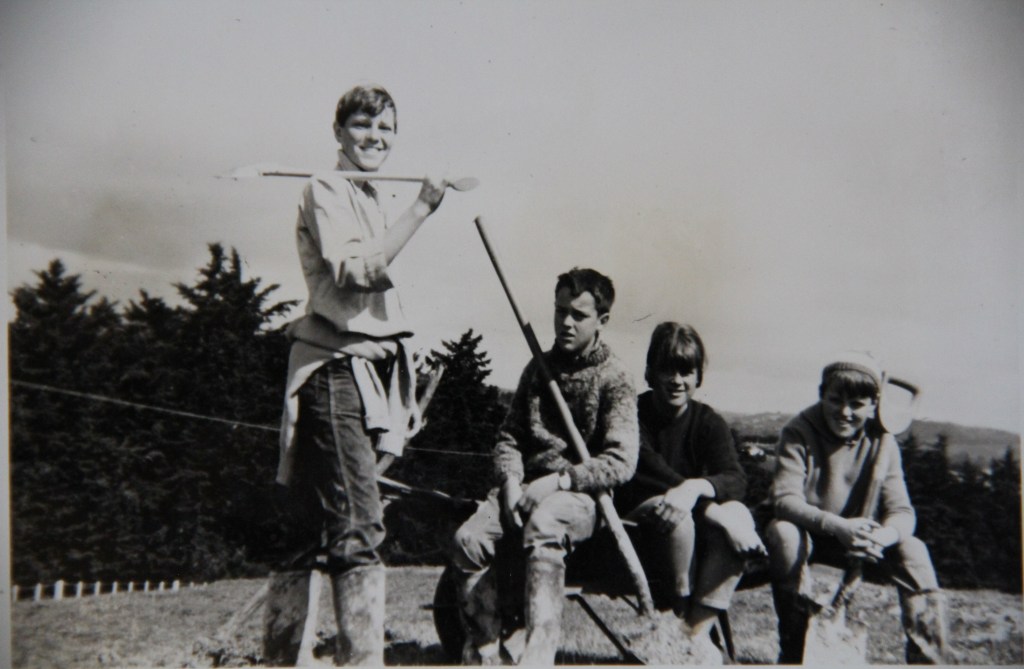
Kay, Pip, and I attended school at Warkworth Primary. This was quite a leap up from the little one-teacher school at Kaharoa and quite a culture shock for me. I’m not sure the quality of the teaching improved, but we got to meet many more people and played Saturday morning sport – rugby for Pip and me – and we got to join the Boys Brigade. John, who was then at high school, went to boarding school at St. Kentigern College in Auckland. Kay opted to stay home during high school, and went to the local Mahurangi College, but Pip and I followed John to St. Kentigern’s. We had the choice at the time, but once Mum and Dad moved to Waiti Station in 1968, boarding school was the only option.
Again, this was a magnificent place for kids to grow up in – Algies Bay and Snell’s Beach on either side, and a beach and rocky shore straight below. There were P-classes, Z’ies, and moths to sail and a string of other boats that Dad had bought to fish from and recreate in. The only draw-back I recall was the hazards of riding a bike on the metal road after the grader had been through.
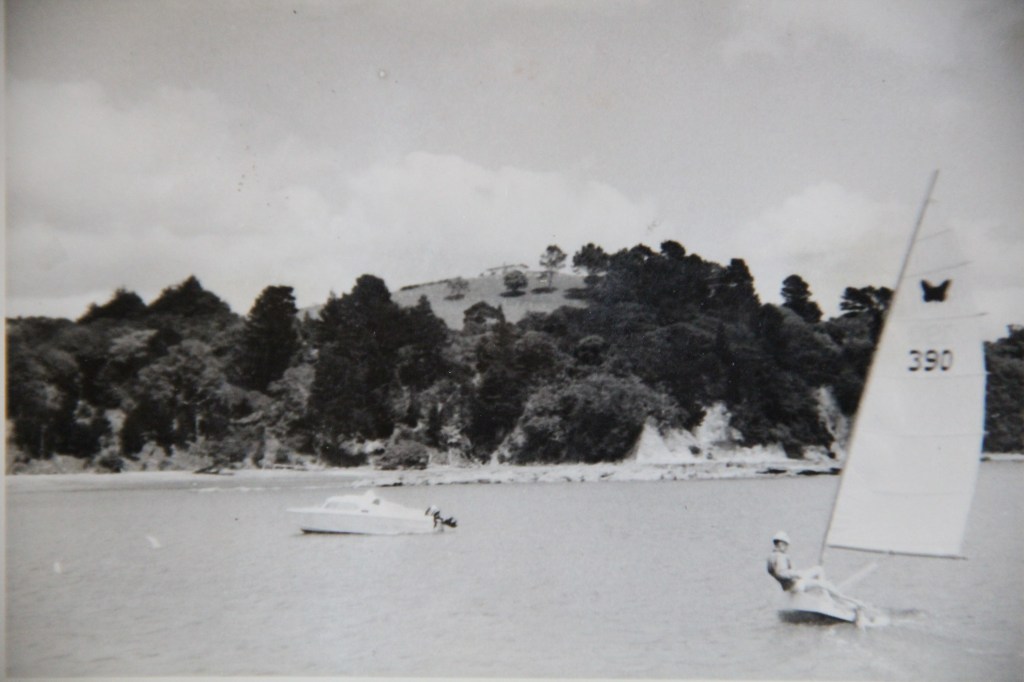
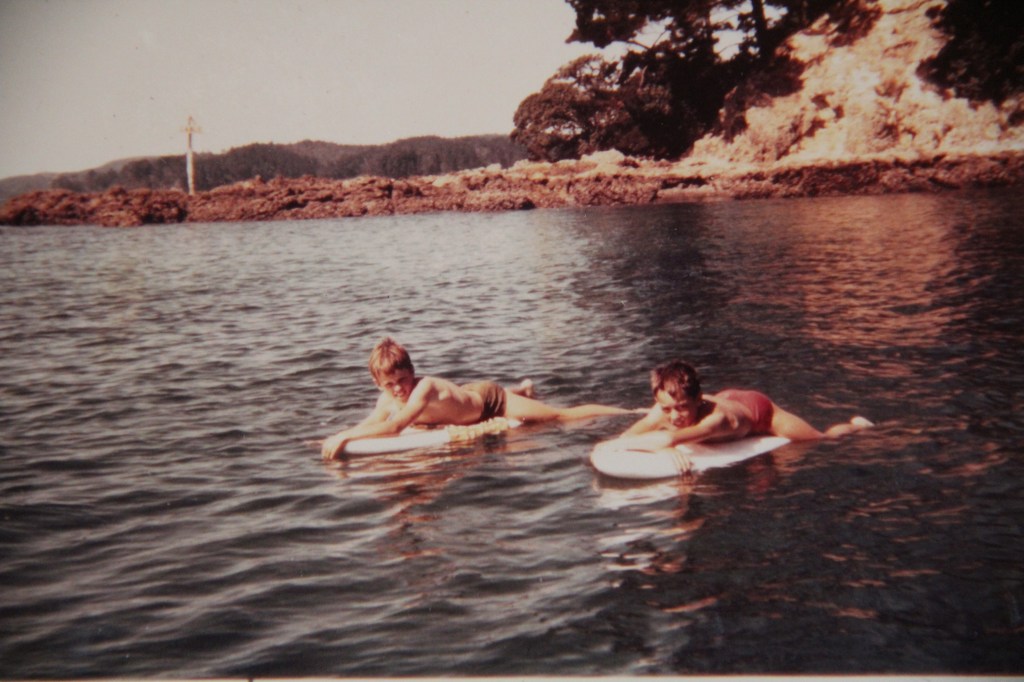
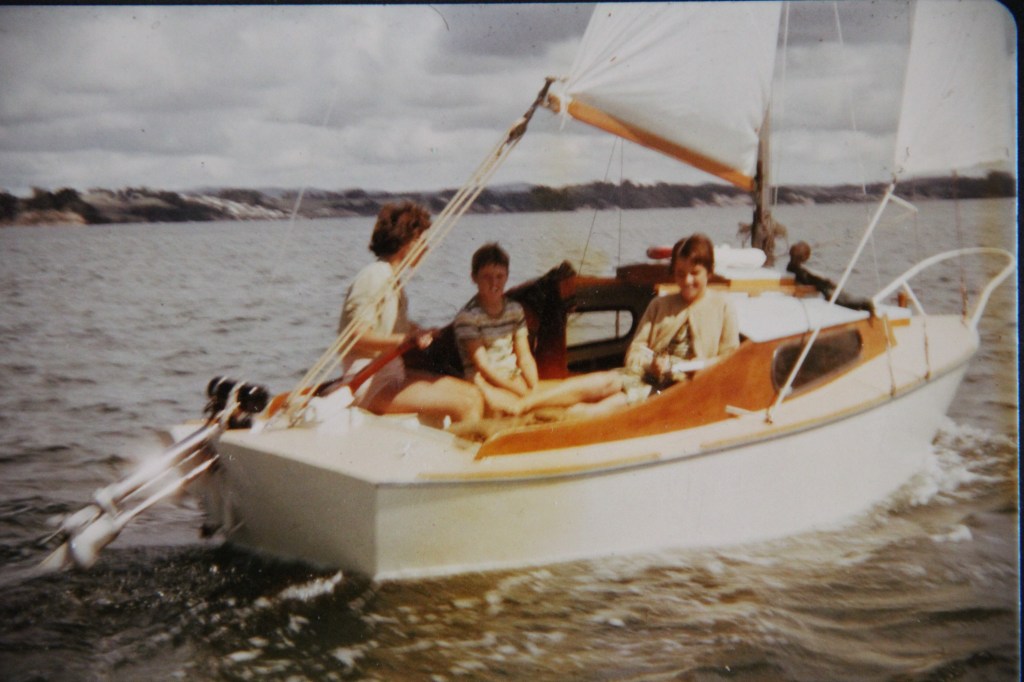
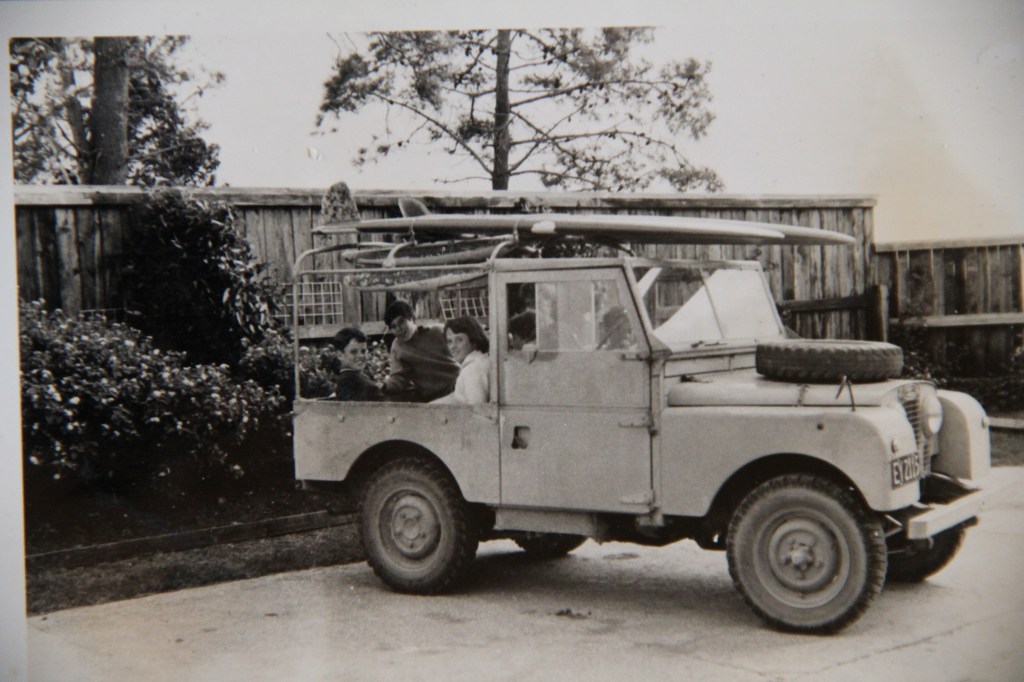
Here too, Mum and Dad were relatively light-handed in their parenting. Provided we adhered to the basic rules, we had a free passage about the neighbourhood and came and went as we pleased. Mostly we adhered to the rules, but during summers with more people in Algies Bay and more parties on the beach, there were a few breaches of the night curfew. Kay, especially, who had a growing interest in the boys holidaying at the beach, would sneak out often. We were sleeping out in the boatshed that summer, so we thought we were getting away with it, but years later, Mum admitted that they knew exactly what was happening.
There were holidays from here, too. One that particularly sticks in my memory was a 1963 camping trip around the East Cape to Gisborne and Wairoa and back through Waikaremoana. We travelled in the Land Rover and towed a trailer, freedom camping all the way, sleeping in a centre-post tent and cooking on a single-burner Primus stove. Eating freshly smoked schnapper from Waihau Bay was an enduring memory for me.

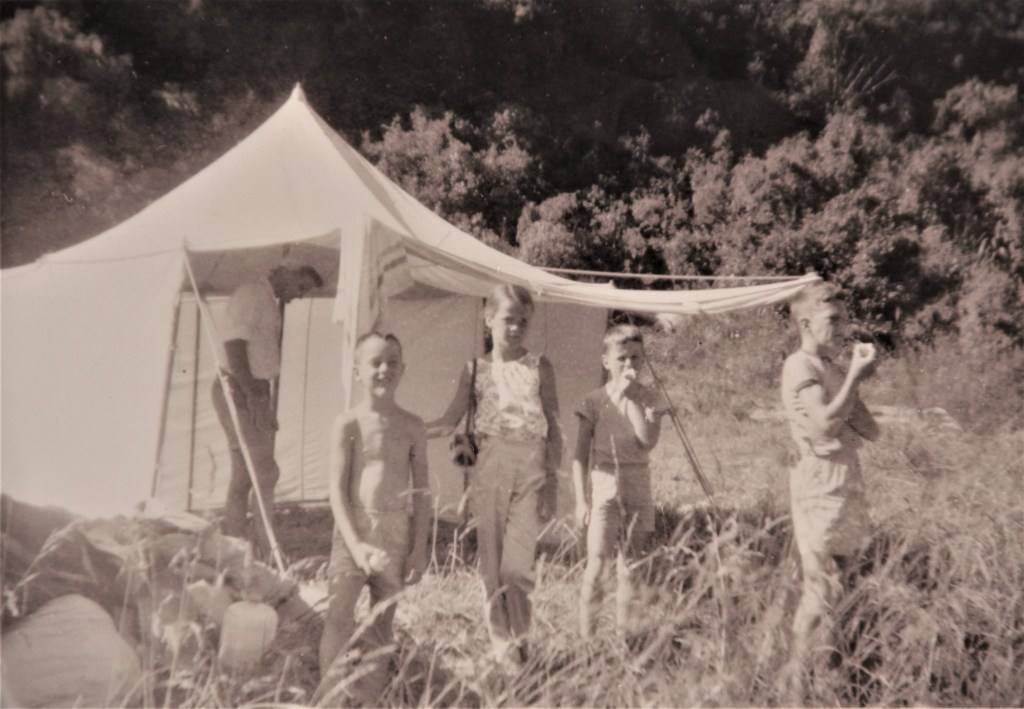
There were also camping trips to places like Matauri Bay north of Kerikeri. There was no actual campground there, just a large sweeping beach, a small stony one, and acres of dune we mainly had to ourselves. There was a small Maori village tucked around the corner from which the locals lived as near a traditional lifestyle as was possible in those days, and where most of the income was earned from near-shore fishing from very small boats. The demise of communities like this, following the introduction of the Individual Transferable Quota system in the mid-1980s, worried Dad greatly, and this was in part behind his decision not to take the quota when they were offered.
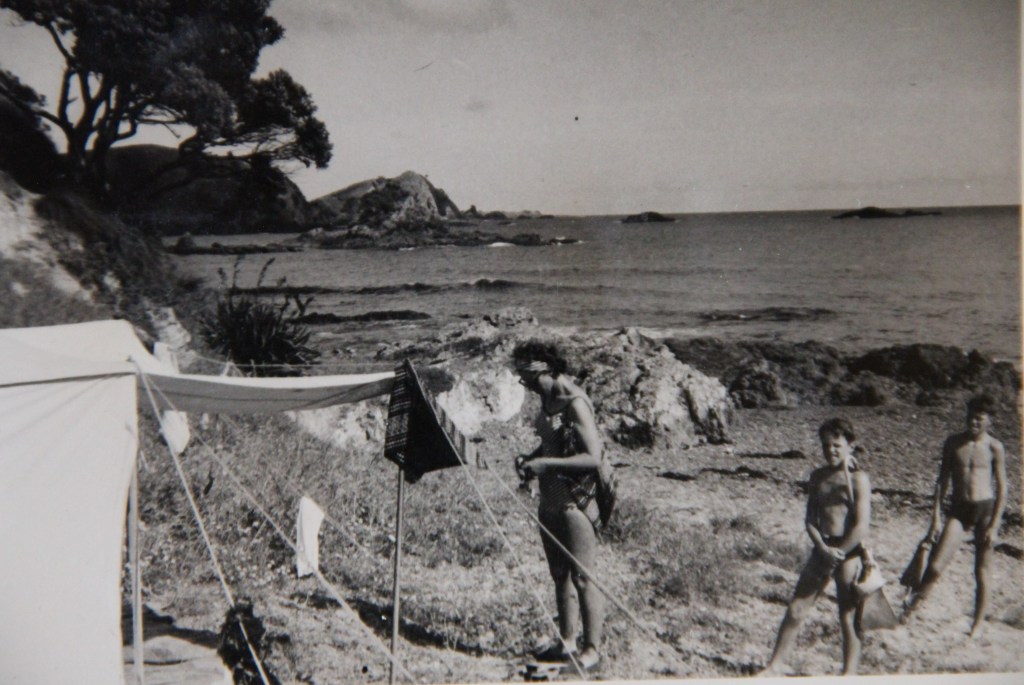
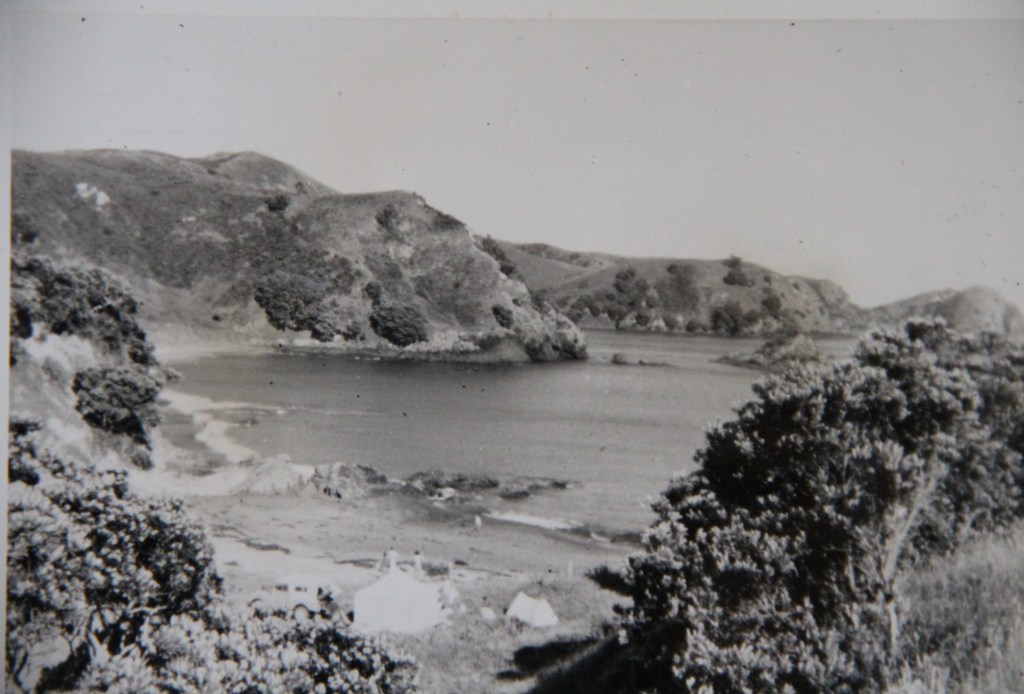
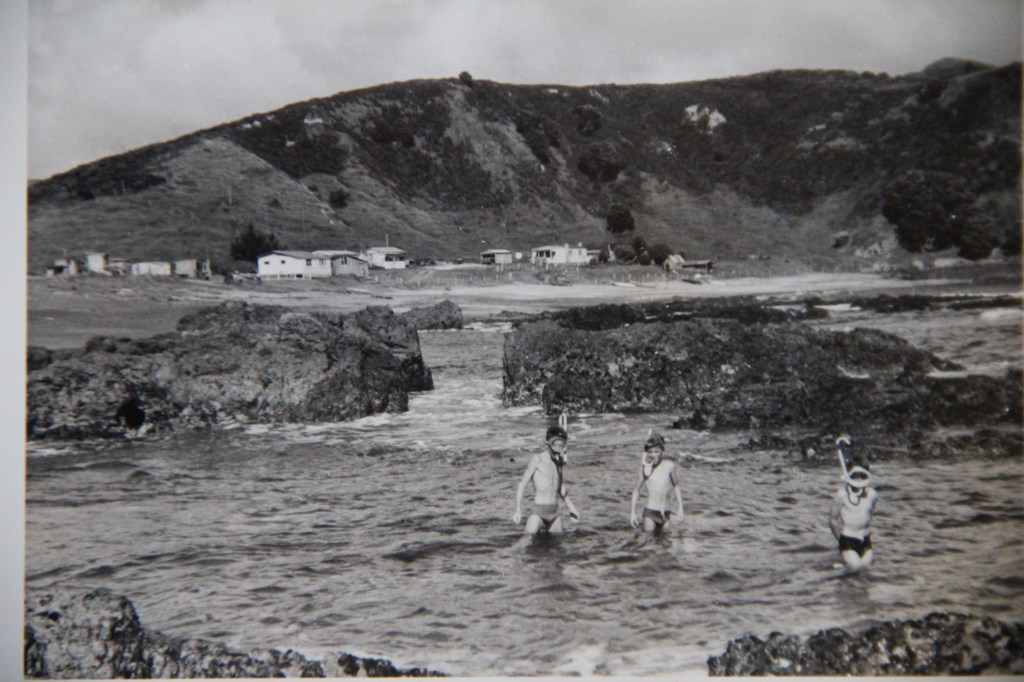
There was also an epic camping tour of the South Island in the Land Rover with a trailer when we kids were all in our teens. Dad felt he needed to stay behind on this trip to keep some money coming in, but that was no barrier for Mum. It was the first trip to the South Island for any of us kids and so the first time we got to see the country in which Mum had grown up, and I think this was the catalyst for both Pip and me to eventually live in the south and work on high country management. It was the beginning of my life-long love of the South Island mountains.
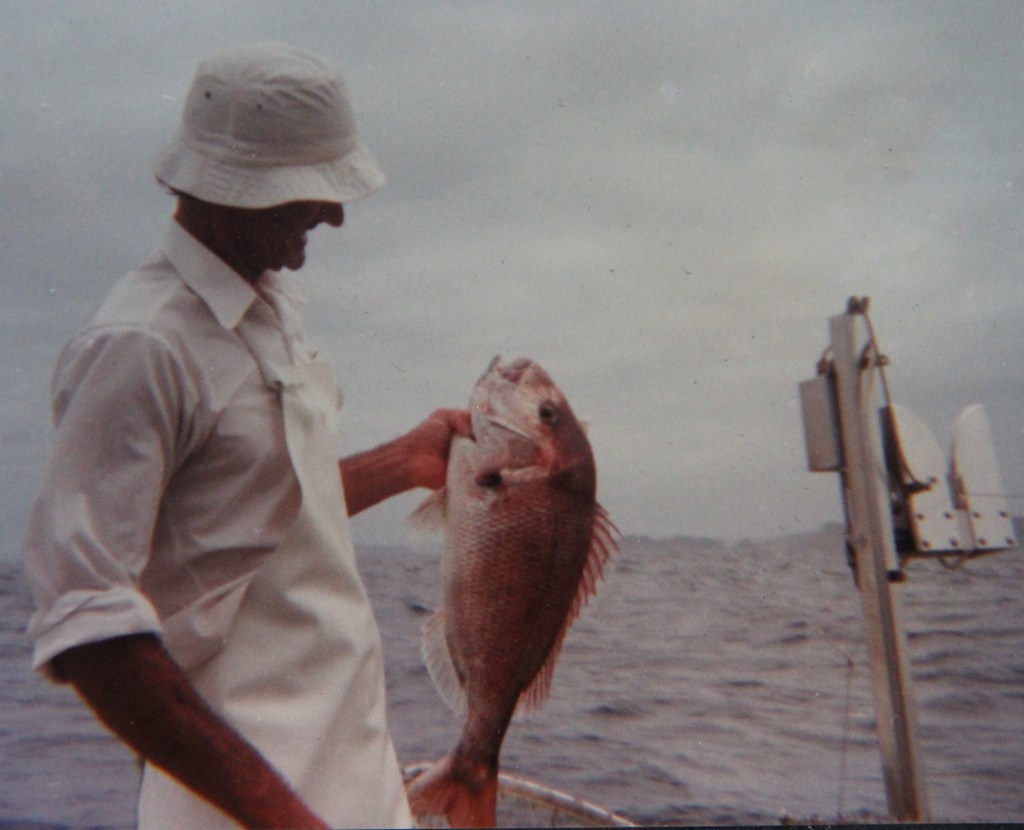
The novelty of running a shoe store soon wore off for Dad, and as his health seemed to improve, he began looking around for other things to do. He finally settled on commercial fishing. He bought a boat, fitted it out, and set off to sea, long-lining in Kawau Bay and off the southern shore of Kawau and Motuora Island, selling his fish at Leigh Fisheries. In those days, he would catch between two and three ‘baskets’ per trip. I don’t recall what a ‘basket’ contained, but compared to the catch he got in the early 1980s this was a relative bonanza.


He thrived during this time. He was always happy in his own company, but he loved being out on the water and being his master. Many of his fishing colleagues were a little dismissive, claiming that he was just a gent playing at being a fisherman, but he took it very seriously. I recall him getting out in the mornings before he started fishing, going for runs along Algies Bay and back to get fit. I also remember many evenings at Algies Bay when he would sit in front of the fire, making what seemed like miles of new long-line and ‘longline snoods’ (traces).
Not all his colleagues were so dismissive, however. Neville Houston, who lived with his wife Phil and their son Sean on Kawau Island, would often raft up with him as they waited between sets, and shared philosophies on life. Neville and Phil were to become great friends through the remainder of their lives.
He also befriended ‘Snow’ Harris, a sometime drunk and deep thinker who lived on Moturekareka Island in a shack made of packing cases. There was still a house in the bay behind the wreck in those days, but it was too cold and damp, so Snow felt that the packing case hut on the north-facing slope was better for his health. He would periodically row his ten-foot clinker dinghy to Mansion House Bay on Kawau, get blind drunk at the pub that was there at the time, and then row himself home when he’d felt he’d had enough, or more likely, when they refused to serve him more booze. Dad first met him when he was anchored in the bay, waiting out a longline set, when Snow rowed out and asked him for some meths for his Primus. Dad, suspecting his intentions, gave him a tiny bottle that would have lit a primus several times, but would not have gotten him drunk. Snow was not best pleased and rowed away. However, he did not hold a grudge; they met often over the next few years. Dad would take him magazines and books (he was a great reader) and they would spend time between Dad’s longline sets, solving the world’s problems.
Back at Algies Bay, we had been keeping bantam hens, but like bantam hens do, they bred. After seemingly no time, we were over-run, so Dad proposed that we take them out to Snow’s Island, which had bantams on it at the time. We agreed (I would never admit this to my Department of Conservation colleagues). However, when we took them out, Snow said no. He had quite enough bantam hens as it was. I recall Dad saying, “Oh well, we’ll just have to take them back and put them in the pot”. Snow couldn’t cope with the thought (he would never have eaten one himself), so he finally agreed and we let them go. However, the cost was Dad having to periodically supply Snow with chook food.
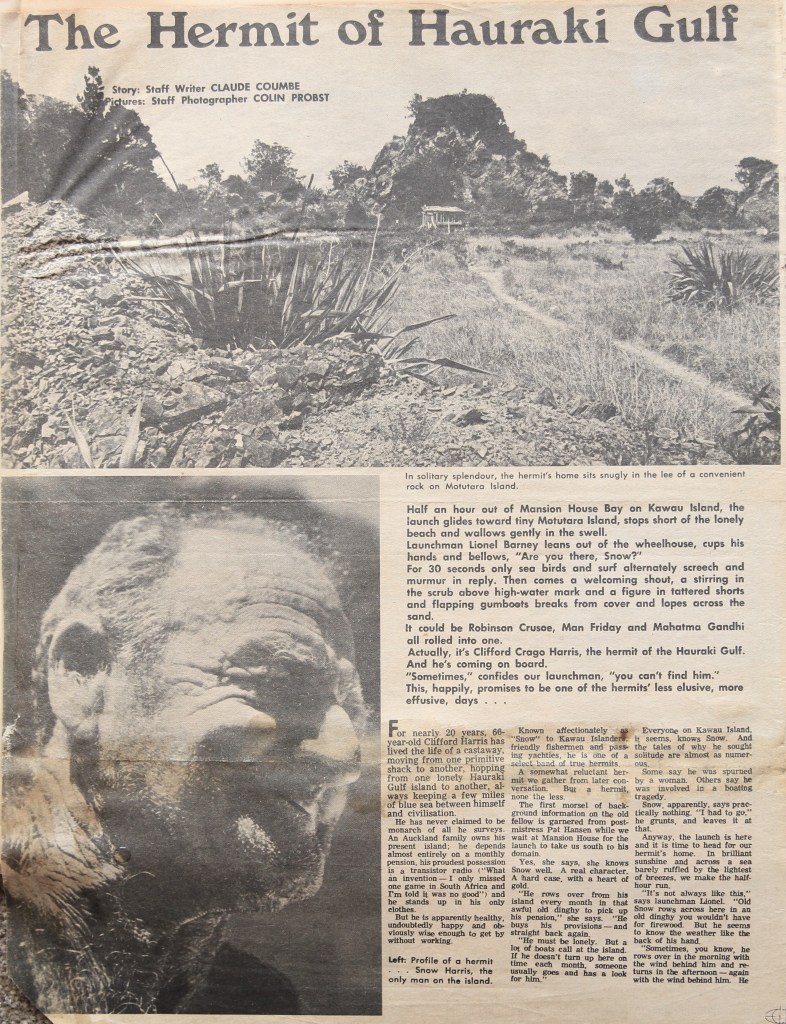
- Circa 1967 NZ Herald Article on Snow Harris, Hermit of Hauraki Gulf
Dad continued to supply Leigh Fisheries with fish for the first year, but he always grumbled that they were taking too much of a cut. So, he set about selling fish direct to the public from a specially built trailer with ice boxes, which he parked by the south-end bridge into Orewa. Everything was immaculately clean, the fish was always fresh, and he always charmed his customers. He soon built up a regular clientele. I’ve no idea whether this was worth the extra effort in filleting the fish, carting it south to Orewa and standing on the side of the road to sell it, but he persevered.

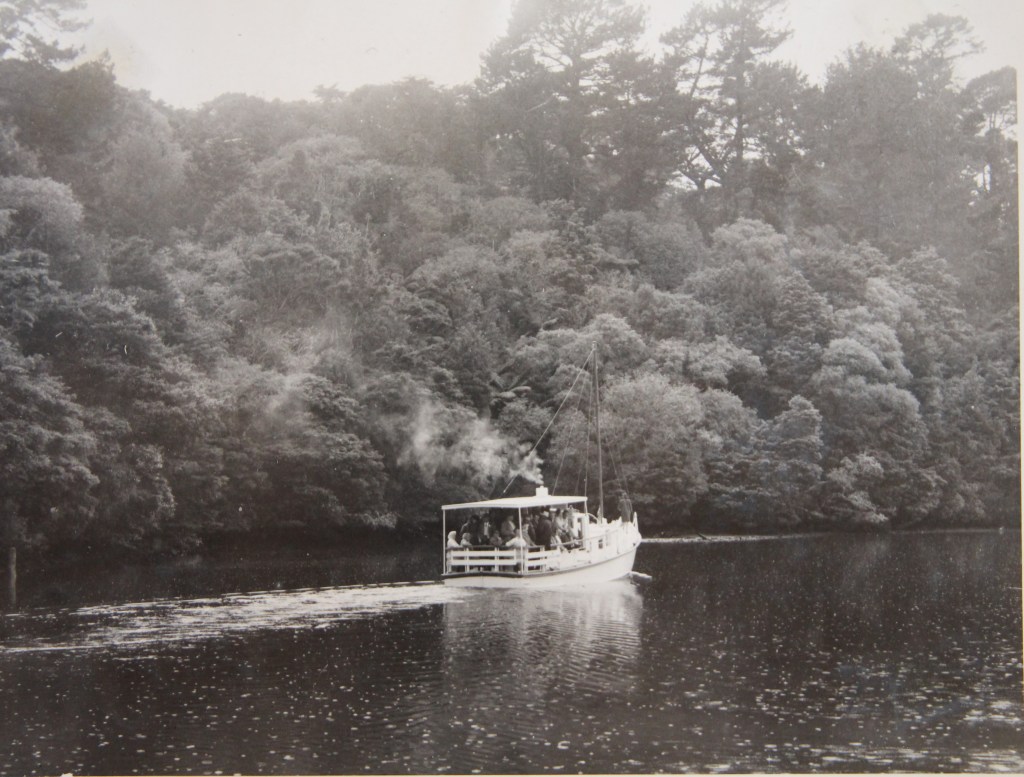
At one point, he decided he could maximise the use of his boat by buying one he could fish from and charter out. The result was Tunaeke, an aging forty-footer with a large after-deck and endless steel stanchions that always needed painting. He did fish from her and took out charters, but I suspect it was not a money spinner. One of the more memorable charters was with the NZ Photographic Society, who he took down the Mahurangi River from Warkworth to the old cement work ruins. They were delighted despite the rain, but I think Dad felt the stress involved was not worth the financial return.
Mum, meanwhile, looked after the shop. She claimed not to have minded this. In truth, she had lots of opportunities to people-watch, which she loved, and when it was quiet, she read – sitting on an oil heater out the back of the shop if it was winter. Doubtless, among the books she read was Eric and Susan Hiscock’s Around the World in Wanderer III. Dad would continue to help out occasionally, and she would insist that he retain responsibility for dealing with the shoe peddlers and buying new stock. It would never make them a fortune, but it contributed significantly to paying the bills.
Despite the income from the shop and Dad’s fishing, money would still have been tight, so Dad was always looking for new things he could try to supplement their income. They grew vegetables in their voluminous garden to sell, and in one year, they grew strawberries. A large patch on the slope below the house. They were magnificent strawberries, but I doubt they made any money, and it was many years before I could again eat another strawberry.
In 1968, they decided to return to farming and head to Waiti Station on Waiheke. However, this was not the end of their time with shoes or fishing.
After they returned from the United States and South Africa in 1975, they were again concerned about how they would make a living. They had moved into a rental in Little Manly, Whangaparaoa, and were searching for work.
Dad decided that he’d go back to commercial fishing. He bought a boat, fitted it out and began fishing out of the Wade River in the Whangaparaoa. Things had changed greatly in the industry while he’s been away, the biggest change being that there was considerably less fish about. Nevertheless, he kept at it. He thought perhaps that things would be a little better further north, so they rented a house – ‘the pink house’ – on Rangimarie Crescent, overlooking Snell’s Beach, and he began fishing out of Sandspit.
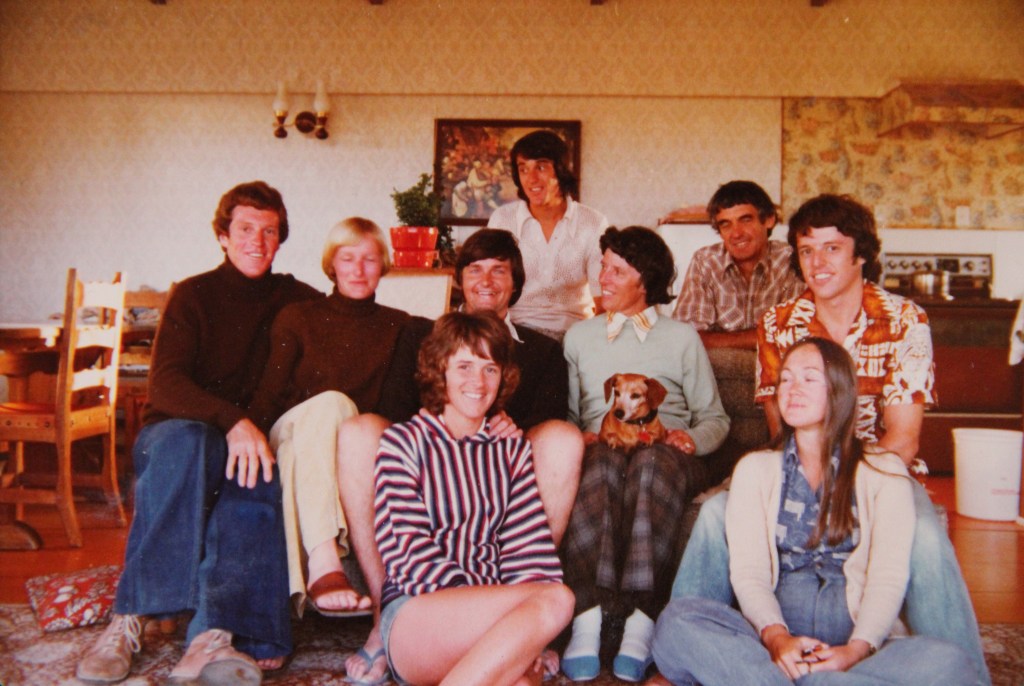
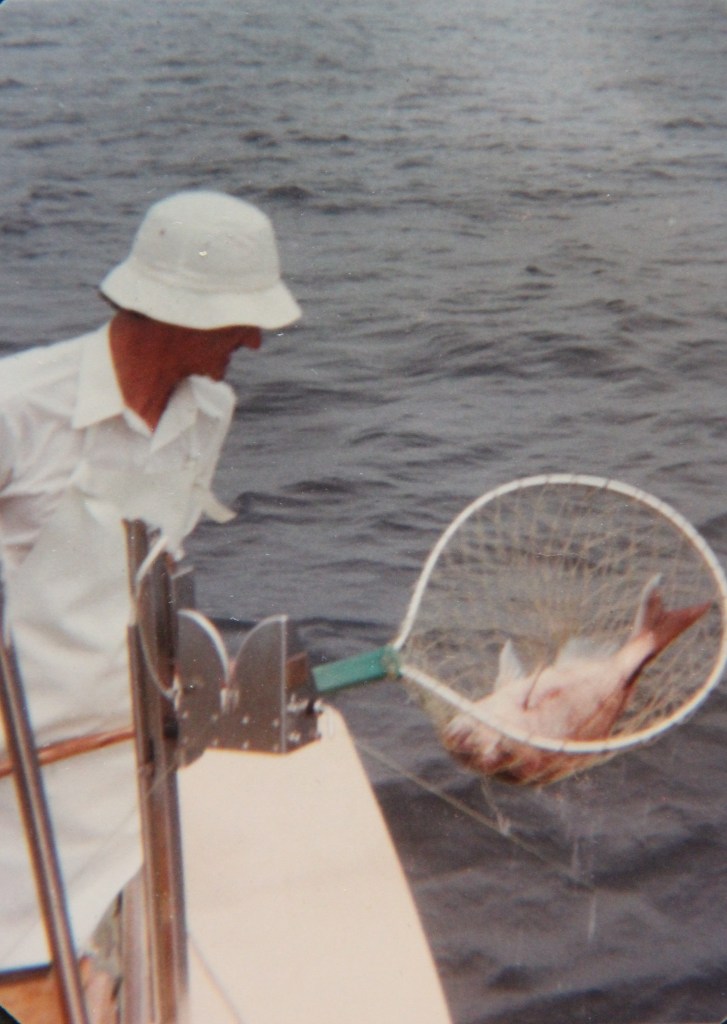
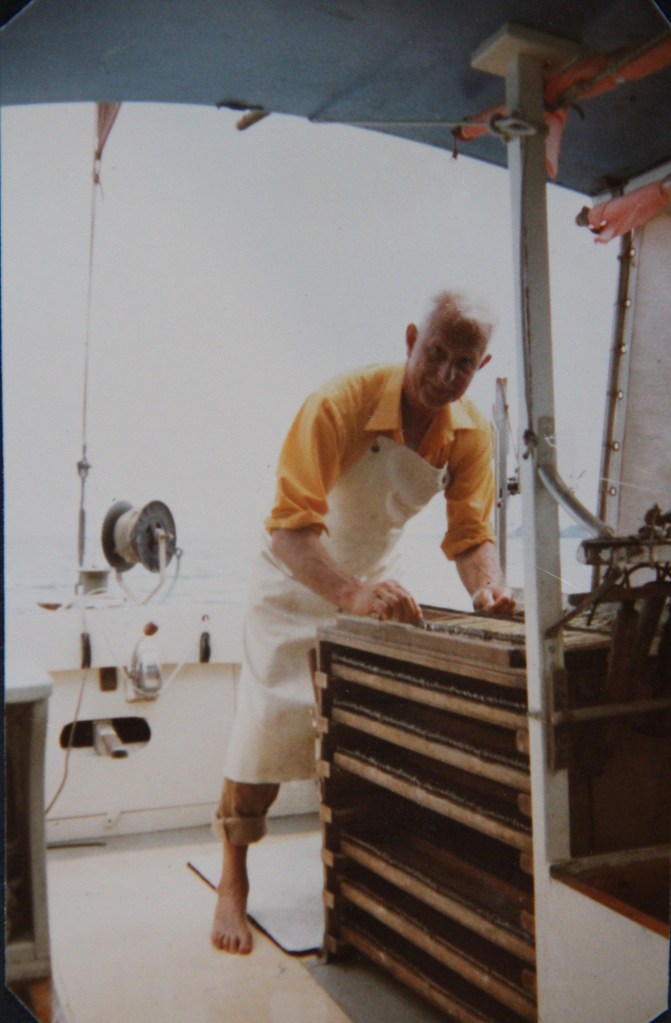
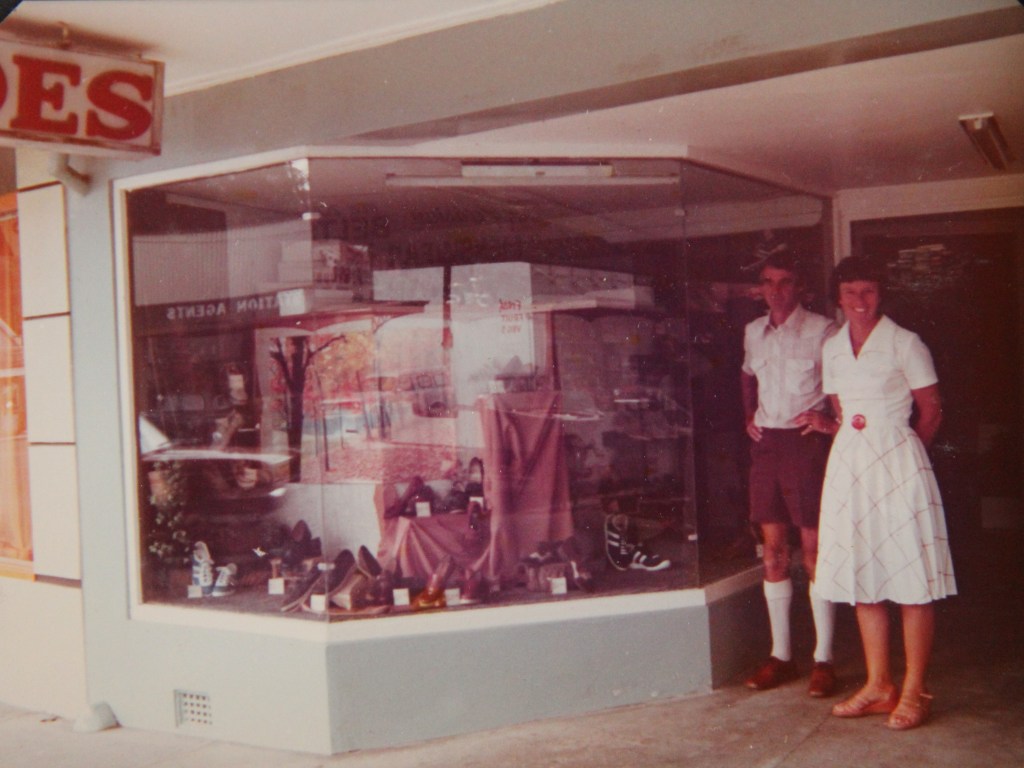
Fishing had never been particularly profitable in the 1960s and was no better in the 1970s, so they looked for something Mum might do to bring in more income. Dad’s brother Richard had bought the shoe store in Warkworth from Mum and Dad when they left for Waiti Station, and by this stage, he had had enough of it. So, in 1975, he agreed to sell it back to them. This must have felt a little like Groundhog Day for Mum, but she didn’t seem to mind.
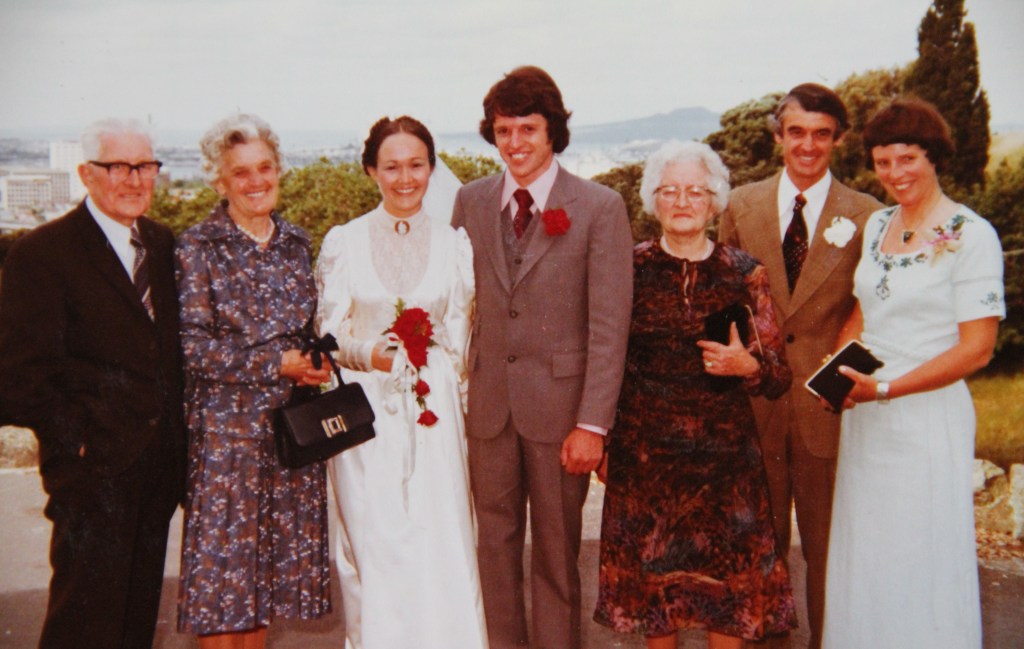
Also in this period, there were two weddings in the family. Mum and Dad’s eldest, John, married Jude Kelly in early 1976. Jude was from Point Chevalier in Auckland. She had salt in her veins having grown up around the sea and boats and at the time they met, she was at a New Year’s Eve party in Port Fitzroy Harbour on Great Barrier Island. John was there with Kay and Malcolm on their ‘honeymoon cruise’ aboard Cecilene in 1972/73. John was working on Whangarei at the time, but they kept in touch and on the 10th of January 1976, they were married.
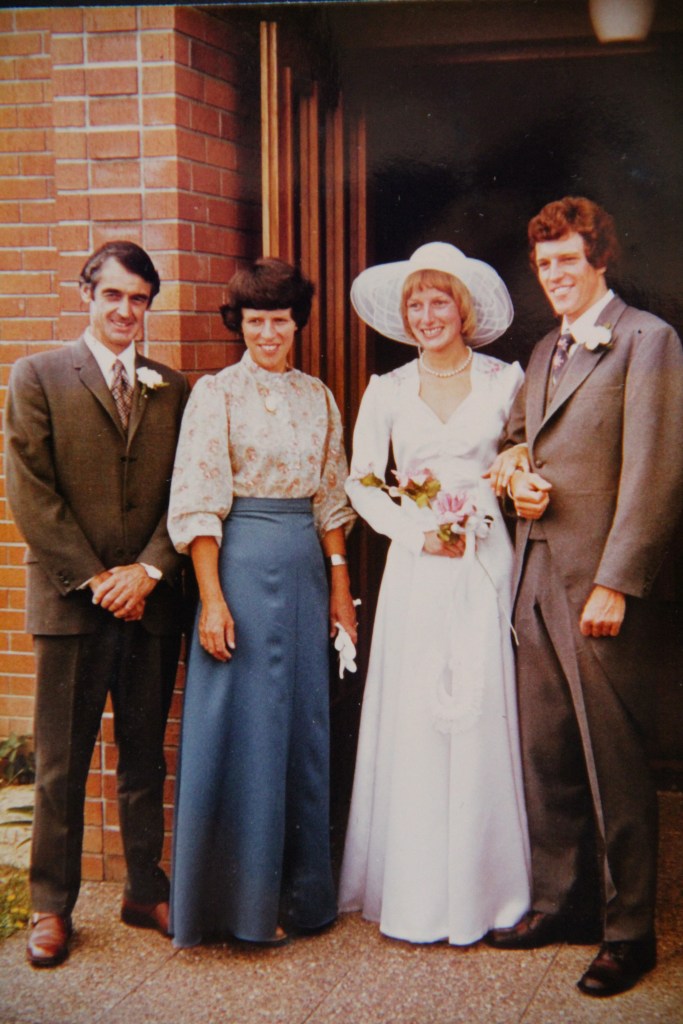
Two years later, I married Karen Eisenhut. Karen grew up in Kaikohe, where her father was the local garage proprietor. She was a bright, strong and determined young woman interested in art and adventure – inherited, I think, from her mother who sadly died in 1968 when Karen was only fourteen. We were occasional co-habitants of an antipodean flat in Clapham, London, that housed a horde of people as they came and went from their travels around Europe. After a trip to the Beer Festival in Munich with some of our flatmates in the latter part of 1974, we set off around Europe together in a VW camper. It was a wonderful experience for me, so it was hard to return to New Zealand before her, to start at Lincoln College. She later joined me in Christchurch, and we were married in Auckland on the 16th of December 1978.
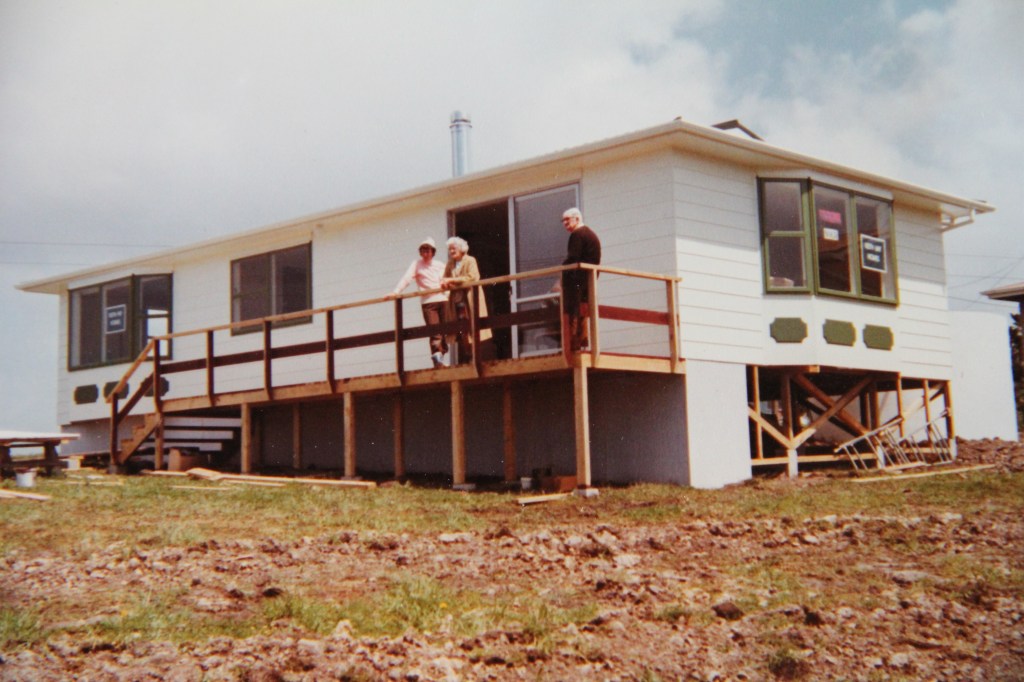
In 1976, Mum and Dad bought a section out at Leigh on Kowhai Terrace, right next to the cemetery, overlooking the Leigh Harbour and with a magnificent view toward Hauturu (Little Barrier Is). By 1977, they had had a house built on it, they’d moved in, and Dad had moved his fishing operation out to Leigh. He had a new fishing boat – ‘Chelan’ – built by Howard Greenwood at Whangateau, and he was making a passable living.
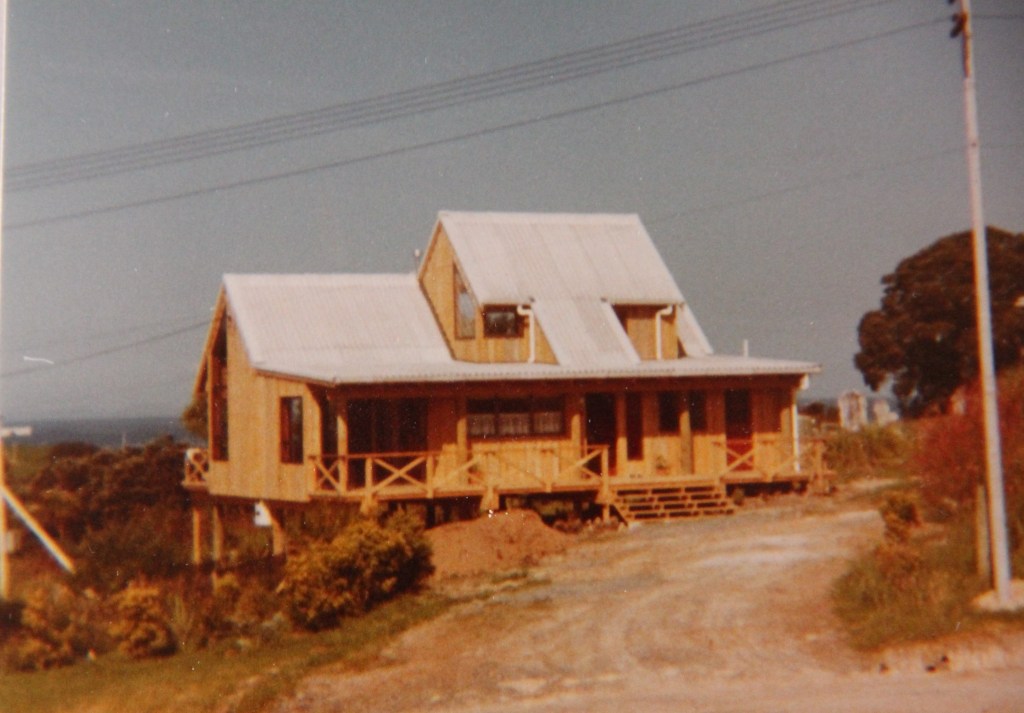
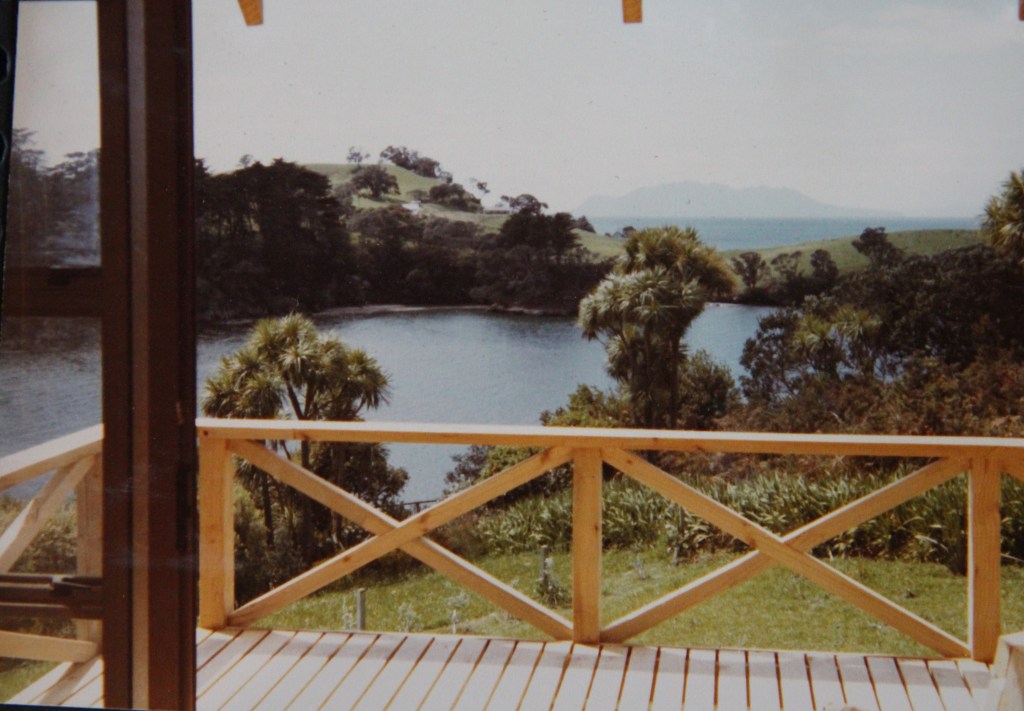
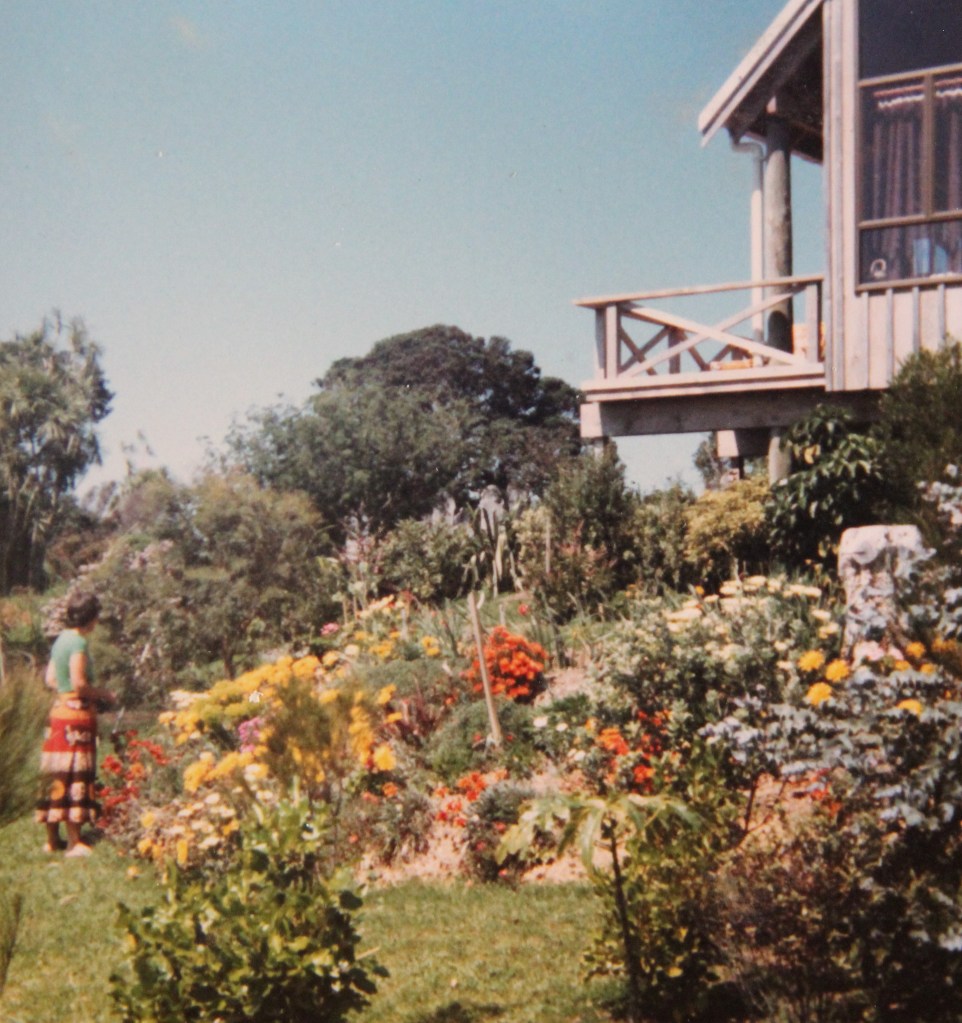
Mum described this as her ideal place to live and her ideal house. She continued to run the shop, and Dad continued to fish from Leigh. They built a house next door for Gran and Ticka and settled down as more grandchildren began to appear on the scene. I recall Mum taking Alice and Cameron on big adventures down to what they called ‘The Back Beach’ below the end of Harbour View Road, or around the rocks in Leigh harbour. This might have been their final place to settle, but for Dad’s restlessness and his dislike for Leigh Harbour as a place to keep a boat.
Dad continued fishing until the end of 1985, primarily out in Omaha Bay, off Tawharanui and in the Craddick Channel. Fish became harder to get as fishing pressure in the Hauraki Gulf grew and snapper stocks reduced to less than ten percent of their natural biomass. Dad was very conscious of this unsustainability at the time and strongly supported controls. He felt longlining could be managed sustainably but argued for removing trawlers and purse seiners from the Gulf.
When the Government consulted on its plans to introduce Individual Transferable Quotas (ITQs) for key fishing stocks, he argued against it, not because he didn’t like the control, but because he could foresee all the quotas going into the hands of the economically more efficient trawling industry. He could also foresee the demise of those small coastal communities around New Zealand that depended on near-shore fishing for their livelihoods. He wrote many drafts of letters to both Ministers and newspapers on the subject during that time. I was completing a master’s degree in natural resource management at Canterbury University at the time and we wrote several papers critiquing the proposed Individual Transferable Quota system. We were aware of the concerns raised by Dad and others, but sadly, we were mostly convinced that the benefits would outweigh the costs. This has proved not to be the case, and sadly, some thirty-seven years later, we as a nation, have still to effectively deal with the problem.
Dad could have continued fishing for another six months and taken the quota in mid-1986 that would have been allocated to him, a quota that would have been worth a small fortune. However, his principles would not allow it, so he hung up his fishing apron and put away his hooks in December 1985.
After Dad stopped fishing, Mum got a job with the Post Office in Warkworth in the toll exchange and Dad took over running the shoe store. For the technically illiterate, the telephone exchange was the arm of the Post Office that had people taking incoming phone calls and directing them manually to wherever they needed to go within New Zealand or around the world. She wasn’t particularly excited by the work, but it brought in some necessary income and for a socially lazy extravert, it provided her with some much-needed social contact. She made some great friends here – Hine Brook, Rosie Grayson, and Jackie from Puhoi – who enlivened her days at the exchange. She maintained regular contact with them after she left, but sadly, she outlived them all by several years despite being the oldest of the group.

Dad knuckled down in the shop, and I suspect, began to enjoy the social contact that this gave him. He and their young assistant Sharron kept the business running, and despite competition from big specialist box shops, which were appearing in Auckland at the time, they managed to keep it financially afloat. Sharron had had a very restrictive childhood, but by her late teens, she wanted to spread her wings. Without the courage to do this on her own, she adopted Dad as a guide and mentor, a role that he enjoyed. So, during this time, she found her wings and Dad learned how to make the task of selling shoes bearable.
Toward the end of this period, their youngest child got married. They had met as strangers on the way to Mount Hutt ski field when Pip was supposed to be studying for his Masters degree at Lincoln & Canterbury University. Lynne’s new flatmate (who knew Pip) asked if he had room in his car for some more people to go skiing. He did, but ultimately there was only one other passenger – Lynne Stewart. Later, they jointly bought a small block of land across the river from Clyde. It was here that they were married on the 22nd of October 1986. It was a simple affair without parents and family but with a few good friends, and it was an occasion that would cement their relationship with this place for years to come. Sam and Thomas were born and grew up here, and they were still living there in 2022 at the time of writing.
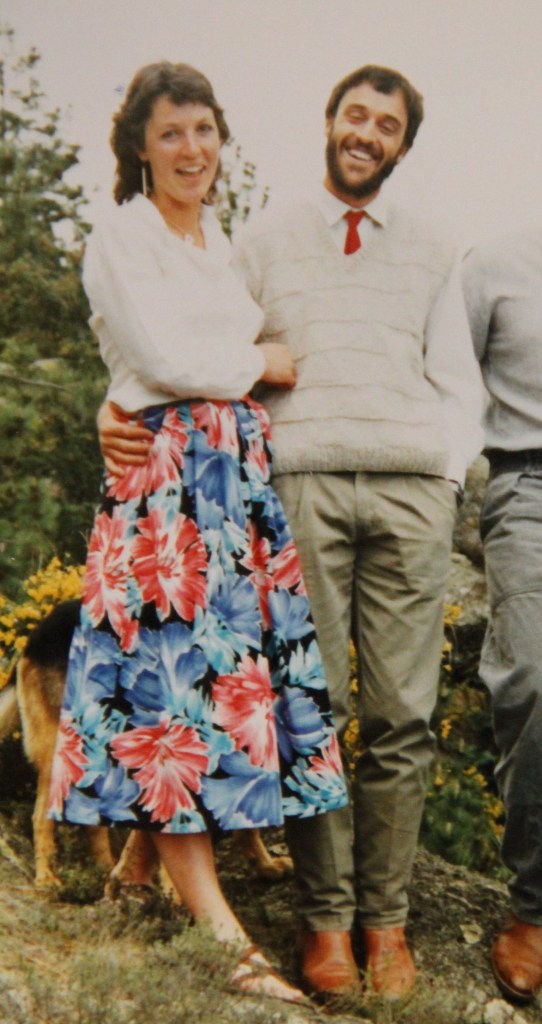
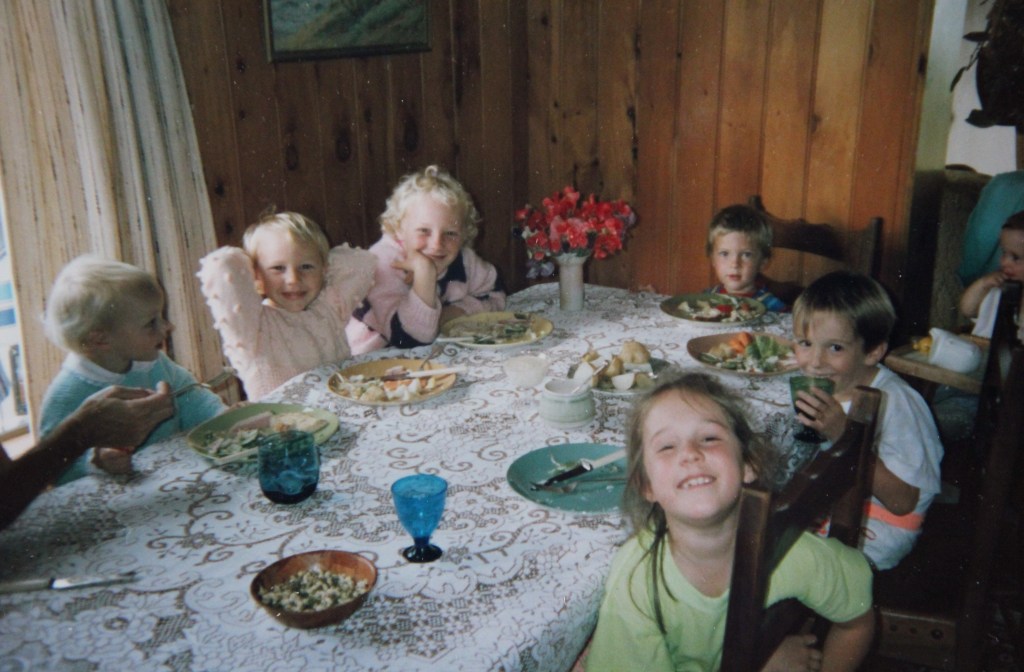
Mum and Dad were much more settled during this time than they had been in years. They loved their new house at Leigh. Gran and Ticka were on hand and increasingly in need of support, and there was a growing list of grandchildren. Gilly and Richard were born in 1976, Alice and then Lizzie were born in 1982, Cameron was born in 1984, Rachel in 1986, and Sam in 1987.
However, they were far from ready to settle down and play at being just grandparents. By 1986, plans were already afoot for their second Pacific cruise.
 John and Beverly Murray
Leave a comment