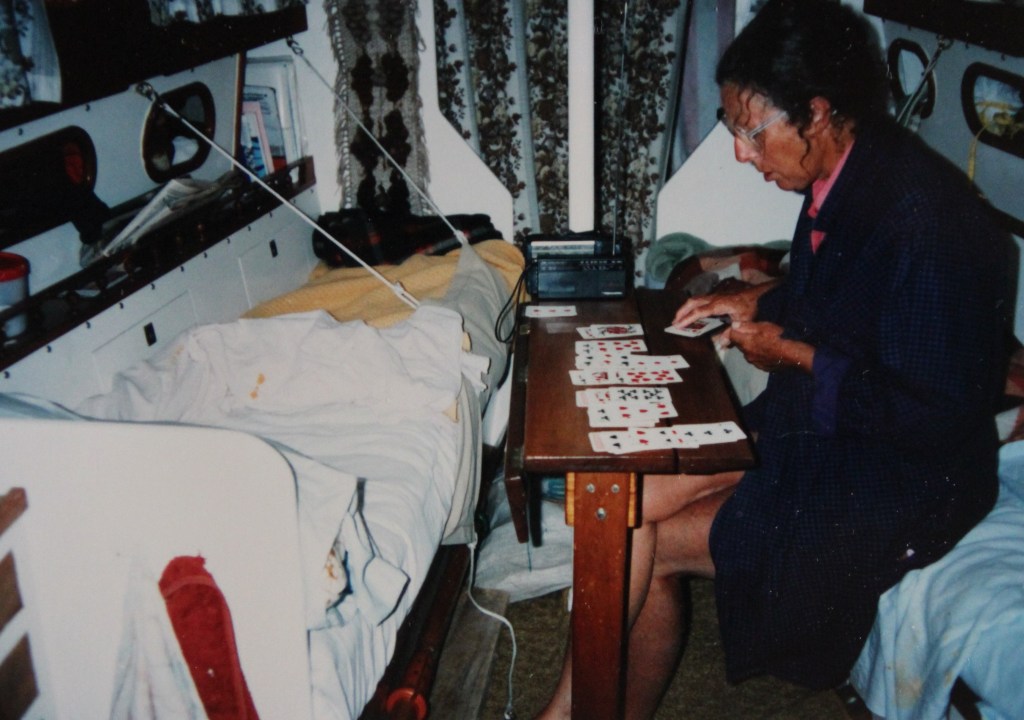
After Mum and Dad returned from their second Pacific cruise, they moved back into their house at Leigh, Jane Rhodes went back onto a swing mooring at Sandspit, and they began planning the next chapter in their lives.
Mum was likely already planning a trip to the United Kingdom and Europe, but Dad was planning a life of coastal cruising around the northeast coast of the North Island. If they were to stay at Leigh, this would mean for Dad, having to deal with the travel between house and boat, a prospect that gnawed away at him and grew in significance the more he thought about it. He would not entertain the idea of bringing the boat back to Leigh, so for him, that meant moving house to Sandspit.
He knew that persuading Mum would be a challenge as she was still very much in love with their Leigh house, and she had never professed to liking Sandspit. He persevered however and, in the end, she acquiesced. The compromise was that it would be at the little settlement of Rainbow’s End and not at Sandspit – still on the Matakana Estuary, but not Sandspit!
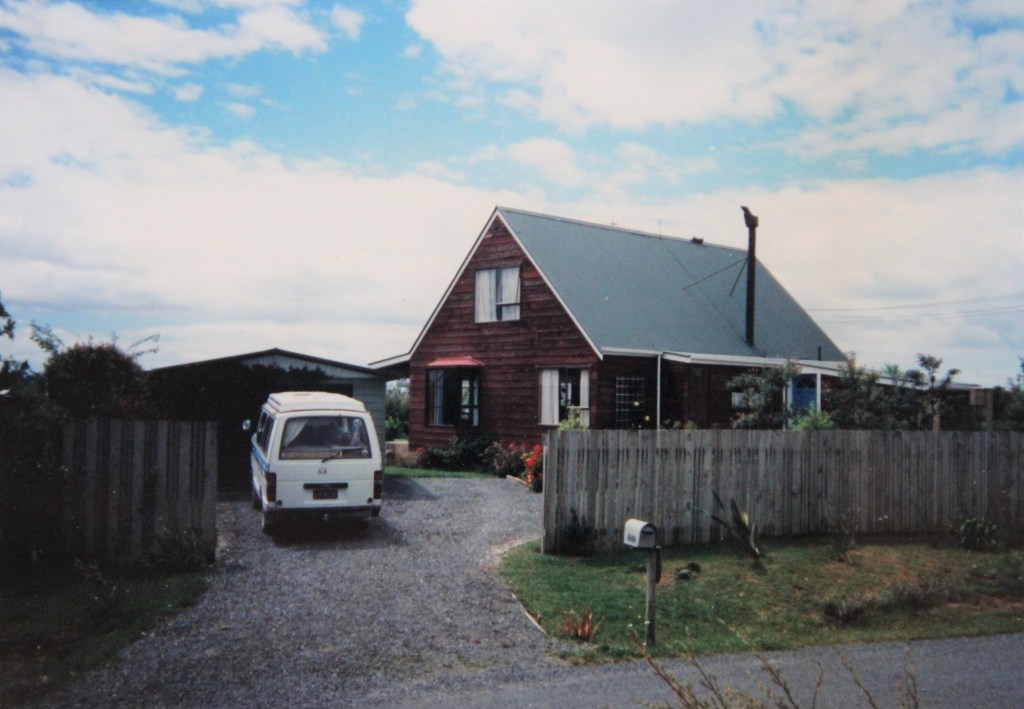
A year after they returned from the Pacific, they sold the house at Leigh and bought a house on the corner of Green and Lysnar Roads, with magnificent views northeast over the Matakana Estuary. It was a self-built house, a bit rough around the edges, with no garage and all the topsoil scraped off the section. However, it presented a good challenge to a home handyman who couldn’t sit still, and a gardener who always liked a challenge. While you couldn’t see the Sandspit Wharf or Jane Rhodes on her swing mooring, you could see the pile moorings across the estuary and at high tide, you could take a dinghy out to the boat from the little jetty and ramp below.
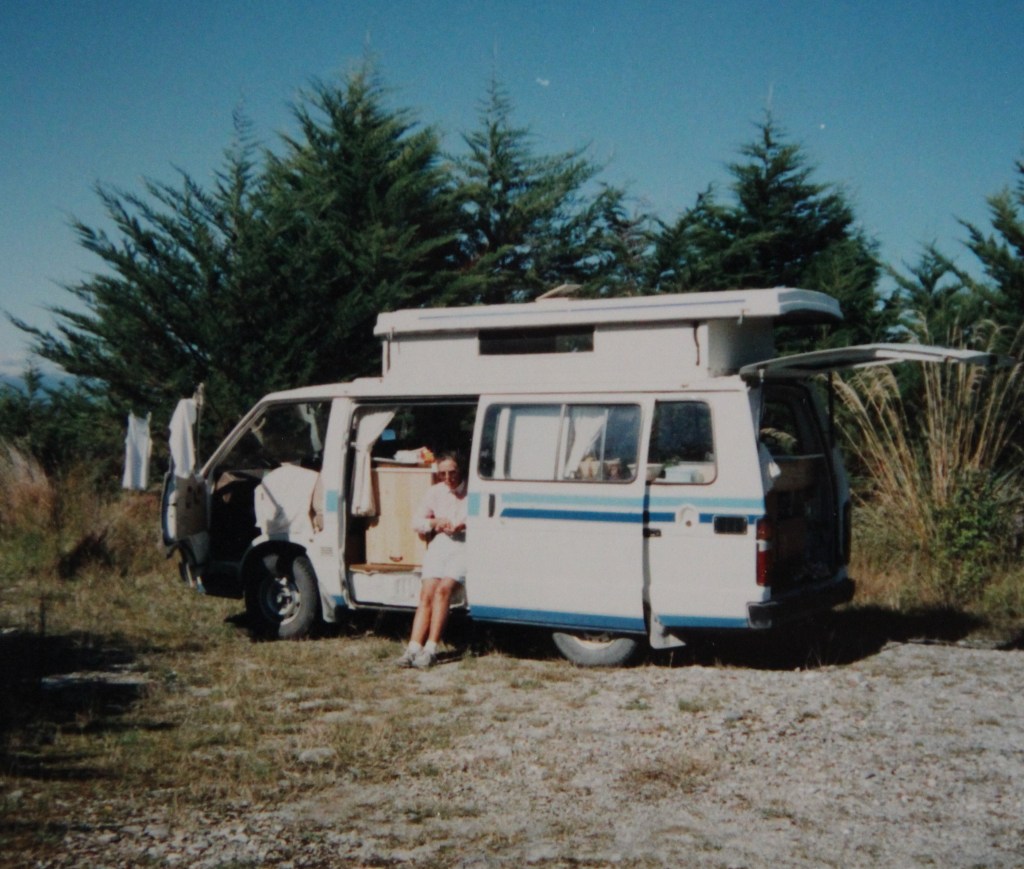
Having now moved house, their adventure plans got more attention. Mum was likely still determined to do her Europe trip, but she was also keen to explore New Zealand by camper. Dad too, was keen on the camping, but of course, he was not ready to give up coastal cruising. Unfortunately, the financial ends did not meet. Jane Rhodes had served them well offshore and provided a wonderful platform for boating holidays with Scott, Gilly and Richard, but it was expensive to maintain. So, he concluded that she should be sold and that they would buy a campervan. I think he was quietly planning a smaller boat even then, but for the moment, he was prepared to bide his time.
They bought a campervan before Mum left for the United Kingdom, got to use it for a South Island tour in 1990, but sold it soon after to buy a boat. This came in the form of a twenty-eight-foot Nova called Shadowfax. She was an Allan Wright-designed yacht, built with glass over double diagonal kauri and bilge keels. The latter were particularly good for shallow estuaries and for sitting on the bottom without embarrassment if you happen to get caught by the tide. They didn’t like the name or the orange paint job, and the motor needed replacing, so they re-engined her with a new Volvo, painted her blue and changed the name to Shadowfox.
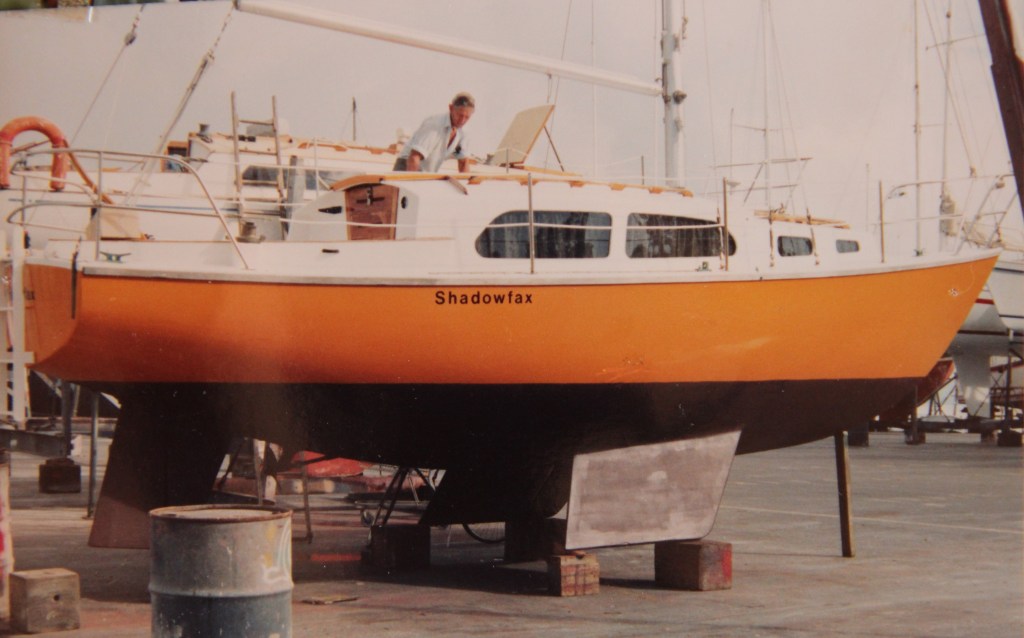
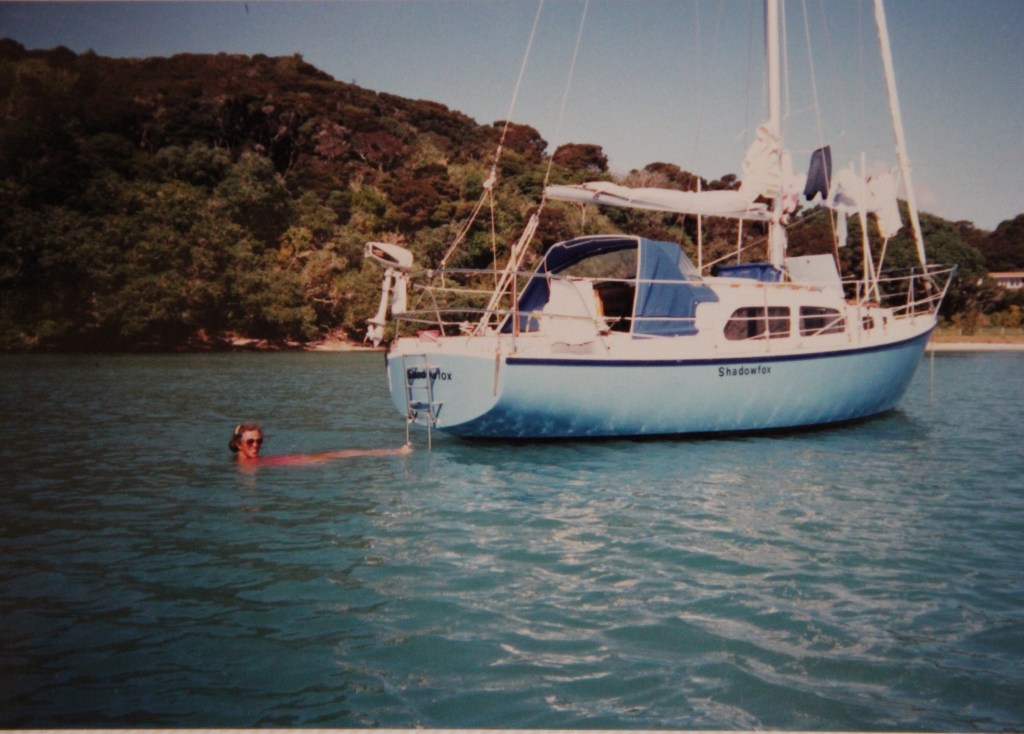
This boat was to stay in the family for the next twenty-five years. She was a perfect coastal cruiser for two to three people and served them well through the remainder of their cruising times.
Adventures over the next nine years were split between camping tours and cruising.
Their first camping trip, in March 1990, was a South Island tour in the camper – down the West Coast, time with Pip, Lynne and the boys at Clyde, Queenstown and across to Milford Sound. Surprisingly, Dad had never been west of Cromwell before, so he had never seen Queenstown or Fiordland. Mum’s diary doesn’t tell us what he thought of it. Certainly, he didn’t express a great desire to sail around Fiordland, but they did love the Eglinton Valley and later, Riverton with its glorious beach and a view to Antarctica and a temperature to match. Dad did promise at the time, that he would walk the Milford track with Mum one day, but sadly, that never happened.
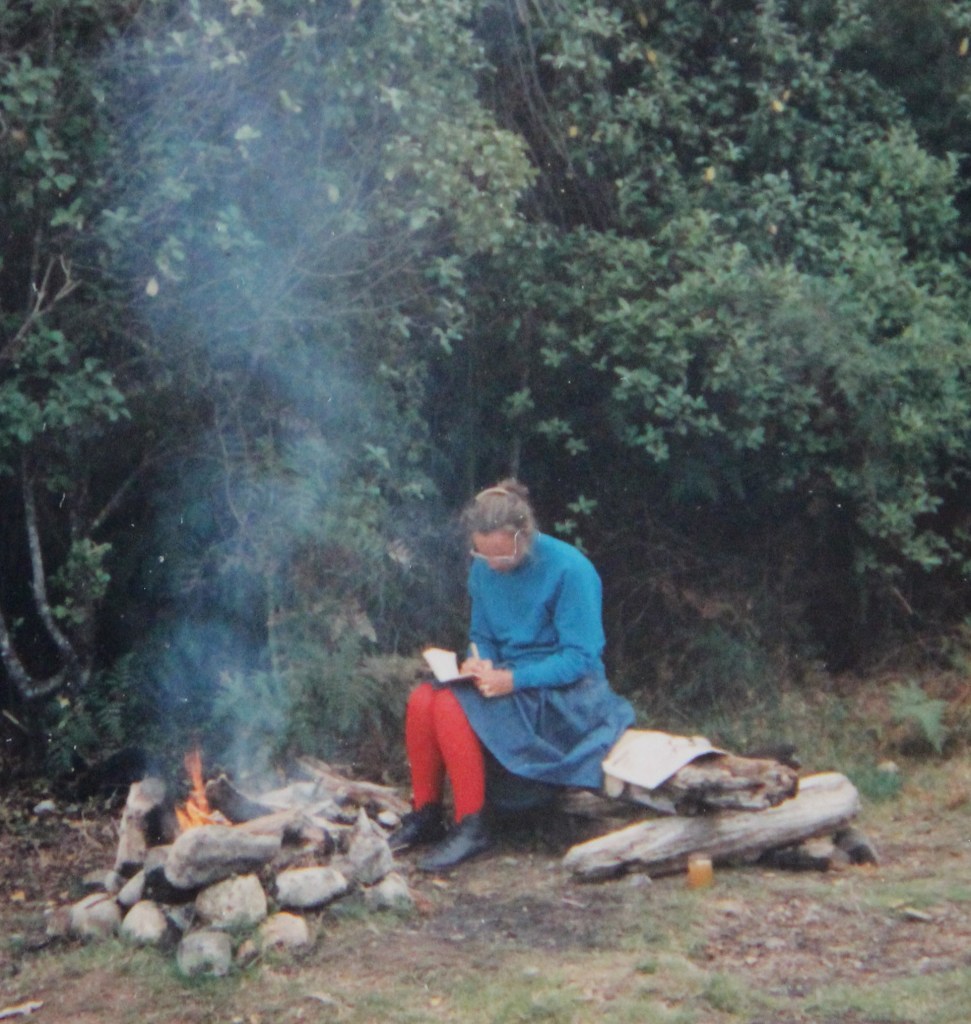
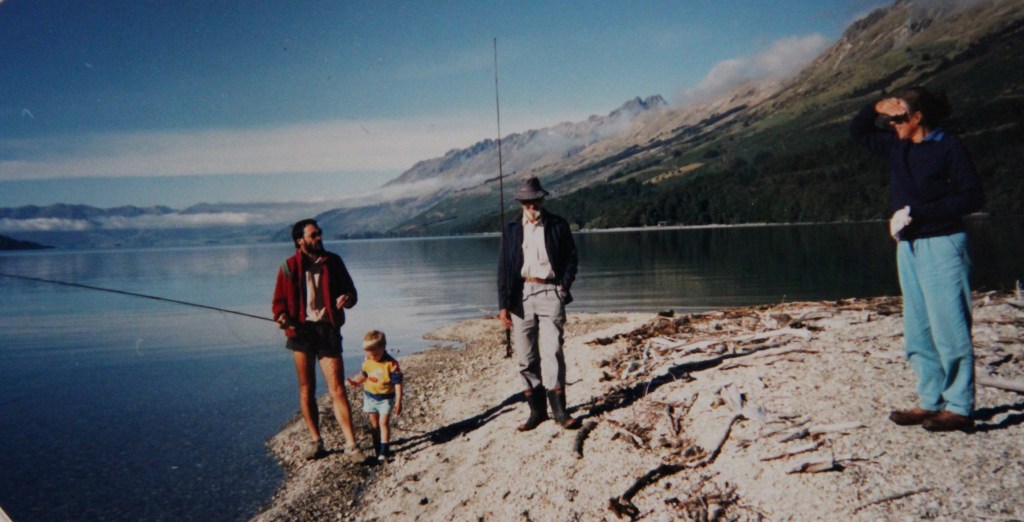
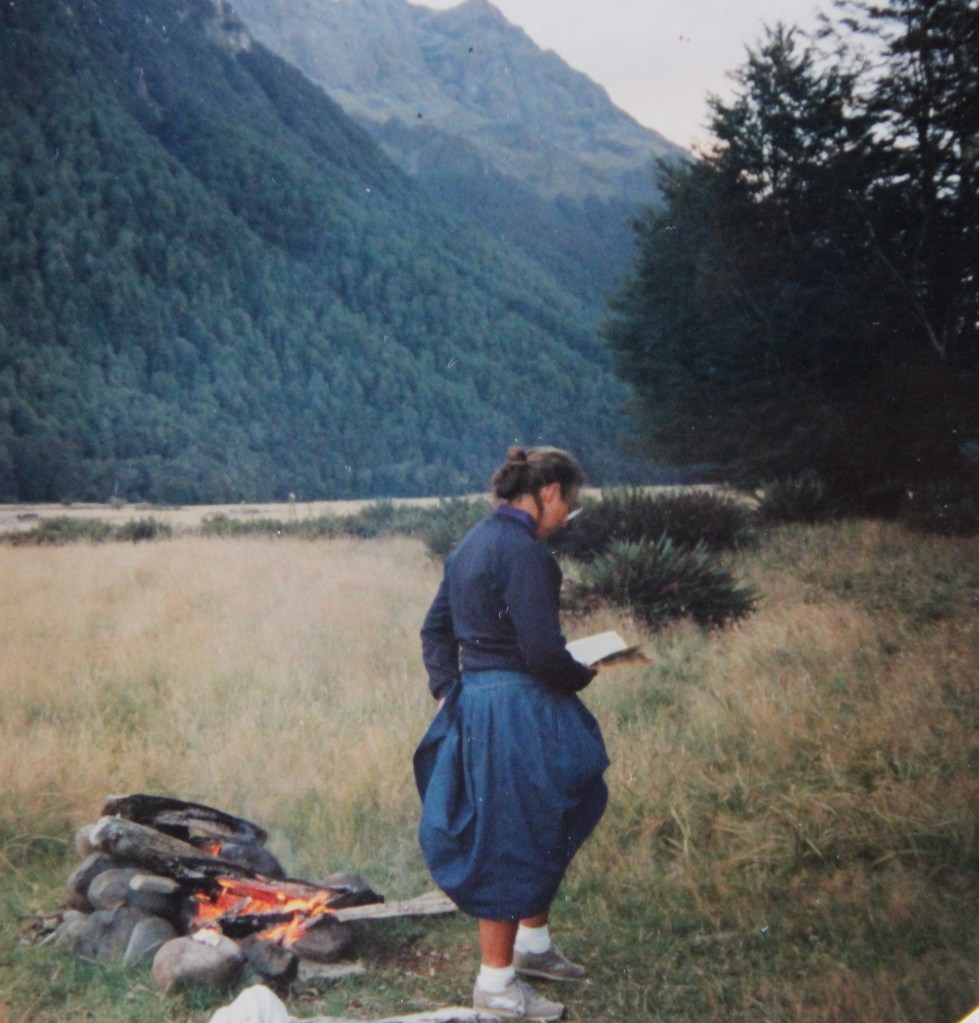
Over the next few years, there were camping trips north into deepest Northland, south through the Waikato, Western Bay of Plenty and the Coromandel, and walking group trips down the Ninety Mile Beach and down the coast from Hokianga to Bayley’s Beach. There was another South Island Camping tour in 1994, following much the same route as before, but this time, taking a trip through the Catlins with Pip and the boys instead of Fiordland.
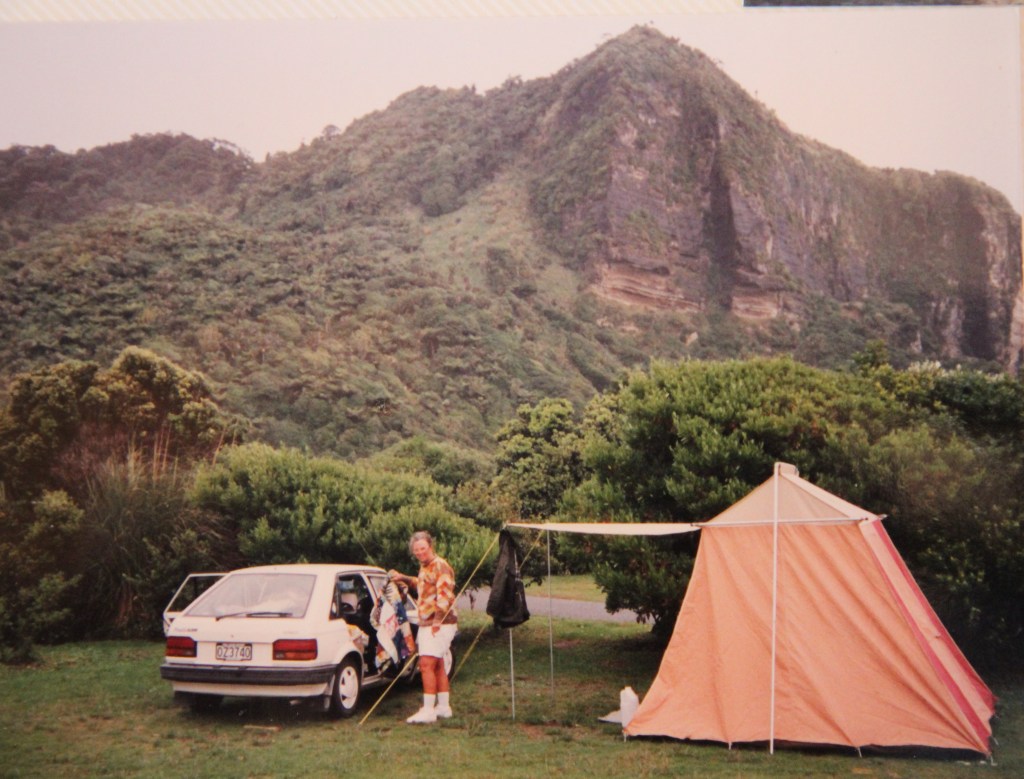
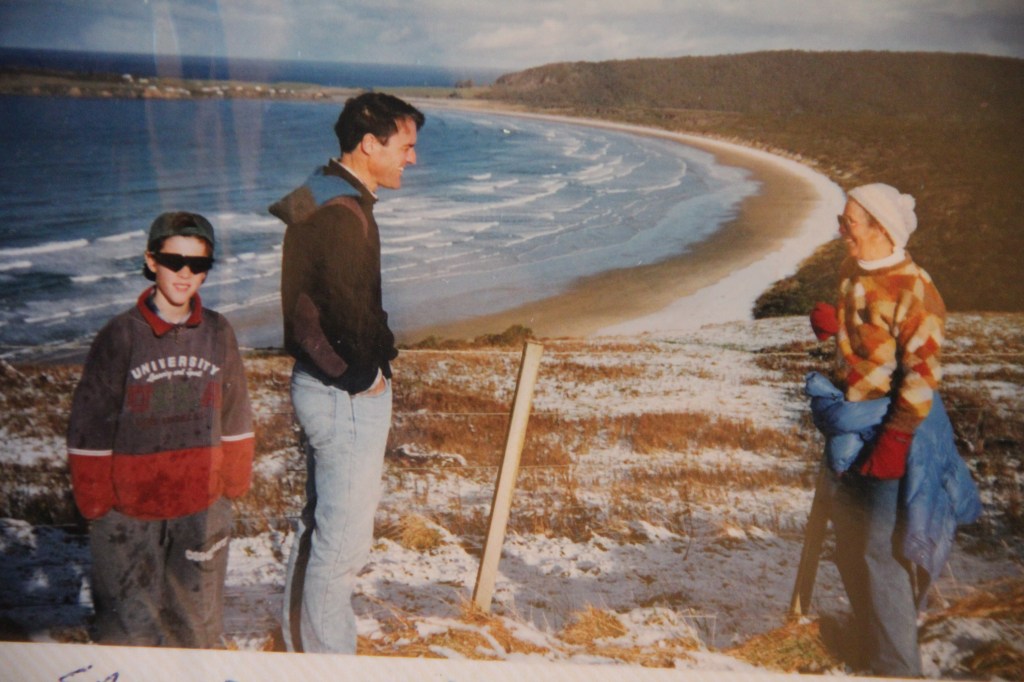
These later trips were in their little white Mazda and a tent. They would find freebie camping spots wherever possible and stayed at campgrounds only in extremis or if they needed a shower. Wherever possible, there was a camp side fire which would satisfy Mum’s wood gathering and pyromaniac urges.
Of the North Island, the bare dune country west of Cape Reinga, Pawarenga, Hokianga Harbour and the coastline to the south, and Kawhia Harbour, all featured heavily in Mum’s writings. They had always been East Coast people and had not explored the west to any great extent. When they finally did, they appreciated its differentness, wildness, and off-the-beaten-track character.
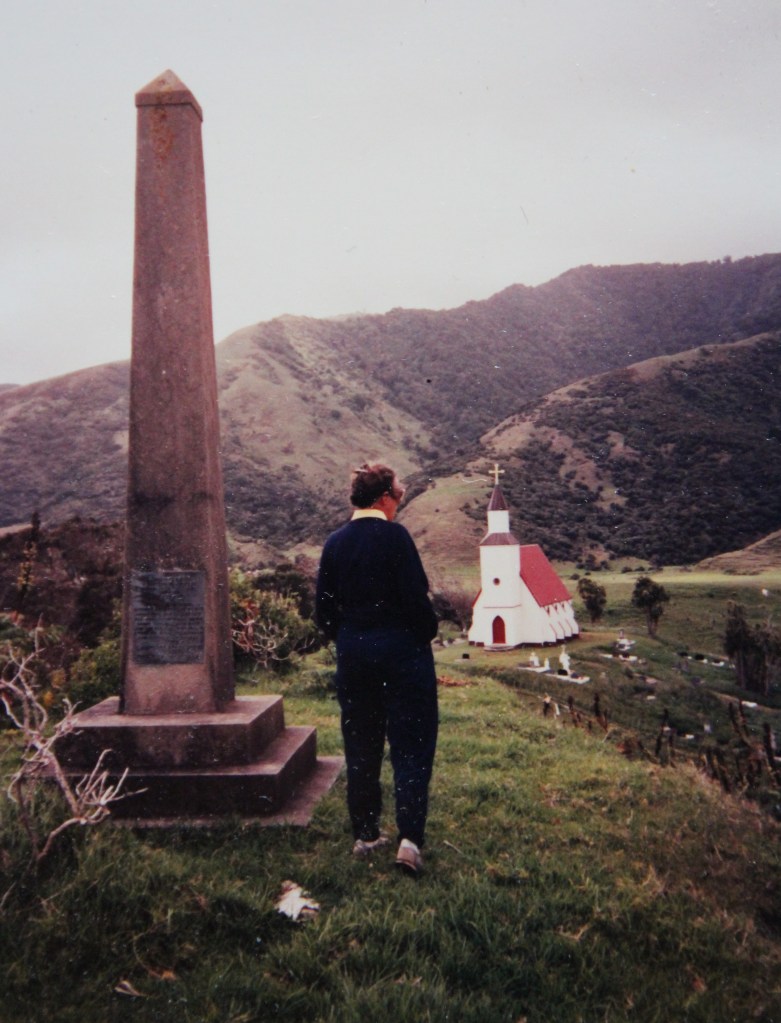
Among these was the Pawarenga Harbour and surrounding country – ‘like no other part of New Zealand’. There were still many of the lovely red roofed, white churches around, immaculately cared for, and on wonderful sites; and plenty of relatively new housing, presumably occupied by tangata whenua who were returning from the city at the time in significant numbers. However, there was no sign anywhere of what was sustaining the community financially. They were very taken too, with Kohukohu to the south on the northern shores of the Hokianga where every building was carefully restored and lovingly maintained.
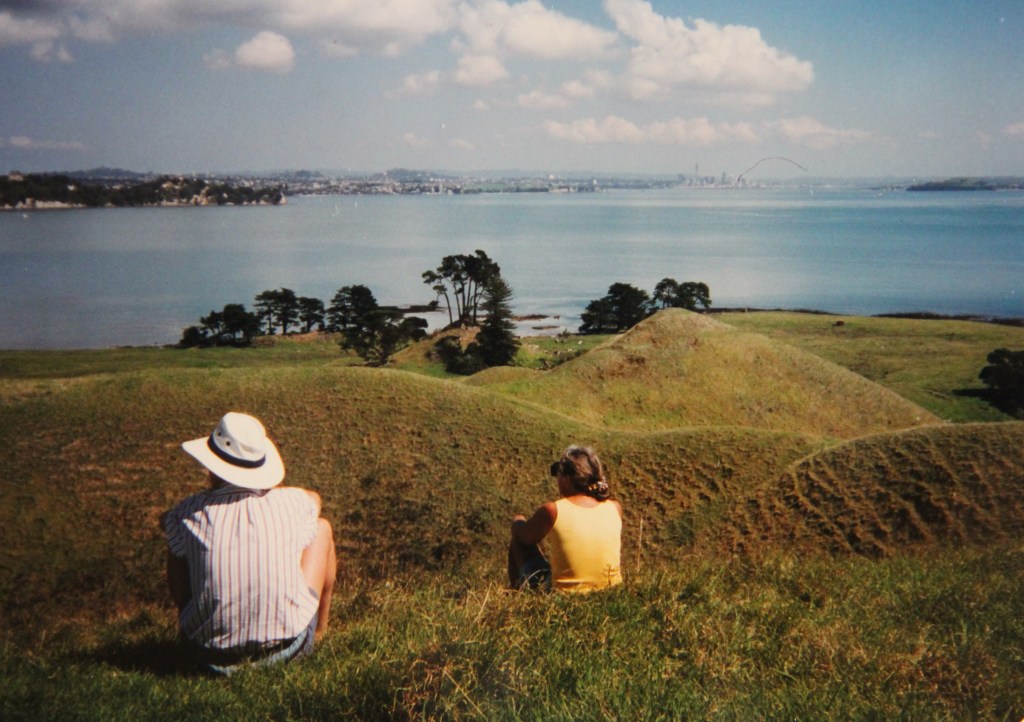
They had a brief break in boating activities after returning from the United Kingdom, but as the nineteen nineties progressed, coastal cruising became an increasingly prominent feature of their lives. There were trips to the western Coromandel coast; Great Barrier; Waiheke, the inner Hauraki Gulf Islands, and Auckland; Whangaroa Harbour; the Bay of Islands; Whangaruru; and Whangarei Harbour. And of course, many weeks were spent at Kawau and Mahurangi with the occasional venture up the river to Warkworth. The two places that Mum had always wanted to spend time at but never got to, were the Poor Knights Islands and the east coast of Great Barrier Island. They must have passed the Poor Knights a dozen times over the years, but for one reason or another, the weather or sea conditions were never quite right. As for the east coast off Great Barrier, Dad just refused to go there – “way too exposed!”
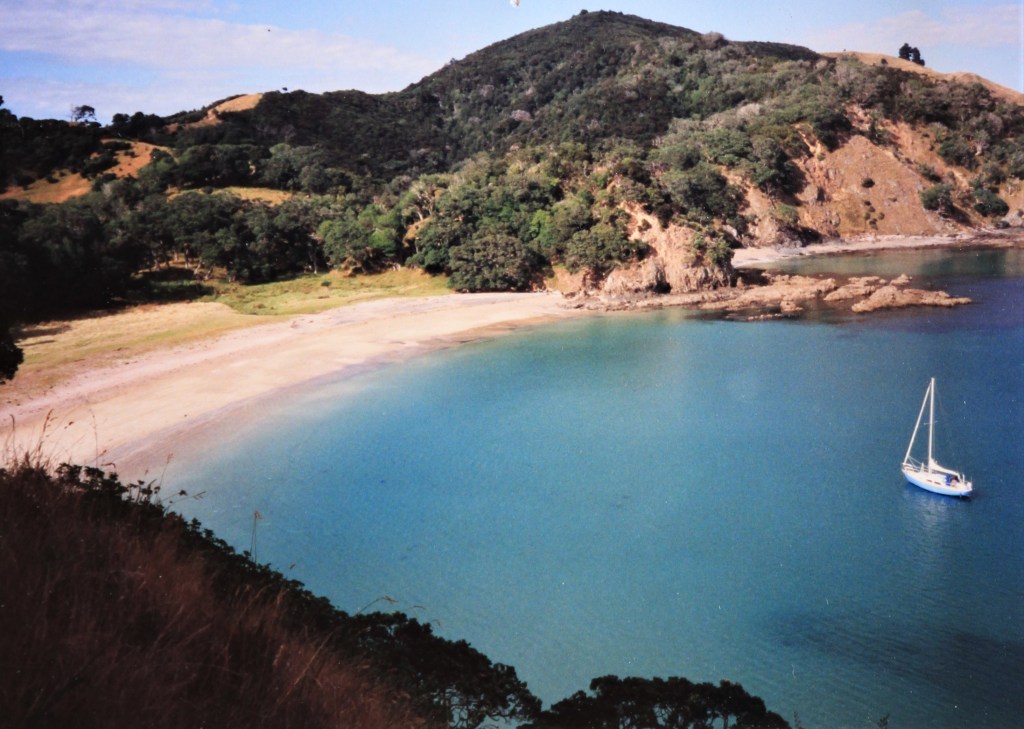
Shadowfox did not have much in the way of modern cruising comforts. There was no anchor winch; no GPS, depth-sounder or chart-plotter; no hot water, oven, or fridge; and at least in the early days, no means of communicating with the outside world other than a VHF radio which Dad hated and would rarely use. He would have liked a GPS in their offshore cruising days but didn’t feel the need around the coast. He knew exactly where he was, he always had charts on board to remind him where the rocks were, and he had a lead line if he felt the need to find the depth. So, he was quite happy without a GPS/chart-plotter/sonar.
Having said that he always knew exactly where he was, there was one occasion off Tiritiri Matangi when they hit a rock. Fortunately, they bounced over it and carried on, but it must have been quite a shock for Dad. The rock was a good quarter mile off the north-west end of the island, and he knew it was there, but he clearly misjudged the distance. I wasn’t aware of this event until I read Mum’s journal and had always thought he’d had an impeccable record as a navigator. In 2004 when Yvonne and I were sailing south past Tiritiri, we hit the same rock. We bounced off and sailed on like them, but I was mortified. I felt Dad looking down at me sternly and saying, “look at your chart boy!”.
Strangely, he professed to be entirely happy without an anchor winch. There must have been times though, when he had a thirty-five-pound CQR at the end of twenty metres of chain when he would have given his left ear for one.
A heavy cast-iron pot on the kerosene stove sufficed as an oven, and hot water could be made on the stove whenever needed. However, they felt most keenly about the lack of a fridge.
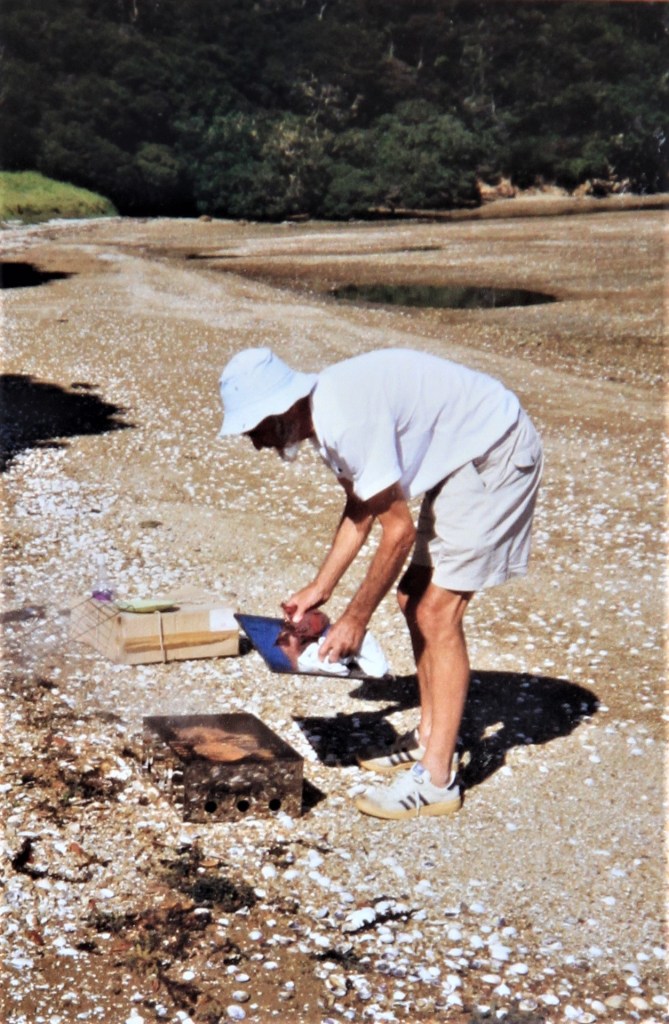
They persevered with a chilly bin and ice for the first few years, but in 1994, they bought a gas fridge and squeezed this into the quarter-berth. This revolutionised their cruising life. There was no longer the need for regular trips to a shop for ice and they could take more fresh food to supplement their diet. Interestingly, it didn’t stop their practice of smoking their fish ashore. I think they preferred their fish smoked to fresh, and of course the ritual of fish smoking on a beach was not one easily dispensed with.
Another piece of modern technology that they came to appreciate was a cell phone. This didn’t come until 1996 when John, Kay, Pip and I bought one for them for Christmas 1996. Dad was as suspicious of this as he was of the VHF and even used it like one initially, saying “over” when finishing what he had to say. However, it was wonderful for us to communicate with them regularly and know they were safe; in time, they too got used to using it more often.
Another feature of life on a small boat that greatly influenced how they planned their trips was water – or the relative lack of it. Shadowfox only carried eighty litres in her holding tanks, so it had to be carefully eked out. Regular visits were needed to sites where it could be topped up. They were well used to getting by on little water, but Mum’s passion for washing clothes was a challenge.
I had not appreciated how much of a passion this was until I read her journals. Washing clothes in outdoor settings and having crisp, fresh, and clean clothes gave her great delight. She wrote that when they were 25 days out on their second Pacific cruise, Raywin and she would pass between them their one remaining clean pair of undies so they could sniff them. They’d then put them back in the drawer unworn.
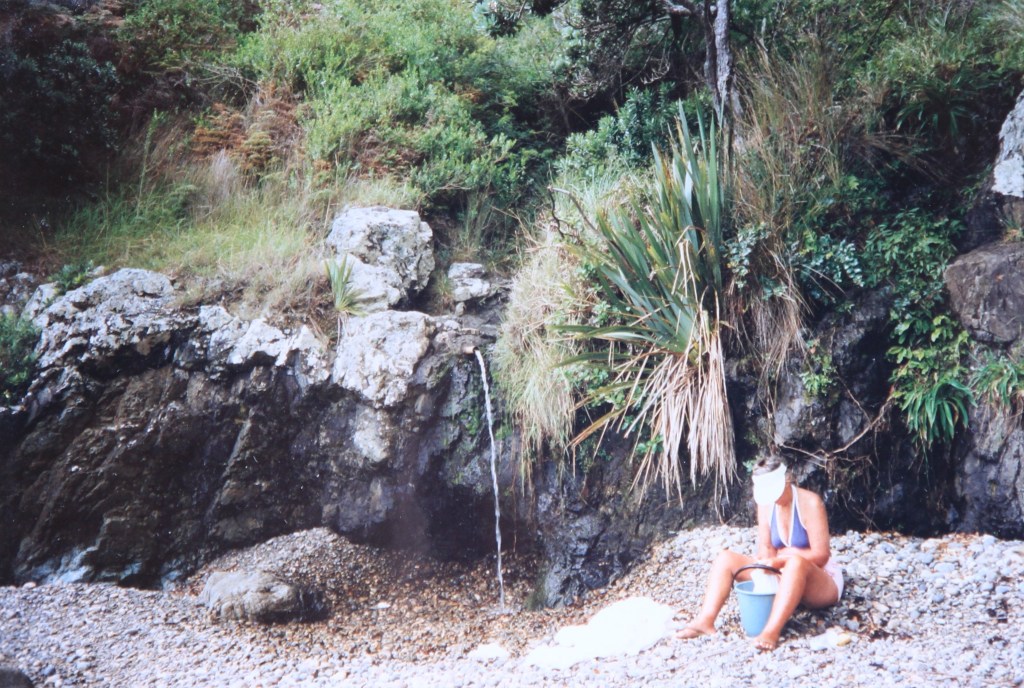
She would gather buckets of water from coastal streams, toilet blocks at coastal parks, and even a cattle trough at Urquhart’s Bay, and she would wash clothes in the rainwater gathered in the bottom of the inflatable dinghy when the opportunity arose. She was always delighted if it rained at night as it would mean having washing water in the morning. However, she would grumble if the wind flipped the dinghy as it often did. Many of her favourite anchorages were places where she could get good water – Oke Bay in the Bay of Islands (where the water was piped out of a steam out onto the beach), Admiral’s Bay in Whangaruru (lovely soft water), and Urquhart’s Bay in the Whangarei Harbour.
There must always have been washing hanging on the rails or in the rigging, attached by the pegs she found on the beach. She never recorded having lost any, but on one occasion she returned from a walk to find Dad with the booming-out pole, trying to retrieve two pairs of her undies in eight feet of water below the boat. He’d dutifully taken in the washing as the wind came up but dropped the undies in the process.
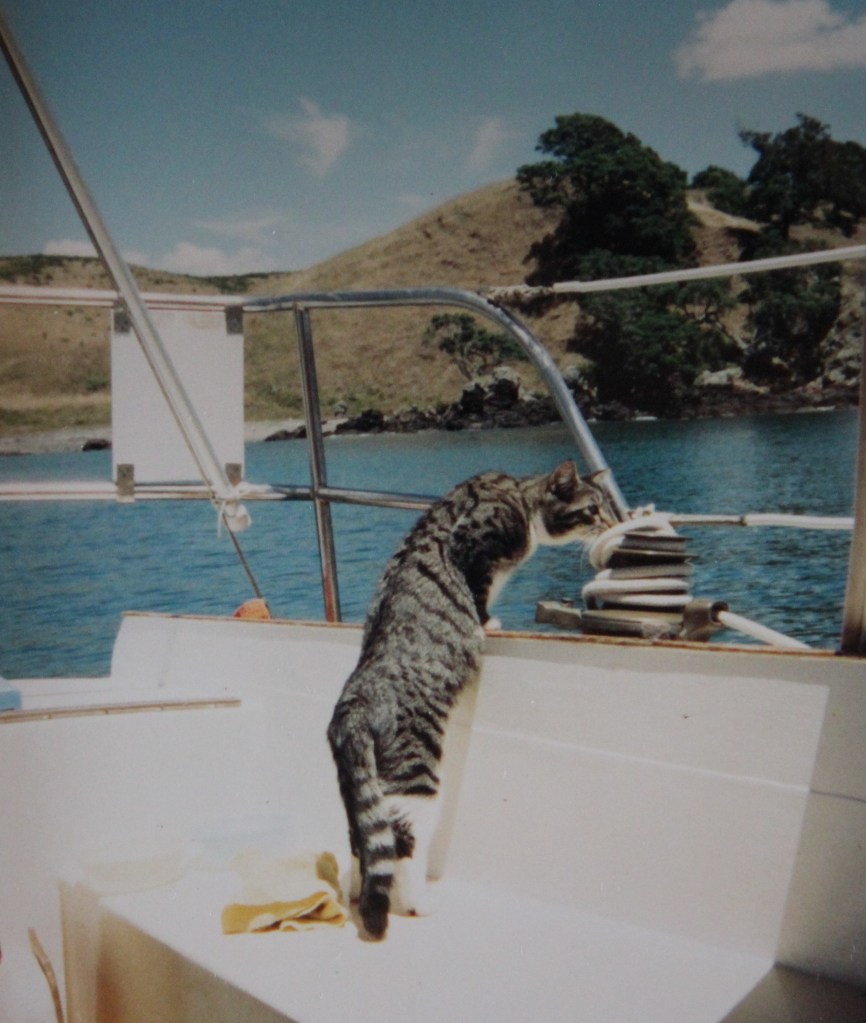
In 1994, they got a new addition to the crew – a cat called Ermintrude (Minnie), a two-part feral creature who wouldn’t let anyone other than Mum and Dad touch her. They had always wanted a boat cat but had put this off for fear of losing it overboard. They had lost one some years before, off Cecilene at Matiatia and didn’t want to repeat this. However, they had Minnie practice getting herself back on board and after some initial stress, she took to boat life very well. She delighted in watching fish from the rail, chasing seagulls and swallows and, of course, eating fish. Only black backed gulls and strangers aboard would have her bolt to her hiding spot up behind the engine.
They developed a routine to their coastal cruises that usually involved a very early start (for the skipper anyway), early arrival to the next anchorage, a walk or a row (usually just the mate), a fish for both themselves and the cat, a swim for the mate if warm and for the skipper if really hot, socialising with fellow yachties, and a book, solitaire or scrabble in the evening. They always aimed to be within range of a shop every few days for ice in the early days, but later just for fresh bread and a ‘granny Herald’. Favourite spots then, were Opunga Cove and Oke Bay in the Bay of Islands, Whangaruru Harbour, Urquhart’s Bay, Port Fitzroy and Tryphena Harbour on Great Barrier, Rocky Bay on Waiheke and of course Bon Accord Harbour on Kawau. All were well sheltered, had fresh water, a shop nearby, and nice walking places. There were many other anchorages that they enjoyed and used often, but they usually lacked one or two of these essential elements.
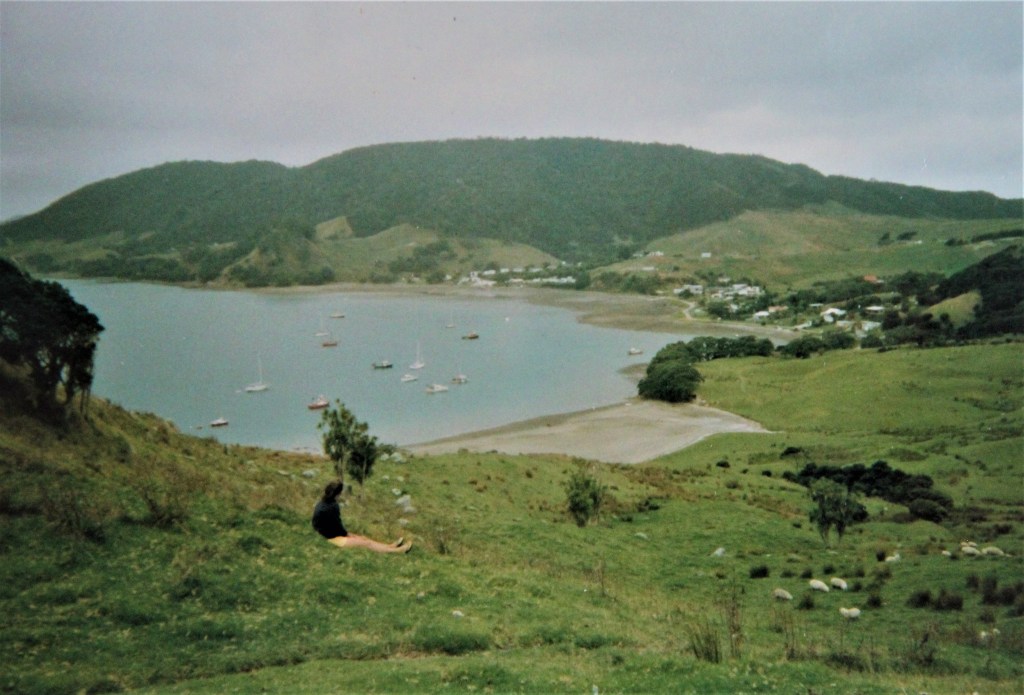
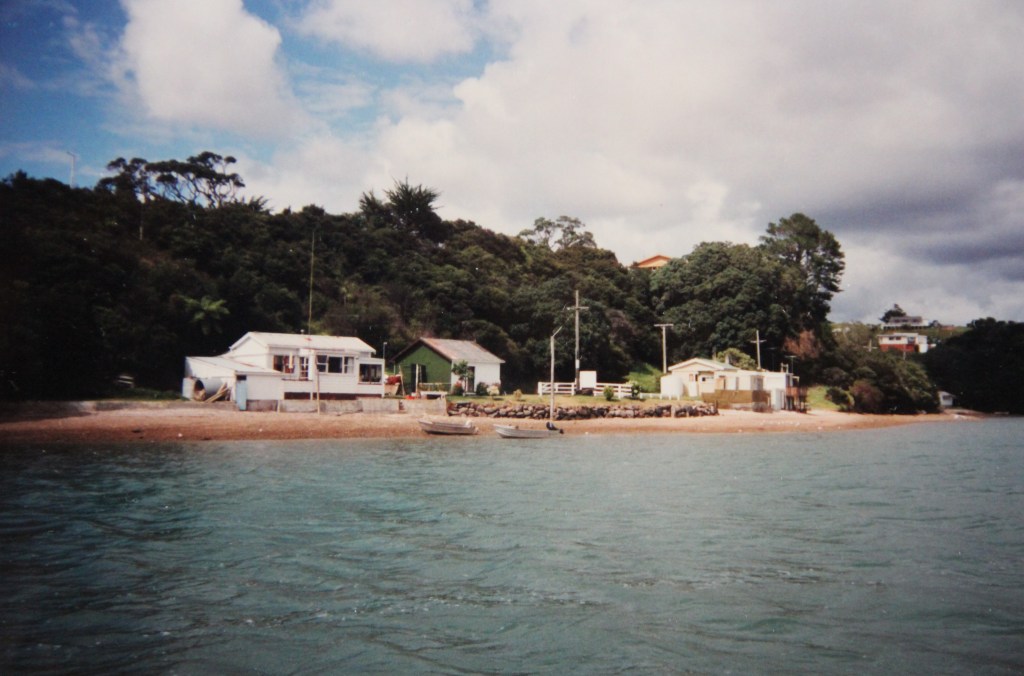
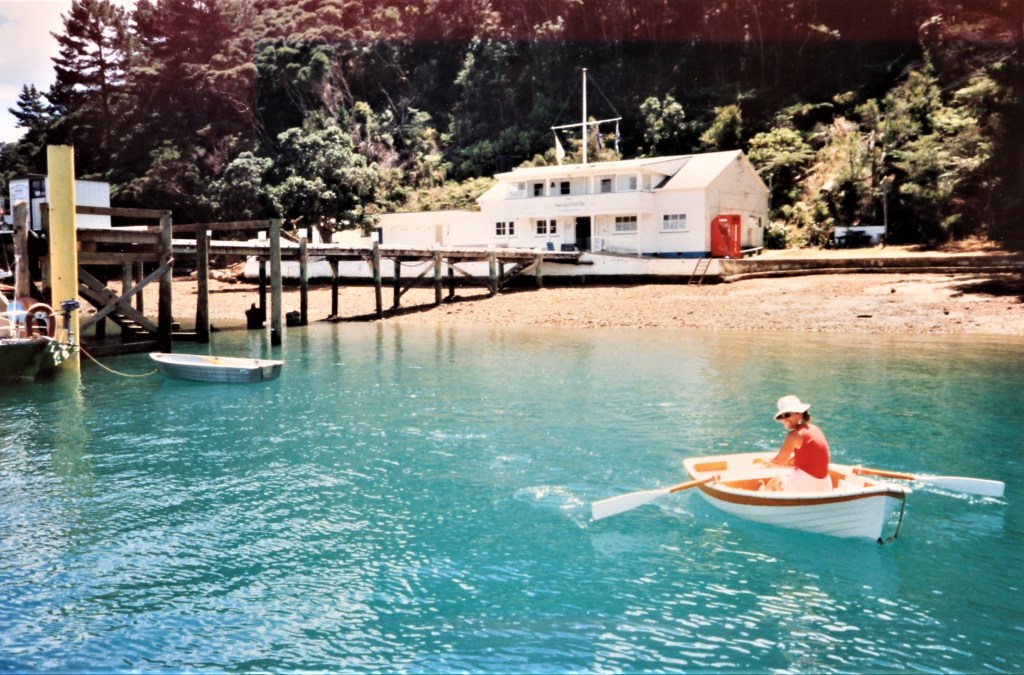
It was interesting that Nagel’s Cove wasn’t featured in their list of favourite spots. Dad had wished he was there when bobbing around in the North Pacific in 1973. It possessed all the qualities they looked for except a shop, but they found they didn’t like it. It was still being farmed after a fashion by Allan Phelps (who they didn’t know) and he was out on his tractor, determinedly mowing the gorse when they were there in January 1993. The whole place looked depressing – neither well farmed nor restored to some semblance of a natural state. They never went back, but they might have been pleased to know that Allan would get the conservation disease in time and be quite influential on The Barrier, promoting conservation initiatives.
Walks for Mum were a key feature of her day when cruising. These could be epic affairs covering considerable distances, but equally they could be just a beach walk where she would look for ‘treasures’ washed up in the tide. ‘Dahlia’ stakes (oyster farm stakes), rope, and pegs were her favourite but on occasion, she would find a real treasure like the stainless-steel dish she found at Te Kouma in 1992 which Pip and I still have on Deception to this day. A journal entry in 1996 read:
‘Back to Parua Bay and on a walk just before high tide, I did really well. A knotted t-shirt full of peaches for which I risked life and limb climbing a steep bank, a long piece of green cord which I laboriously unravelled and a peg!”.
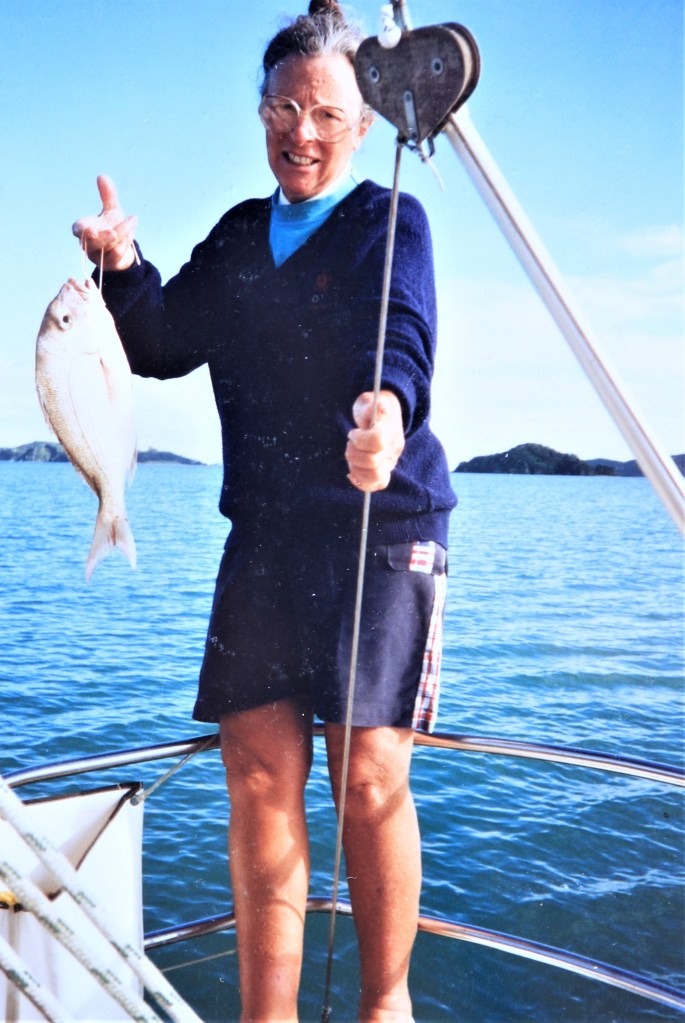
Fishing and smoking the catch also seemed to consume much of their time and was a key diversion and passion for them both. The pickings were very sparse in the early nineties – only tiny schnapper, the occasional yellow tail, parore and kahawai, the latter being their principal fresh food. There were many occasions when they had to resort to tin food and worried about the cat having to do likewise. By 1997, however, the fish stocks were clearly recovering, and they could catch very reasonably sized schnapper with relative ease. They would still smoke these and get great pleasure out of giving some of this away.

On one occasion in the Bay of Islands, they met up with a couple and kids in a fizz boat, who were camping on Urupukapuka Island. They had forgotten their fishing tackle box so they couldn’t fish. Mum and Dad saw their boat two days later, on the beach at Motukiekie Island. They called in to give them some fish, and finding no one about, they left it in their boat without a note. It delighted Mum to think of their puzzlement when they saw it. She wondered whether they would connect the dots.
Another feature of cruising that progressively changed, was the sociability of their fellow boaties. In their early days of cruising, people would always wave or acknowledge each other as they passed or came up beside other boats in an anchorage. Dad would also get great pleasure in an evening by rowing around an anchorage and chatting with people on other boats. However, over the years, more and more people would studiously ignore a wave or a hello, even if anchored right beside them. It used to infuriate Dad who thought it the height of rudeness – “bloody big city disease!!”. However, it didn’t stop him from waving to people or visiting other boats. He just got more discerning about who he talked to and the boats he approached.
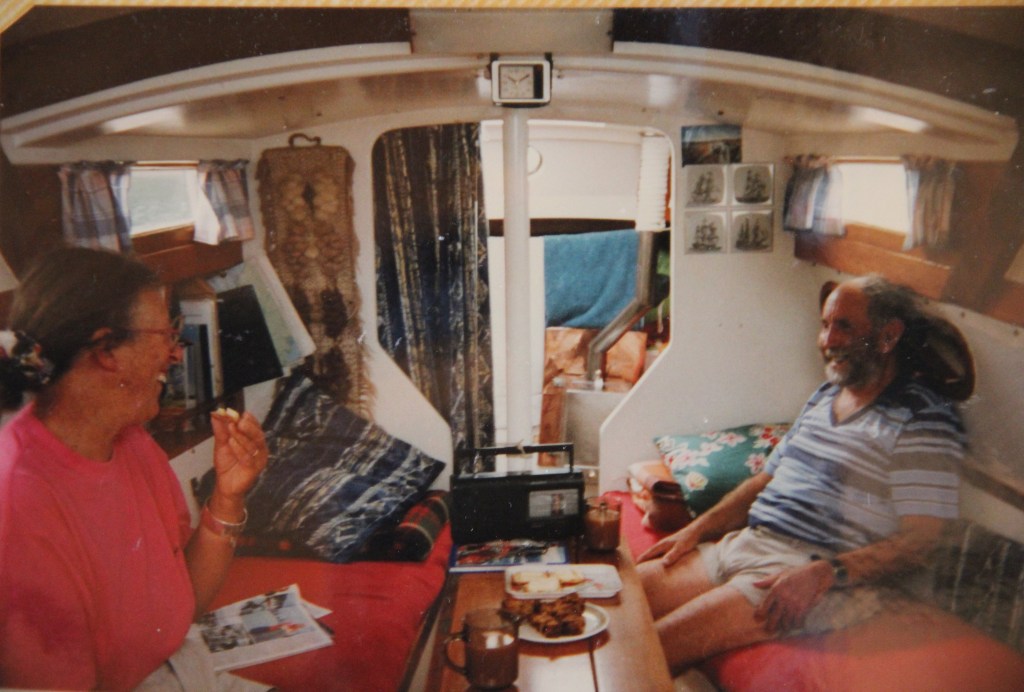
Of all their favourite anchorages, Bon Accord Harbour at Kawau was by far their most used, especially Harris Bay and, to a lesser extent, Smelting House Bay. They would always begin and end a cruise here and would often stay many days if the weather was not good. The yacht club had a good shop, water, and diesel, there were good walks about the harbour, and the anchorage was always rock solid. They weathered many storms here, including a couple of tropical cyclones.
In 1988, they planted several pohutukawa and kowhai on a small spit of land at the western end of Sunny (or Shark) Bay on the south shore of Bon Accord harbour. This had once housed a bach, but this had burnt down some years before, and the site was now just a scrubby patch of flat ground. Over the years, they carefully tended these trees, fencing out the wallaby and possums, releasing them from weeds and even watering them during dry summers. It was here in 1999 that we scattered Dad’s ashes, and, in January 2025 during a large family gathering, Mum’s ashes joined his.
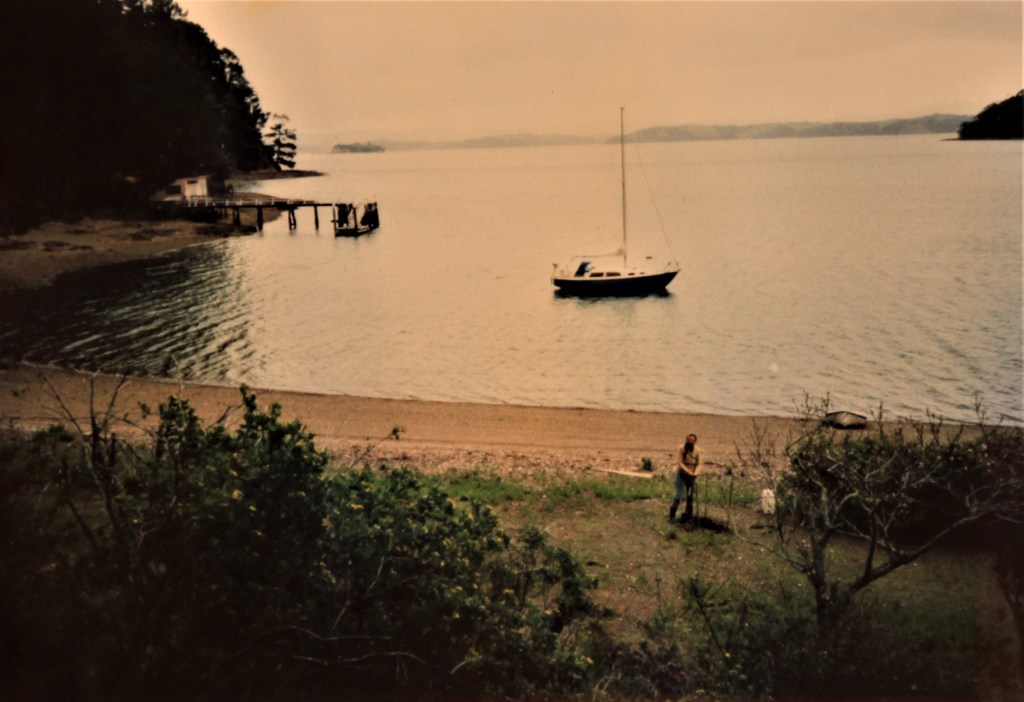
Some of these cruises were very long, lasting up to four months. On one cruise in 1996, they came back after a month in the inner Gulf around Waiheke and Auckland and spent Christmas with the family at Kay and Malcolm’s campsite at Scandrett’s. After waiting out cyclone Fergus in Harris Bay, they went north to the Bay of Islands for another three months. While they were still sitting at anchor in Bon Accord on New Year’s Eve, Mum records a phone call from me:
W call’s from Scandrett’s where they were jointly sorting out family problems. I confessed to not realising that we had any. He said that he would send a list”
I wasn’t aware we had any either, but nonetheless, I’m sure we had fun sorting them out.
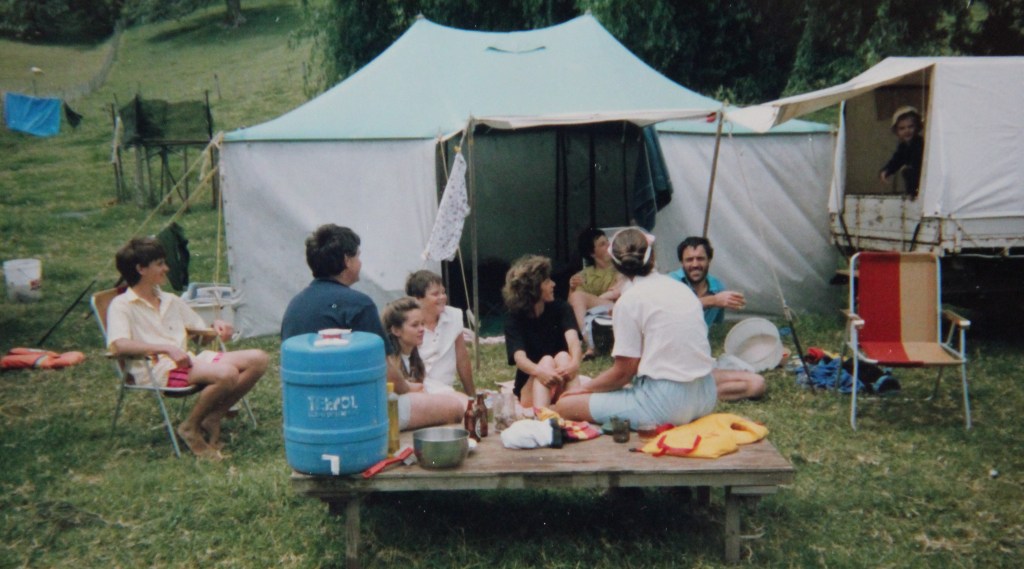
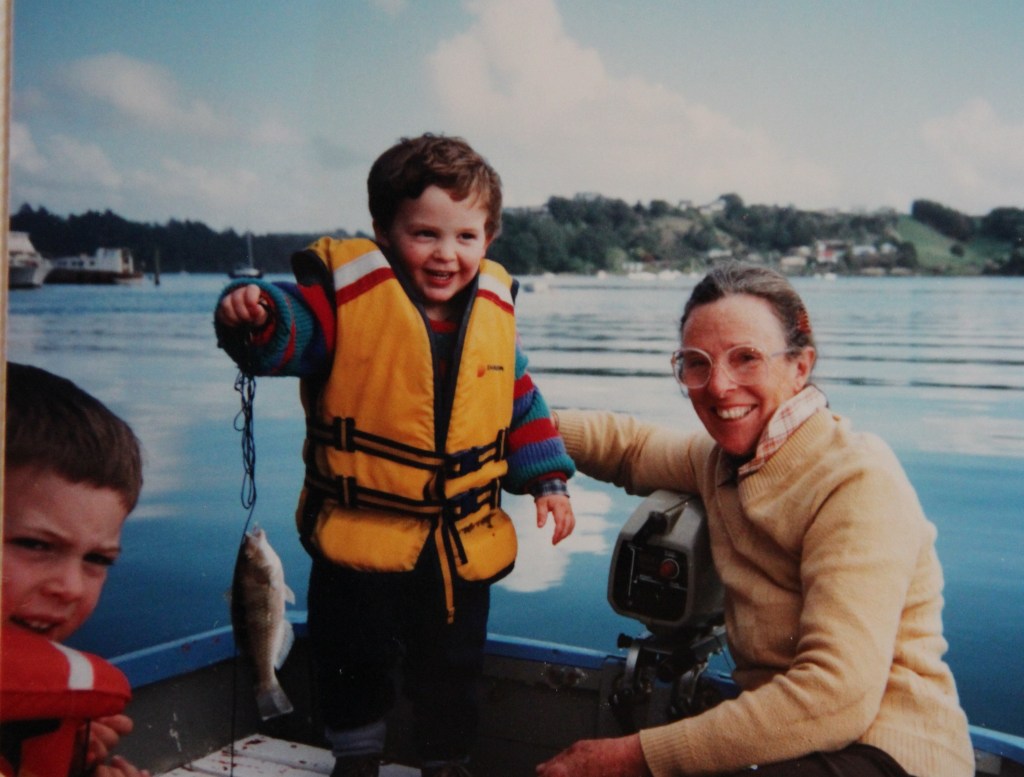
These trips were also often interspersed with longer trips ashore. On one occasion, Mum had a day at Puhanui to watch Gilly ride in the three-day event, and on another, she bussed down to Auckland to Gilly and Richard’s 21st Birthday Party and spent time with both John and Jude and Karen and me. They would also take grandkids out for a few days. Scott, Richard and, I think Gilly, had time away with them when they still had Jane Rhodes, but they also took out Rachel, Cameron and Kate on Shadowfox. I don’t recall whether Sam and Thomas got out with them, but Sam relates a story about Mum driving down to the Sandspit wharf with them in the little yellow Mazda. She asked, “Do you want to see me break the land speed record for a Mazda traversing speed bumps?” Of course they did, so she set off at speed from the campground and crashed over several bumps before screeching to a halt just before the rubbish skips. Gramma’s reputation as a cool gramma went up several notches.
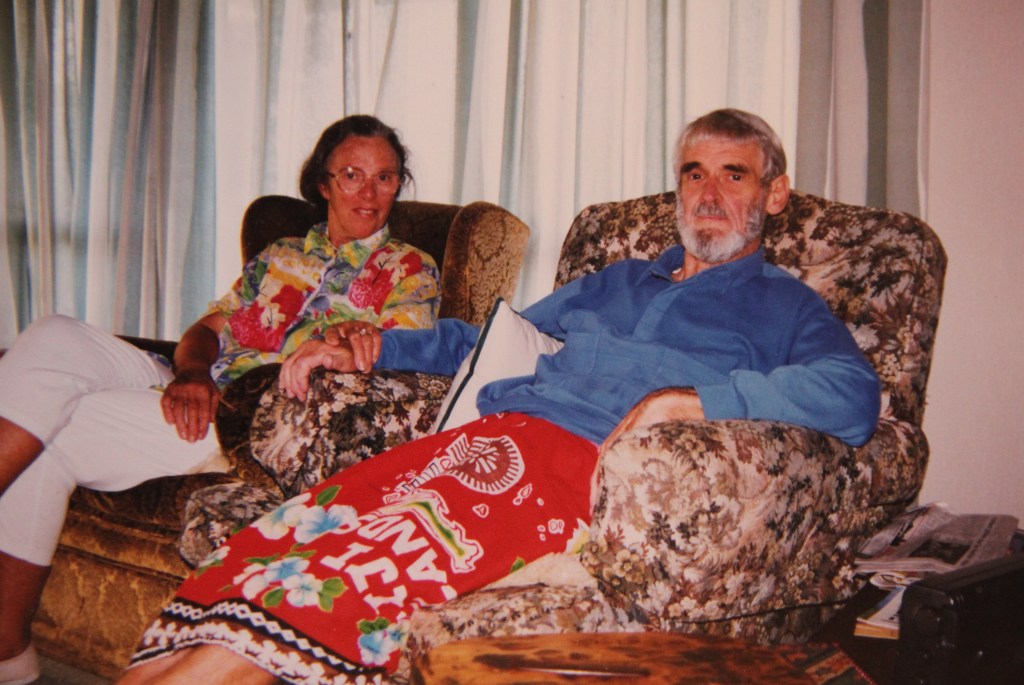
Of course, they still spent much time at home between their camping or coastal cruising trips. They built a garage, put dormers and a bathroom upstairs in the house, and progressively, with many loads of seaweed and compost, the garden began to flourish.

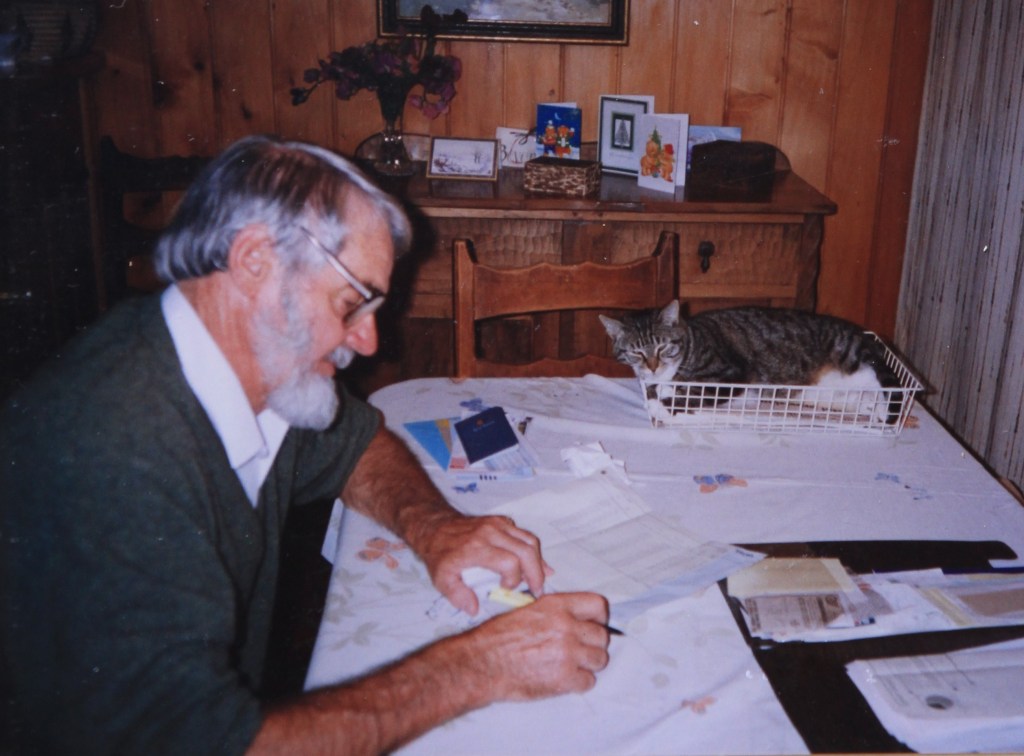
While they had decided that they were officially ‘retired,’ there was still a need for an income to supplement what Mum called the current prime minister’s ‘shilling’. They picked mandarins for Allan Gibb at his property in Omaha and at the Matakana Market. They sold woollen garments that Mum had spun and knitted and wooden buttons that Dad had made from manuka sticks.
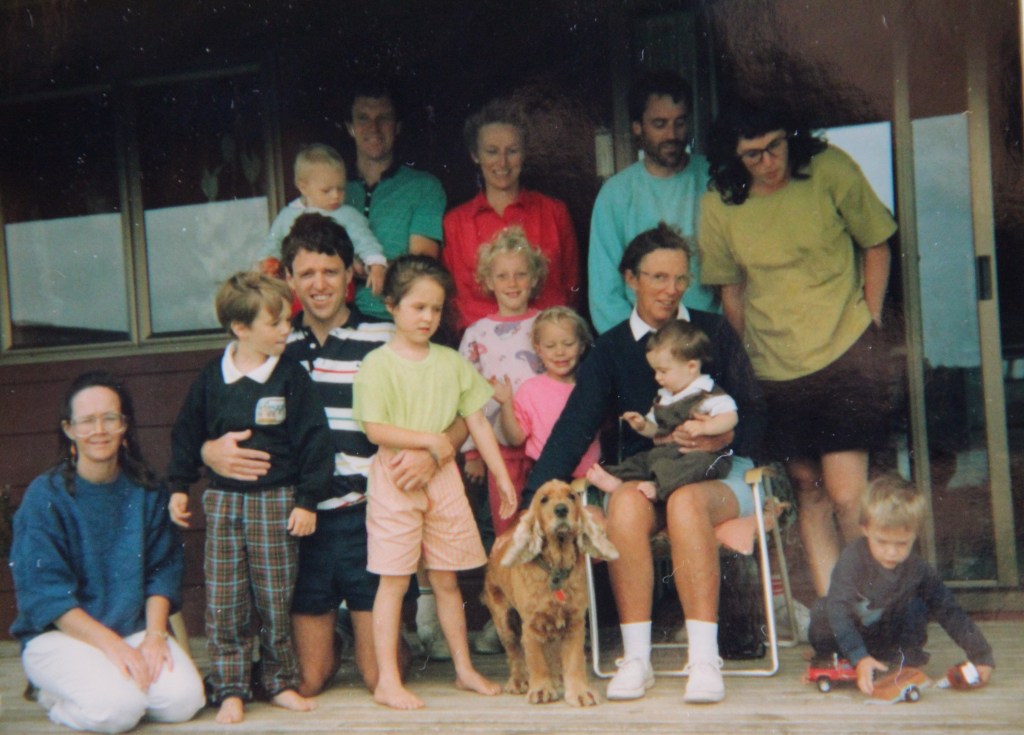
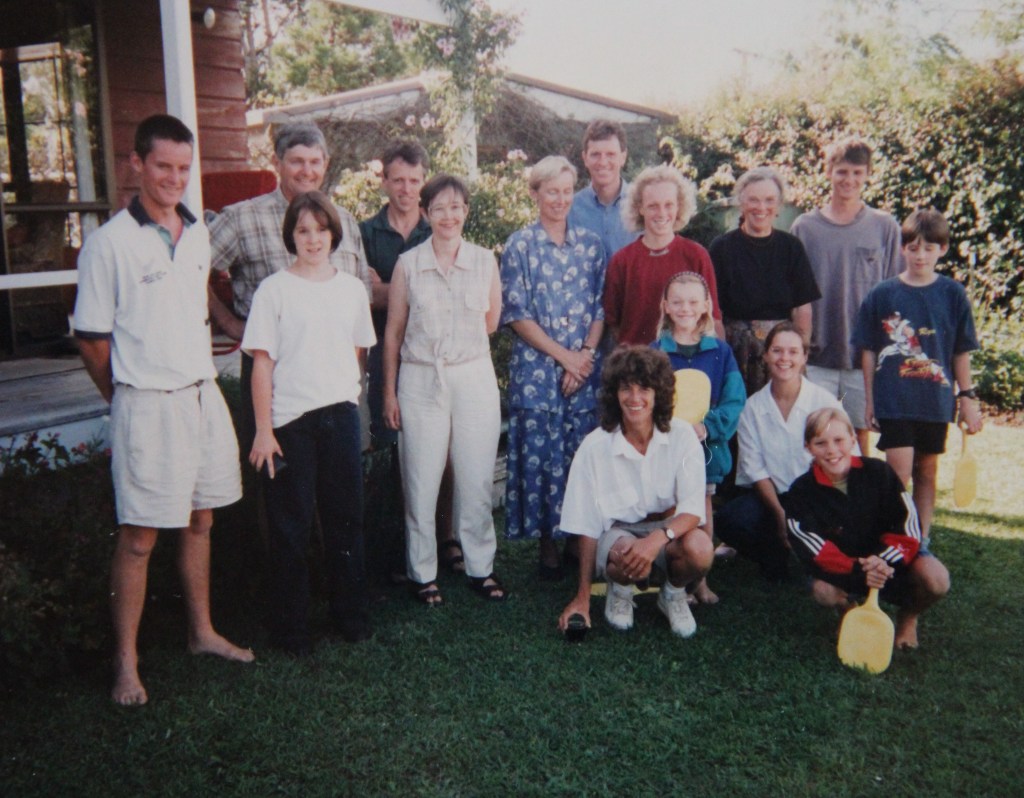
During this time, they had regular visits from children and grandchildren and often had grandkids stay during school holidays. Family Christmases were a routine at their place during this period as well. Dad would dress up and do the Santa Claus bit to the great delight of his grandkids, and Mum would always put on great feasts of roast chook, ham, and fresh peas and beans from the garden. She still made her traditional steamed pudding with coins in it, trifle, home-made fruit salad and lashings of ice-cream.
After the Christmas of 1998, Dad formally handed over the Santa Claus roll to Richard in a note he had Gillian write for him:
On this day, the 28th of May 1998, I, John H Murray, hand over all rights and privileges of the position of Santa Claus to Richard John Meacham on his solemn promise that he will uphold and maintain the tradition of this most auspicious position. I do so knowing that he will not stuff it up more than most of us have in the past.
John H Murray.
Their home was the family gathering place where the wider family would get together periodically, where we would solve the world’s problems together, and where we’d catch up on family doings. It must have been a bit of a culture shock for Malcolm, Karen, Jude and Lynne, as we were a rowdy lot who liked a good debate, but they all in their own way, found a way to cope in this sometimes-chaotic environment.

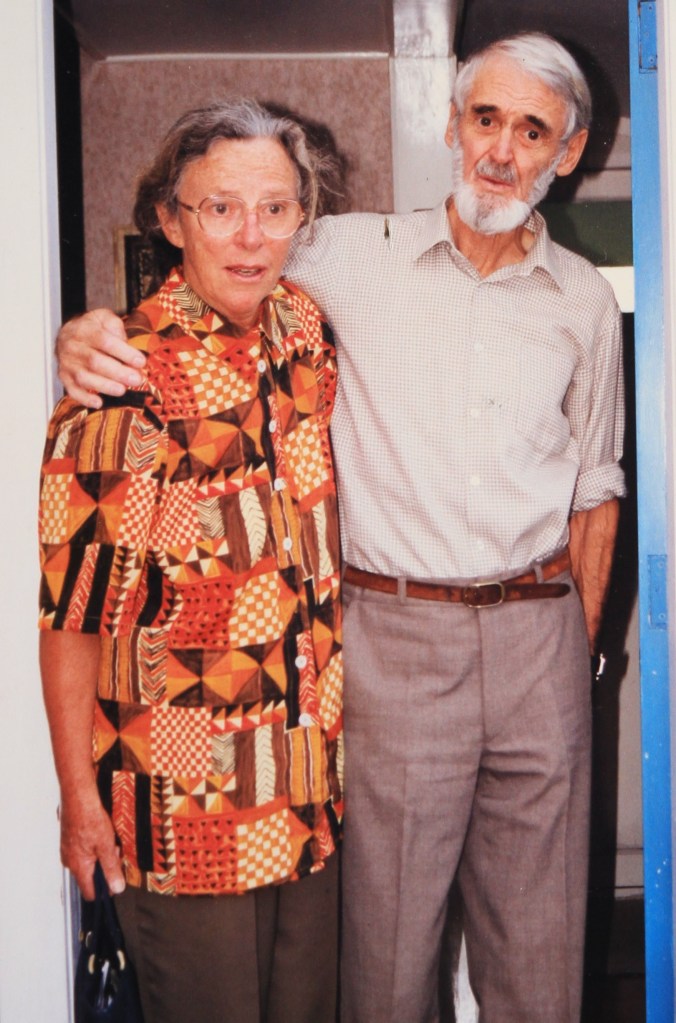
Their final cruise together, in early 1998, took them back up to the Bay of Islands. They made their usual stops at Urquhart’s Bay, Tutukaka, Urupukapuka, and many of their favourite haunts around the Bay. Dad was not feeling well, so he went to see a doctor in Russell who diagnosed a kidney infection. When the antibiotics didn’t fix things, the doctor suggested he get some specialist advice. He took him at his word and decided instantly that they should head back home, which they did, much to Mum’s dismay.
Neither of them were to know at the time that it wasn’t a kidney problem but pancreatic cancer – although I often wonder whether he suspected more than he was letting on. Less than four months after they returned from the Bay of Islands, he died at their home in Green Road.
 John and Beverly Murray
Leave a comment